
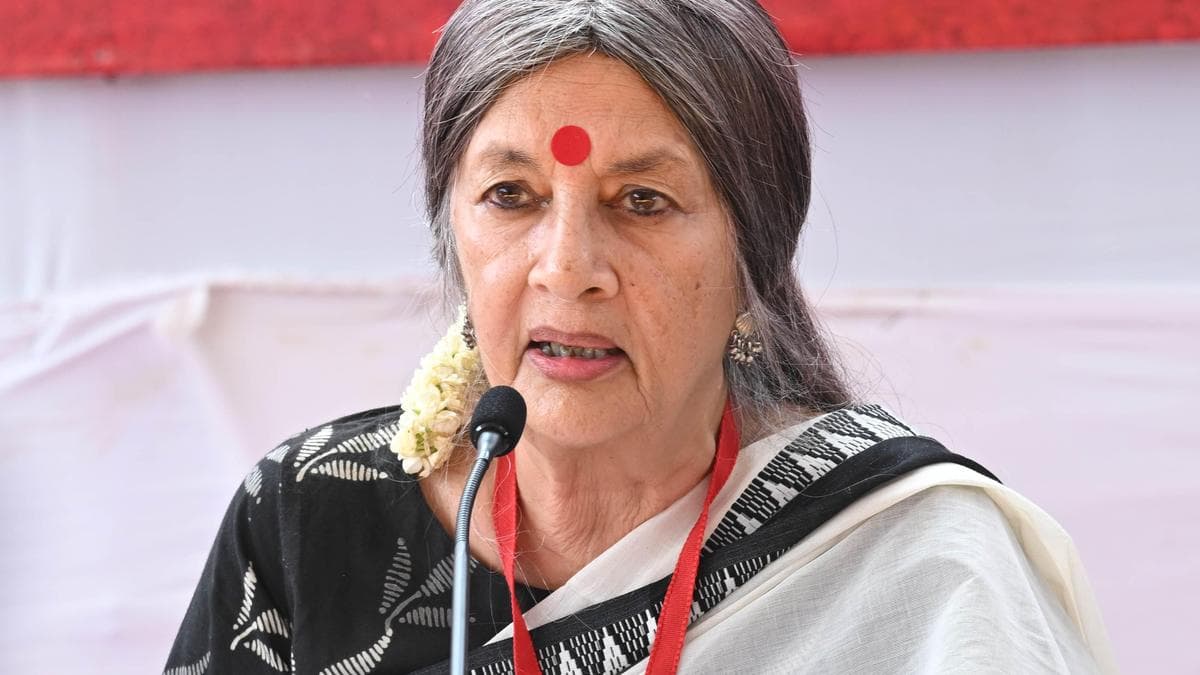
Image: The Hindu
CPI(M) leader Brinda Karat asserts that elections must reflect the rights of people, condemning corporate influence and advocating for social justice.
GlipzoOn March 21, 2026, at a public meeting in Purasawalkam, Chennai, CPI(M) leader Brinda Karat made a compelling case for the role of communists in elections, emphasizing their commitment to representing the struggles and rights of ordinary people. She articulated that their political fight is aimed at ensuring that voices from all walks of life are heard in key governmental bodies, including Parliament, state assemblies, and local councils.
Karat's remarks came amid concerns about the current political climate in India, where she accused the Narendra Modi administration of transforming parliamentary democracy into a model she described as “corporate democracy.” According to her, this shift has allowed corporations to exert undue influence over the political process, particularly through substantial financial contributions to the ruling party.
Highlighting the troubling nexus between corporate funding and political power, Karat alleged that the BJP has engaged in a quid pro quo arrangement with businesses. She stated:
> "They follow a give-and-take policy. If corporates give money, the Modi government will give them licences. If corporates give more money, the Modi government will give them national assets. If corporates give even more money, the Modi government would even give them the Parliament."
Karat's assertions raise critical questions about transparency and accountability in Indian politics. She cited the historical context of labor movements, recalling the establishment of the Madras Labour Union in 1918 by communist leader Singaravelar. This foundation of labor activism is echoed today, she noted, through the ₹20 lakh raised by the Chennai Central party committee, funded by the voluntary contributions of ordinary citizens, including bank and insurance employees.
In an unexpected pivot, Karat also condemned the recent military actions taken by Israel and the United States against Iran, labeling these actions as “unprecedented and highly condemnable.” She criticized the Indian government's silence on this international conflict, contrasting it with the past, when the Indian Parliament unanimously opposed the U.S. invasion of Iraq in 2003, under the leadership of then Prime Minister Atal Bihari Vajpayee.
Karat's remarks about foreign policy reflect a desire for India to take a more principled stand on global issues, particularly those involving human rights and sovereignty. This perspective aligns with her criticism of the BJP's ideological approach, which she claims is heavily influenced by the RSS.
The discussion also delved into domestic issues, with Karat expressing strong opposition to the government's introduction of the four Labour Codes. She asserted that these reforms threaten the hard-won rights of workers, which have been established through decades of struggle.
She specifically called attention to the recent legislative attempts to amend the Transgender Persons (Protection of Rights) Act, 2019, arguing that such changes would erode the rights of the transgender community, undermining their social standing and protections.
Karat's statements underscore a critical moment in Indian politics, where the intersection of corporate influence, labor rights, and international diplomacy is increasingly relevant. The discourse around these issues not only reflects the ideological battles within Indian politics but also resonates with broader global conversations about democracy, rights, and governance.
As the political landscape continues to evolve, the role of parties like CPI(M) becomes essential in advocating for marginalized voices and ensuring that democratic principles are upheld. The upcoming elections will serve as a litmus test for these ideologies, as voters weigh the implications of corporate funding against the backdrop of social justice and labor rights.
As we approach the next election cycle, observers should keep an eye on how these themes develop. Will the CPI(M) be able to galvanize support around issues of corporate influence and labor rights? How will the BJP respond to these accusations, and what impact will it have on their electoral prospects?
The outcomes of these debates will not only shape the future of the CPI(M) but also determine the trajectory of Indian democracy itself. Brinda Karat's assertions may very well catalyze a renewed focus on the critical need for transparency, accountability, and the protection of civil rights in a rapidly changing political environment.
Published - March 21, 2026 01:12 am IST
---

Tensions soar as the US and Iran engage in air strikes near the Strait of Hormuz, raising concerns over global oil supply and regional stability.
BBC World
Trump's international interventions face serious stalemates. What will this mean for U.S. foreign policy? Explore the critical challenges ahead.
Indian Express
Tehran denies resignation of President Masoud Pezeshkian amid claims of IRGC influence. What does this mean for Iran's political stability? Click to learn more!
Indian Express