
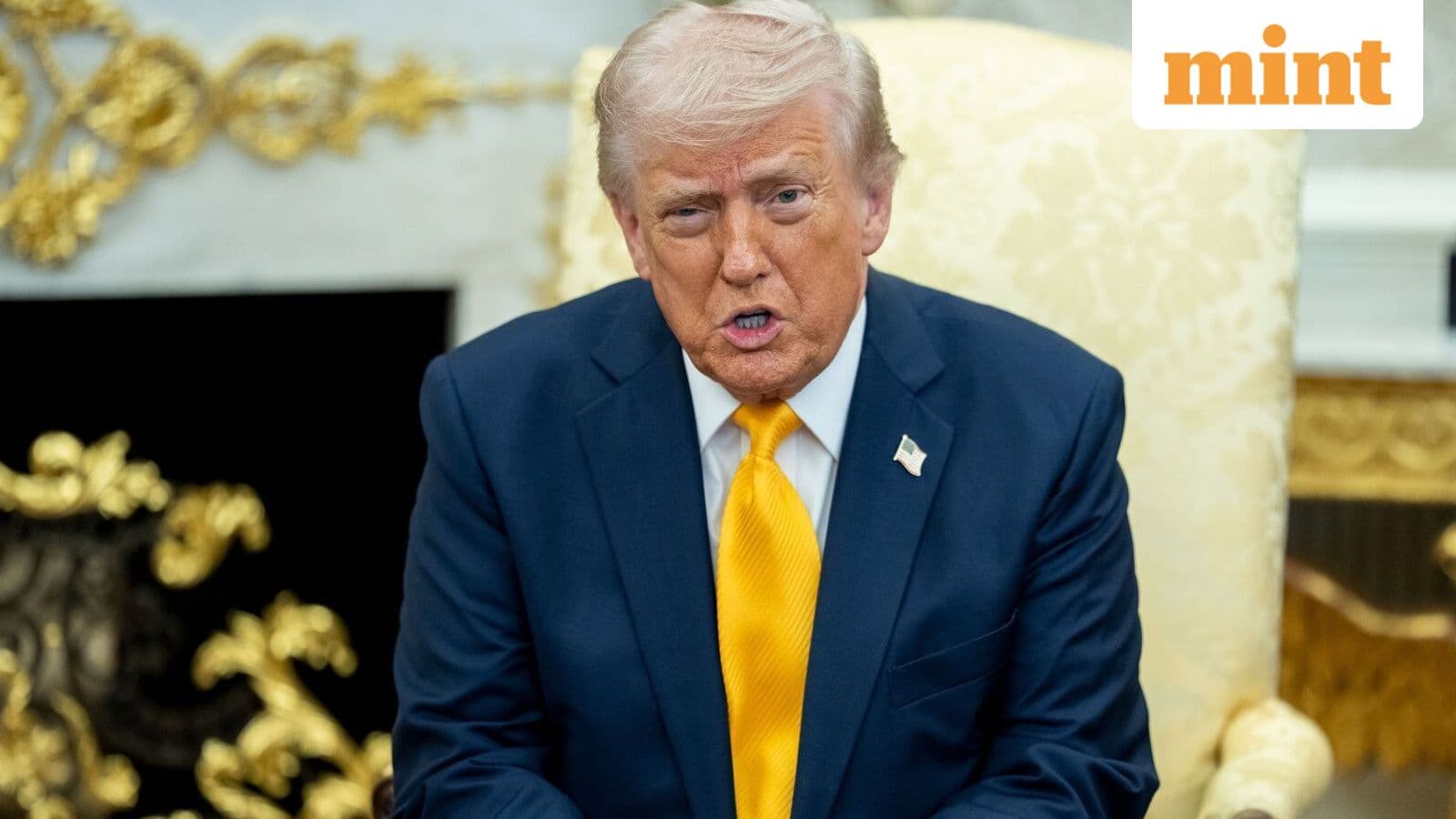
Image: Mint (Business)
Trump criticizes NATO as 'paper tiger' over Iran conflict, urging allies to support U.S. in securing vital oil shipping lanes amidst rising tensions.
GlipzoIn a recent social media outburst, President Donald Trump did not hold back in his criticism of NATO allies, branding the alliance a 'paper tiger' due to their reluctance to support U.S. military efforts against Iran. This statement came as tensions escalated in the region, particularly concerning the Strait of Hormuz, a vital waterway for global oil trade. Trump stated, "Without the U.S.A., NATO IS A PAPER TIGER!"—a clear indication of his frustration with the lack of cooperation from member states.
The backdrop of Trump’s comments is the ongoing conflict in the Middle East, where Iran has intensified its control over the Strait of Hormuz, a crucial passage for shipping that accommodates approximately 20 million barrels of oil daily. As a direct result of these tensions, global oil prices have surged, leading to significant economic repercussions worldwide.
In the face of rising oil prices, Trump accused NATO members of cowardice for refusing to support American and Israeli military actions aimed at securing the Strait. He lamented that while the military situation had improved, allies were more concerned about economic fallout rather than contributing to military maneuvers that could alleviate the situation.
Trump specifically called out the leaders of Germany, France, the UK, and other nations for their lack of commitment, stating: - “Now that fight is Militarily WON, with very little danger for them.” - “COWARDS, and we will REMEMBER!”
This rhetoric underscores a growing frustration among U.S. officials regarding NATO's perceived inaction in critical geopolitical moments.
With Iran’s de facto blockade of the Strait of Hormuz, the situation has become increasingly precarious. The strait is essential not only for Iranian oil shipments but also for a significant portion of the world’s seaborne oil trade. Reports suggest that approximately 20% to 25% of global oil exports pass through this narrow channel, making its security a priority for the U.S. and its allies.
In response to the escalating crisis, various NATO countries, including Germany, Britain, and France, have recently issued a statement expressing their intent to contribute to efforts ensuring safe passage through the Strait. However, they have made it clear that any military involvement hinges on a cessation of hostilities, which complicates Trump's calls for immediate action.
The Iranian government has reacted strongly to U.S. and Israeli military actions, reinforcing its grip on the Strait of Hormuz. This escalation has not only heightened tensions in the region but also resulted in a significant increase in oil prices, affecting markets globally. French President Emmanuel Macron emphasized the need for promoting de-escalation to ensure international law is upheld, stating, “I have not heard anyone here express a willingness to enter this conflict — quite the opposite.”
Trump’s long-standing skepticism towards NATO is evident in his recent remarks, as he perceives a double standard in the alliance's actions. He pointed out that while NATO allies have relied heavily on U.S. financial support for Ukraine amidst Russian aggression, they have failed to reciprocate during the current crisis with Iran.
The conflict with Iran poses a significant challenge not only to U.S. foreign policy but also to NATO’s unity and effectiveness as a military alliance. The discord among member states raises questions about the future of NATO, especially when facing threats that require collective action.
Trump’s criticisms reflect a broader sentiment among various U.S. officials who believe that NATO must step up its commitments and support in times of crisis. As Trump noted, “We will protect them, but they will do nothing for us, in particular, in a time of need.” This statement encapsulates the frustration felt by many regarding the perceived imbalance in the alliance’s contributions.
As the situation in the Middle East continues to evolve, all eyes will be on NATO’s response to the U.S. call for action. The ongoing dialogue about military support for securing the Strait of Hormuz will be crucial in determining how the alliance operates moving forward.
In conclusion, as tensions in the region heat up, the effectiveness of NATO as a unified military force will be tested. It remains to be seen whether the alliance can overcome internal divisions and respond decisively to the challenges posed by Iran, or if it will continue to be seen as a 'paper tiger' in the face of aggression.
This situation is critical not only for the nations involved but also for global stability and economic health. Keep an eye on developments in the coming weeks as NATO faces one of its most significant tests yet.

Tensions soar as the US and Iran engage in air strikes near the Strait of Hormuz, raising concerns over global oil supply and regional stability.
BBC World
Trump's international interventions face serious stalemates. What will this mean for U.S. foreign policy? Explore the critical challenges ahead.
Indian Express
Tehran denies resignation of President Masoud Pezeshkian amid claims of IRGC influence. What does this mean for Iran's political stability? Click to learn more!
Indian Express