
Image: BBC World
Discover the implications of the U.S. naval blockade in the Strait of Hormuz and what it means for global trade and regional stability.
GlipzoIn a significant escalation of tensions in the Middle East, the U.S. military announced plans to enforce a blockade on all maritime traffic entering and exiting Iranian ports starting Monday. The decision follows an intensifying conflict that has persisted since February 28, when diplomatic negotiations faltered, leaving both sides at an impasse.
The Strait of Hormuz, a vital maritime corridor, has become a focal point of this conflict. While the U.S. has stated that vessels traveling to or from other regions will be permitted passage, the blockade effectively limits Iranian shipping activities. This situation raises questions about the implications for global trade and regional stability.
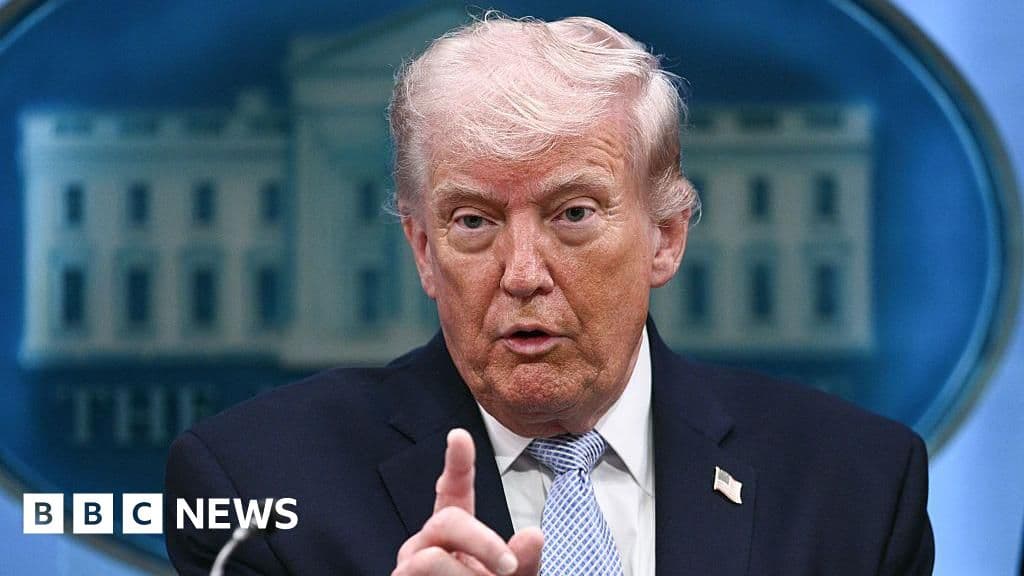
The U.S. President, Donald Trump, highlighted the necessity of the blockade on social media, declaring that any ship attempting to enter or leave the Strait of Hormuz would face severe consequences. He stated, "I have also instructed our Navy to seek and interdict every vessel in International Waters that has paid a toll to Iran. No one who pays an illegal toll will have safe passage on the high seas."
This assertive stance stems from perceived threats to U.S. interests and allies, amid claims that Iran has engaged in aggressive actions, including laying mines in the strait. The U.S. Navy Commander's handbook defines a blockade as a military strategy intended to restrict enemy access to specific ports or coastal regions. Trump's declaration marks a significant shift in the U.S.'s naval strategy in the region, aiming to enforce this policy “effective immediately.”
The operation is set to begin at 10:00 EDT (15:00 BST), as confirmed by U.S. Central Command (Centcom). The blockade will apply indiscriminately to vessels of all nations attempting to access Iranian ports while allowing free passage for ships heading to non-Iranian destinations.
Key points regarding the blockade include: - Impartial Enforcement: All vessels entering or departing Iranian ports will be subject to scrutiny. - Freedom of Navigation: Ships that are not associated with Iranian ports will not face disruption during their transit. - International Awareness: Centcom has promised to issue formal notices to commercial mariners ahead of the blockade's implementation.
International responses to the blockade have varied. Trump mentioned potential collaboration with other nations, suggesting that NATO allies might participate in enforcing the blockade. However, reports indicate that the United Kingdom will not be involved in these operations. A spokesperson from the UK government emphasized the importance of maintaining freedom of navigation, stating that the Strait of Hormuz must not become a tollway.
As the situation unfolds, Prime Minister Keir Starmer has noted that British military assets are already in the region, ready to contribute to operations aimed at ensuring maritime safety. The implications of a blockade extend beyond regional tensions, potentially affecting global oil supply and prices, given that a significant portion of the world’s crude oil travels through this narrow channel.
Legal experts have raised concerns regarding the blockade's compliance with international maritime law. While the U.S. government asserts its right to impose such measures, questions linger about the legality of restricting passage in international waters. The complexity of maritime law means that the blockade could provoke legal challenges, both domestically and internationally.
As tensions escalate, the risk of miscalculations or confrontations between U.S. forces and Iranian military assets increases. Trump's comments about a potential confrontation highlight the precarious balance in the region, where an armed conflict could have devastating consequences.
Looking forward, all eyes will remain on the Strait of Hormuz. The effectiveness and enforcement of the blockade will be critical in determining the next steps from both the U.S. and Iran. The ongoing negotiations and willingness of Iran to engage in dialogue will shape the future landscape of U.S.-Iran relations.
As the situation develops, observers will need to monitor: - Diplomatic Efforts: Will renewed negotiations take place, and can both sides find common ground? - Military Movements: How will Iranian forces respond to the blockade, and will there be escalations? - Global Economic Impact: What effects will this blockade have on international shipping and oil prices?
The potential for conflict remains high, and the international community is watching closely as the situation continues to evolve. The coming days and weeks will be crucial in assessing whether diplomatic solutions can emerge or if military engagements will escalate.
The U.S. blockade in the Strait of Hormuz represents not just a military maneuver but a pivotal moment in U.S.-Iran relations. With both sides fortified in their positions, the potential for conflict looms large. As stakeholders in the region and beyond contemplate their next moves, the focus will be on de-escalation and the future of maritime security in one of the world's most critical waterways.

Tensions soar as the US and Iran engage in air strikes near the Strait of Hormuz, raising concerns over global oil supply and regional stability.
BBC World
Trump's international interventions face serious stalemates. What will this mean for U.S. foreign policy? Explore the critical challenges ahead.
Indian Express
Tehran denies resignation of President Masoud Pezeshkian amid claims of IRGC influence. What does this mean for Iran's political stability? Click to learn more!
Indian Express