
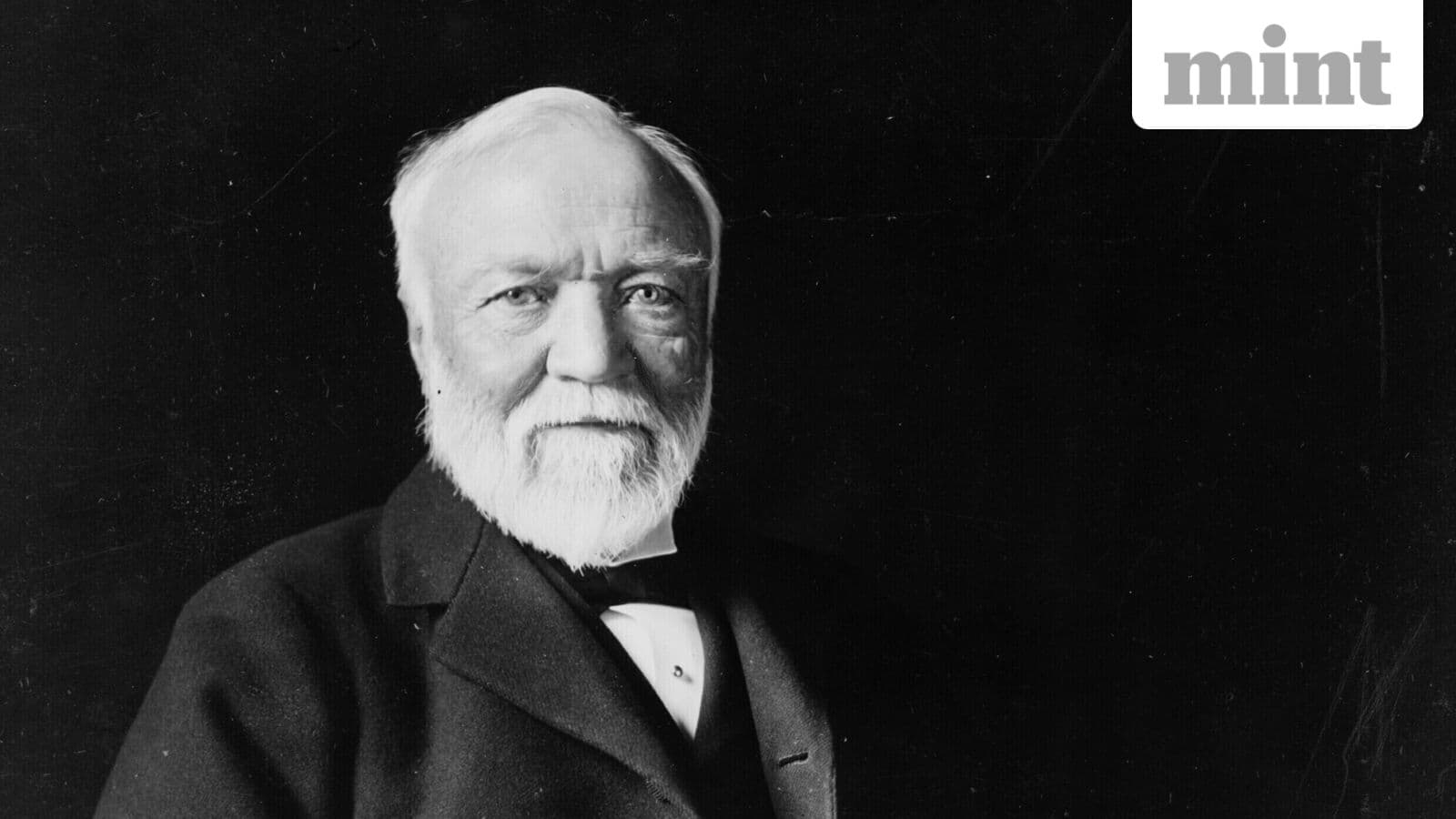
Image: Mint (Business)
Discover Andrew Carnegie's profound insights on wealth and responsibility in business. Learn how his philosophy remains relevant in today's corporate landscape.
GlipzoAndrew Carnegie, born in 1835 in Dunfermline, Scotland, is an emblematic figure in the history of American industry and philanthropy. His journey from a struggling immigrant to a titan of industry is a compelling narrative of ambition, hard work, and societal contribution. After moving to Allegheny, Pennsylvania, in 1848, Carnegie faced significant challenges, particularly due to the economic downturn in the weaving industry. However, he quickly adapted by entering the workforce at a young age, educating himself through reading and attending night school.
Carnegie's rise began in the telegraph and railroad sectors, ultimately leading him to establish Carnegie Steel, which became one of the most formidable industrial enterprises of the late 19th century. In 1901, he sold his steel company to JP Morgan, marking a turning point in his life as he pivoted towards philanthropy. Carnegie dedicated his wealth to creating libraries, universities, and research institutions, emphasizing that great fortunes should be utilized to improve society.
One of Carnegie's most impactful statements, often paraphrased, is: “No man can become rich without himself enriching others.” This quote, which can be traced back to remarks he made in November 1895, encapsulates a fundamental principle of his philosophy: the interconnectedness of wealth creation and societal contribution. While the phrase has undergone modern retelling, its core message remains relevant.
At its heart, Carnegie's assertion posits that wealth is inherently relational; it does not exist in isolation. Successful businesses thrive by addressing needs, creating jobs, and enhancing the value of communal resources. This perspective challenges the notion that individual success is the sole driver of prosperity. Instead, it highlights the critical role of networks—workers, customers, suppliers, and public trust—in the accumulation of wealth. Thus, enriching others is not merely a byproduct of business; it is a foundational element of success.
Carnegie's insights provide strategic guidance for contemporary business leaders. His assertion does not imply that charitable acts should occur only after profit is secured; rather, it suggests that sustainable profits often result from creating genuine value. The most successful companies do not merely seek to maximize margins; they focus on developing products and services that meet customer needs, enhance employee opportunities, and improve the lives of their stakeholders.
This viewpoint aligns remarkably with today's emphasis on stakeholder value. Carnegie’s “Gospel of Wealth” further underscores this moral obligation, arguing that those who amass great fortunes should dedicate a portion of their wealth to the betterment of society. This perspective is increasingly relevant as businesses today are scrutinized not only for their financial performance but also for their ethical practices and contributions to equitable growth.
In the landscape of 2026, Carnegie's philosophy feels more pertinent than ever. Companies are evaluated not just on their financial success but also on the fairness and trustworthiness of that growth. According to Edelman’s 2025 Trust Barometer, businesses are the most trusted institutions globally, with a trust level of 62%. However, a significant “crisis of grievance” persists, fueled by perceptions of inequality and job insecurity. This duality presents a challenge for leaders: demonstrating that success is shared rather than hoarded.
Moreover, the advent of artificial intelligence has intensified the scrutiny of corporate practices. A recent survey by PwC indicates that trust in top management is waning, with only half of workers expressing confidence in their leaders. As organizations hastily integrate AI, employees are concerned about their job security and the implications of these technological advancements. Carnegie’s insights serve as a guiding principle for modern leadership: Are you enriching only shareholders, or are you also benefiting employees, customers, and the broader community?
Carnegie’s two pivotal quotes together form a comprehensive philosophy on wealth and leadership. The first quote, “No man becomes rich unless he enriches others,” articulates the mechanism of wealth creation, while the second, “the man who dies thus rich dies disgraced,” addresses the purpose of wealth. Collectively, they outline a profound leadership philosophy: create value for others, and then recognize that wealth is not merely a personal achievement.
For business leaders, this duality is crucial. The first quote emphasizes the importance of contributing through enterprise, while the second highlights the responsibility that comes with success. One underscores market usefulness, and the other speaks to moral stewardship—together, they suggest that true business success lies not just in accumulating wealth but in utilizing it to benefit society at large.
As society continues to grapple with issues of fairness, trust, and corporate responsibility, Carnegie's insights provide a framework for future business practices. The challenge for leaders will be to cultivate environments where value creation is prioritized, not just for shareholders but for all stakeholders involved. As we move deeper into an era defined by innovation and rapid change, the ability to balance profit with ethical considerations will be critical.
In conclusion, Andrew Carnegie's legacy serves as both a reminder and a guide for current and future leaders. As they navigate the complexities of modern business, they must ask themselves: are they merely accumulating wealth, or are they enriching the lives of those around them? The answer to this question will shape the future of businesses and their impact on society.

Commercial LPG prices have risen again, with increases of ₹42 in Delhi and ₹53.50 in Kolkata impacting businesses and consumers alike. Find out more.
Indian Express
Discover how a tragic coal mine explosion in Shanxi, China, reveals ongoing safety concerns in the industry amidst a push for green energy.
BBC Business
Montek Singh Ahluwalia highlights key economic challenges for India, emphasizing the need for a strategic approach to balance payments and investment.
Indian Express