

Image: TechCrunch
Discover why Wall Street is skeptical despite Nvidia's ambitious projections at the GTC conference. What does this mean for the future of AI and investments?
GlipzoWhen Jensen Huang, CEO of Nvidia, stepped onto the stage for this year's annual GTC conference on Monday, the atmosphere was electric. Investors and tech enthusiasts alike were eager to hear about the latest advancements from a company that has become synonymous with innovation in the AI sector. However, as Huang began his two-and-a-half-hour keynote, the mood shifted dramatically; Nvidia's stock started to decline. This unexpected reaction was a stark contrast to the buzz of excitement permeating Silicon Valley, illustrating a growing divide between investor sentiment on Wall Street and the optimism of tech insiders.
Despite Huang's optimistic projections and astonishing claims regarding the future of AI, Wall Street remained skeptical. With a market capitalization of $4 trillion, Nvidia's potential seemed boundless, yet investors were hesitant. They are grappling with uncertainties surrounding the future of AI and concerns about a potential bubble. The mood among investors reflects a broader anxiety about the pace of innovation in technology.
Huang's presentation was a showcase of Nvidia's latest breakthroughs, including advancements in video game graphics, networking infrastructure, and partnerships focused on autonomous vehicles. He emphasized the immense opportunities within the AI agent ecosystem, which he valued at an astounding $35 trillion, and the physical AI and robotics industry, projected at $50 trillion. Additionally, Huang forecasted $1 trillion in purchase orders for Nvidia's upcoming Blackwell and Vera Rubin chips by 2027.
So why are investors not reacting positively to such promising news? According to Daniel Neuman, CEO of Futurum, the rapid evolution of AI technology has left many feeling uncertain. "AI is so good, so transformational, and moving so fast that we don’t actually understand what it’s going to mean for all the things that are the societal constructs that we’ve come to understand," Neuman explained. This uncertainty is exacerbated by misleading information and headlines suggesting low enterprise adoption of AI, which may not reflect the true momentum behind AI technologies.
Neuman argues that the narrative surrounding AI adoption is shifting. Many companies are quietly integrating AI solutions, and while they may not be publicly sharing their return on investment (ROI) data, their purchases of Nvidia's technology suggest a different story. Nvidia has consistently outperformed its earnings expectations, reporting a remarkable 73% revenue growth year-over-year last quarter. This resilience raises questions about the disconnect between market performance and stock valuation.
Adding to the optimism, Nvidia recently confirmed a significant deal with Amazon, where the tech giant plans to acquire 1 million GPUs and other AI infrastructure for its Amazon Web Services (AWS) division by 2027. This partnership exemplifies the increasing reliance on Nvidia's technology across various sectors, reinforcing the notion that Nvidia's growth trajectory is far from over.
Kevin Cook, a senior equity strategist at Zacks Investment Research, supports Neuman's view, humorously noting that despite investor dissatisfaction, the entire stock market is somewhat dependent on Nvidia's success. He remarked, "The economy is sort of orbiting around Nvidia. It’s building this necessary infrastructure... that are building off of these platforms." This comment highlights the crucial role that Nvidia plays in the broader tech landscape, serving as a backbone for various industries.
While some analysts caution against the potential for an AI bubble, the immediate outlook for Nvidia remains bright. The company's aggressive innovation strategy and its ability to meet and exceed expectations suggest that it is well-positioned for continued growth. Huang himself emphasized the company's role as a platform company, stating, "We have technology. We have our platforms. We have a rich ecosystem, and today there are probably 100% of the $100 trillion dollars of industry here."
In conclusion, the GTC conference may not have ignited a surge in Nvidia's stock as anticipated, but the fundamentals driving the company's growth remain robust. Investors and market analysts will be closely watching how Nvidia navigates the complexities of the AI landscape and the broader economic environment. As AI technology continues to evolve and integrate into various sectors, it will be crucial for investors to keep an eye on the company’s innovations and strategic partnerships.
The outcome of Nvidia's innovations can significantly impact not only the tech industry but the global economy as a whole. Understanding the dynamics between investor sentiment and technological advancement is vital for stakeholders across various sectors. As the world increasingly gravitates toward AI solutions, Nvidia's trajectory will likely serve as a bellwether for industry trends and market performance.
The conversation surrounding AI and its integration into businesses is just beginning. As companies like Nvidia lead the charge, the implications for investment strategies, technological adoption, and market dynamics will be fascinating to observe in the coming months.
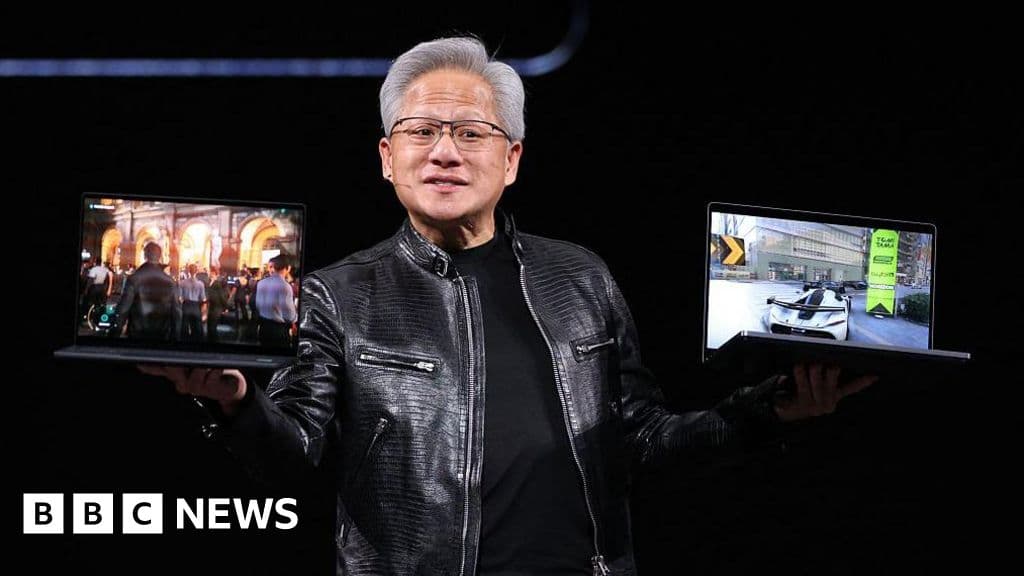
Nvidia's new RTX Spark chip aims to transform personal computing with AI, marking a significant shift in technology. Discover what this means for consumers.
BBC Business
The explosion of Blue Origin's New Glenn rocket raises significant concerns over NASA's lunar ambitions and the future of Amazon's satellite projects. Discover the implications.
BBC Science
Discover how Meta's lack of engagement on user bans raises critical concerns about accountability and transparency in social media governance.
BBC Technology