
Image: BBC World
The US House is set to vote on DHS funding amid travel chaos. Will it pass? Discover the implications for TSA agents and airport operations.
GlipzoIn a critical move, the U.S. House of Representatives is convening to deliberate on a funding bill for the Department of Homeland Security (DHS) amid escalating travel disruptions across the nation. This vote, planned for late Friday, seeks to allocate funds through May 22, but the situation is complicated by a recent Senate deal that was rejected by House Republicans.
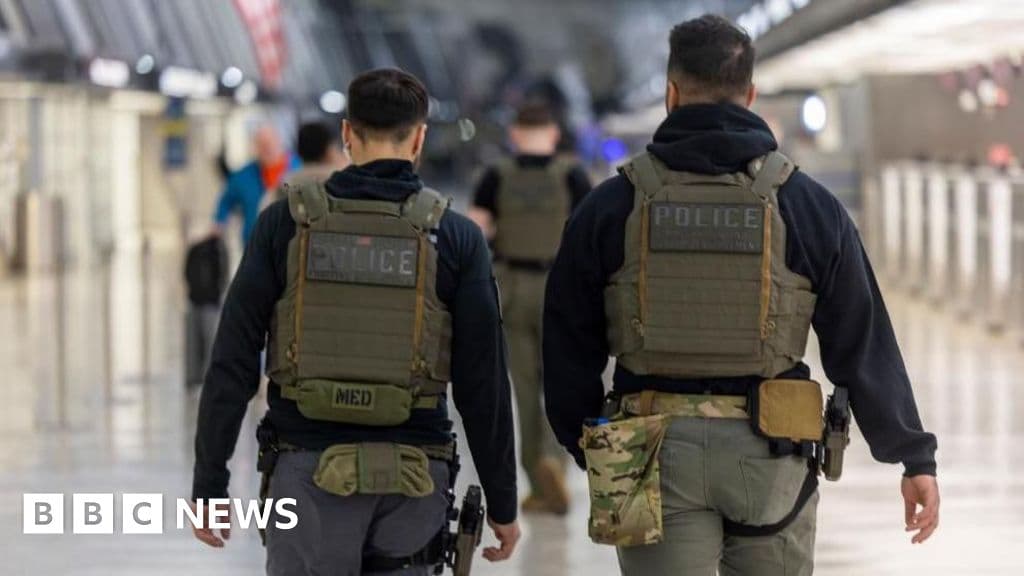
The funding crisis has led to significant delays at airports, with Transportation Security Administration (TSA) agents not receiving payment for over a month due to a stalemate in Congress. The impact has been felt nationwide, with travelers facing long lines and extended wait times at security checkpoints. Many TSA agents, frustrated by the lack of pay, have either called in sick or resigned, exacerbating the already dire situation.
The current legislative deadlock stems from disagreements over immigration reform. Democrats are unwilling to approve funding for DHS without substantial reforms related to Immigration and Customs Enforcement (ICE) and other immigration enforcement agencies. Senate Democrats, however, reached a consensus to pass a bill earlier on Friday, excluding funding for ICE and certain border protection measures.
House Republicans, led by Speaker Mike Johnson, are adamant that any funding legislation must include provisions for immigration enforcement and voter ID requirements. Johnson emphasized, "Republicans are not going to be any part of any effort to reopen our borders or to stop immigration enforcement."
In stark contrast, Senate Minority Leader Chuck Schumer has labeled the House's temporary funding measure as "dead on arrival," reinforcing the Democratic stance that they will not support any funding that lacks accountability measures for immigration enforcement. Schumer stated, "We’ve been clear from day one: Democrats will fund critical Homeland Security functions - but we will not give a blank check to Trump’s lawless and deadly immigration militia without reforms."
As Congress approaches a two-week recess, the prospects for timely DHS funding appear bleak. The department encompasses various critical agencies, including the TSA, Customs and Border Protection, Federal Emergency Management Agency (FEMA), and ICE, all of which are vital for maintaining national security and public safety.
Many airports have reported staggering delays, with only 30% to 50% of TSA checkpoints operational due to staff shortages. For instance, at Houston Airport, travelers have experienced wait times exceeding two hours just to clear security. Jim Szczesniak, director of aviation for the Houston Airport System, confirmed the dismal operating status of TSA checkpoints, leading to frustration among passengers.
In a bid to alleviate the ongoing crisis, President Donald Trump has taken the extraordinary step of signing an executive order aimed at ensuring TSA agents receive their due pay. While this move is designed to provide immediate relief to affected airport workers, it raises potential legal challenges as the U.S. Constitution assigns Congress the exclusive authority to manage federal spending.
Republican Senate Majority Leader John Thune criticized the need for Trump’s intervention, stating, "Trump should never have had to step in to rescue TSA workers and US air travel."
As the House prepares for the vote, all eyes are on the Senate, where a refusal to support the House’s proposal is anticipated. The outcome of this vote will determine the immediate future of airport operations and the funding of critical security personnel.
In conclusion, the unfolding situation highlights the critical intersection of politics and public safety, emphasizing the urgent need for bipartisan cooperation to resolve funding issues that could impede national security and disrupt traveler experiences across the United States. As the nation watches, the implications of this funding vote will resonate far beyond the airport terminals.
Why It Matters: The funding of the DHS is not only pivotal for airport security but also reflects broader issues of immigration policy and government accountability. The ongoing crisis could shape future legislation and public perceptions of government efficiency in managing essential services.

Tensions soar as the US and Iran engage in air strikes near the Strait of Hormuz, raising concerns over global oil supply and regional stability.
BBC World
Trump's international interventions face serious stalemates. What will this mean for U.S. foreign policy? Explore the critical challenges ahead.
Indian Express
Tehran denies resignation of President Masoud Pezeshkian amid claims of IRGC influence. What does this mean for Iran's political stability? Click to learn more!
Indian Express