

Image: The Hindu
The U.S. has eased oil sanctions on Venezuela to combat rising gas prices amid the Iran war. Discover the implications for global oil markets and U.S. politics.
GlipzoIn a significant policy shift, the U.S. Treasury Department announced on March 18, 2026, that it will allow American companies to engage in business with Petróleos de Venezuela S.A. (PDVSA), the state-owned oil and gas entity of Venezuela. This decision comes as the Trump administration seeks to alleviate soaring global oil prices in the wake of heightened tensions in the Iran war, where Iran has curtailed maritime traffic through the Strait of Hormuz, a crucial passage for global oil shipments.
This easing of sanctions marks a dramatic change from years of stringent restrictions aimed at isolating Venezuela's government and its pivotal oil sector. The Treasury's authorization permits PDVSA to sell Venezuelan oil directly to U.S. companies and on international markets. Such actions are anticipated to not only impact U.S. energy prices but also reshape the dynamics of the global oil market.
The backdrop of this policy adjustment is the alarming rise in oil prices triggered by Iran's aggressive maneuvers. The Strait of Hormuz is a critical chokepoint, responsible for transporting approximately 20% of the world’s oil. As Iranian forces halted traffic, global oil prices surged, leading to significant spikes at the pump in the United States. According to AAA, the average cost of regular gasoline has reached $3.84 per gallon, a substantial increase from $2.98 before the conflict escalated on February 28.
As the Republican administration grapples with rising fuel costs, which are adversely affecting consumers, the political stakes grow higher. With the 2026 elections approaching, concerns over living expenses and fuel affordability are particularly pressing for the GOP as they seek to maintain their control over Congress. Vice President J.D. Vance acknowledged the difficulties faced by American families, stating, "Gas prices are up and we know they're up. And we know that people are hurting because of it. We’re doing everything we can to ensure that they stay lower."
In tandem with the easing of sanctions, the White House has announced a 60-day waiver of the Jones Act, which mandates that goods transported between U.S. ports be carried on American-flagged vessels. This 1920s law has often been criticized for inflating shipping costs and, by extension, consumer prices. By temporarily lifting these restrictions, the administration aims to facilitate a more efficient flow of goods and potentially lower prices for consumers.
The Treasury’s new license aims to stimulate investment in Venezuela's beleaguered energy sector and is viewed as a dual benefit for both the U.S. and Venezuela. However, it is essential to note that while the sanctions are loosened, they are not completely lifted. The license allows transactions for companies that existed prior to January 29, 2025, but still imposes specific limitations.
Experts like Geoff Ramsey, a Latin America analyst at the Atlantic Council, suggest that, while the easing of sanctions could eventually lead to increased Venezuelan oil production, immediate effects on U.S. gas prices may be minimal. “We’re talking about 12 to 18 months before we see dramatic changes in Venezuelan output,” Ramsey remarked, indicating that the timeline for tangible benefits is longer than many might hope.
Despite the optimism surrounding the potential revival of Venezuelan oil production, Claudio Galimberti, chief economist at Rystad Energy, cautions that the current market conditions are highly volatile. He predicts that ongoing hostilities between the U.S., Israel, and Iran will continue for at least another two to three weeks, maintaining pressure on fuel prices. “As long as the strait remains shut, we're going to have a crisis,” Galimberti warned, emphasizing that until stability resumes, consumers should prepare for high and fluctuating prices.
The U.S. decision to relax sanctions on Venezuela occurs at a pivotal moment, as global energy markets face unprecedented challenges. With inflation already straining household budgets, the administration’s efforts to stabilize oil prices are critical not only for economic stability but also for political survival as the elections approach.
Moreover, this policy shift could redefine U.S.-Venezuela relations, especially in light of the recent military operations that ousted Venezuelan President Nicolás Maduro. As the U.S. positions itself to influence Venezuela's oil sector, the international implications of these actions will be closely monitored.
As the situation evolves, key factors to monitor include: - Venezuelan oil output: Will easing sanctions lead to a significant increase in production? - Iran’s military actions: How long will tensions in the Strait of Hormuz persist, and what will be their impact on oil supply? - Political repercussions: How will these changes affect the Republican Party's standing ahead of the midterm elections?
In conclusion, while the easing of sanctions offers a glimmer of hope for increased oil supplies, the road ahead is fraught with uncertainty. Stakeholders will be keenly observing how these strategic moves unfold in the coming months and their broader implications for global energy markets and U.S. domestic politics.
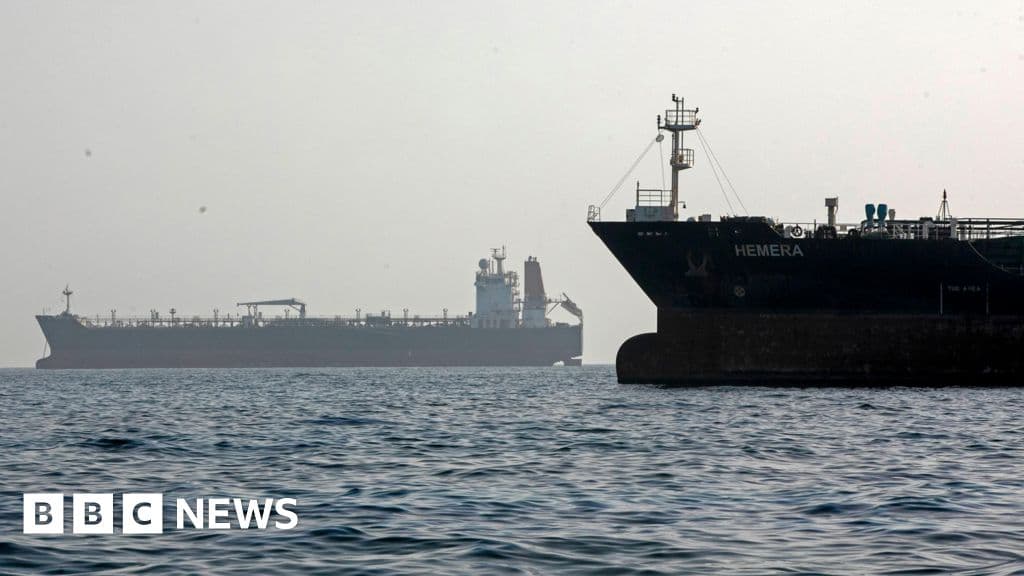
Tensions soar as the US and Iran engage in air strikes near the Strait of Hormuz, raising concerns over global oil supply and regional stability.
BBC World
Trump's international interventions face serious stalemates. What will this mean for U.S. foreign policy? Explore the critical challenges ahead.
Indian Express
Tehran denies resignation of President Masoud Pezeshkian amid claims of IRGC influence. What does this mean for Iran's political stability? Click to learn more!
Indian Express