

Image: The Guardian World
The UK government has decided to end the Global Health Workforce Programme, raising concerns about future pandemic preparedness and health inequalities.
GlipzoIn a surprising move, the UK government has decided to terminate its flagship health project, the Global Health Workforce Programme (GHWP), which has been instrumental in supporting healthcare initiatives across six African nations. This decision, attributed to significant aid cuts, raises concerns about the UK's commitment to global health and future pandemic preparedness. The announcement was made by the Foreign, Commonwealth and Development Office (FCDO), revealing that the program will officially conclude by the end of this month.
The GHWP was launched with the intent of bolstering health systems in countries such as Ghana, Kenya, Nigeria, Ethiopia, Malawi, and Somaliland. It has been characterized by UK officials as a critical component in safeguarding Britain against potential health crises. However, the recent announcement has sparked backlash from health advocates and experts who warn that this decision could have long-term repercussions on both local and global health initiatives.
Established in 2008, the Global Health Workforce Programme has consistently aimed to enhance healthcare training and development in low- and middle-income countries. The program's current three-year contract was expected to be renewed, following the pattern of previous iterations. According to Ben Simms, chief executive of Global Health Partnerships, this decision is a historic one that threatens the UK’s standing in global health efforts. He expressed grave concerns that the country may find it difficult to regain its influence in the realm of international health.
In a statement reflecting on the initiative's importance, former health minister Will Quince remarked: > “This funding aims to make a real difference in strengthening the performance of health systems in each of the participating countries, which will have a knock-on effect on boosting global pandemic preparedness and reducing health inequalities.”
One noteworthy project under the GHWP is the Power for the People Africa Trust, which focuses on training health staff to combat gender-based violence and lower rates of teenage pregnancies and HIV infections in Kenya’s Homa Bay county. According to Caren Okombo, a representative from the Trust, halting funding could reverse significant progress made in these areas, posing potential health risks that could extend beyond local borders, even affecting the UK population.
The decision to cut the GHWP aligns with the UK government’s broader strategy to reduce overseas aid funding from 0.5% to 0.3% of GDP, a move that has raised eyebrows among international development advocates. This change was originally announced by the Labour government last year, citing the need to increase military spending. This follows earlier reductions during Boris Johnson's administration, which lowered aid from 0.7%.
The closure of the GHWP was disclosed in a written response to a parliamentary inquiry by Sir Andrew Mitchell, a former development minister. In the statement, FCDO minister Chris Elmore confirmed that the program will cease operations by the end of March, emphasizing the need for the UK to adapt to a changing global landscape.
Elmore stated: > “The UK should be proud of the progress made in international development this century. But the world has changed, and so must we. With less money, we must make choices and focus on greater impact.”
In light of these funding cuts, Elmore assured that efforts would be made to ensure the sustainability of ongoing projects, asserting that the government remains committed to building resilient health systems in the affected countries. However, critics argue that the lack of sustained investment could undermine these efforts.
A recent report from the Independent Commission for Aid Impact (ICAI) has highlighted that the allocation of official development assistance budgets in recent years has not always been guided by strategic priorities or evidence supporting their effectiveness. This raises critical questions about the future of similar programs and the UK’s role in global health.
In response to the funding cuts, Global Health Partnerships issued a statement acknowledging the fiscal challenges facing the government. However, they underscored that reducing investment in healthcare workforce development in lower-income countries leads to dire human consequences, ultimately costing more in the long run. Partnerships, they noted, require not only goodwill but sustained investment and institutional commitment.
The decision to cut the GHWP is not just about budgetary constraints; it reflects a significant shift in the UK’s approach towards international development and health. As the world continues to grapple with health crises, such as the COVID-19 pandemic, the importance of investing in global health systems cannot be overstated.
Cutting funding for programs that bolster healthcare in vulnerable regions can have far-reaching implications, not only for those countries but for the UK as well, which relies on a stable global health environment.
As the GHWP prepares to close, all eyes will be on how the UK government plans to allocate its remaining overseas aid budget. Stakeholders will be watching for further announcements regarding new initiatives or funding for health programs. The global health community will be eager to see if the UK can maintain its commitment to international health collaboration or if this marks a turning point in its foreign aid strategy.
The ramifications of these cuts may extend beyond immediate funding issues, potentially impacting public health outcomes in both the UK and its partner nations. As we look ahead, it will be crucial to monitor the government's next steps and the broader implications for global health equity and safety.
Shocking findings from Nottingham's maternity unit reveal a toxic culture and alarming neglect. What can be done to improve care? Discover the details.
BBC Health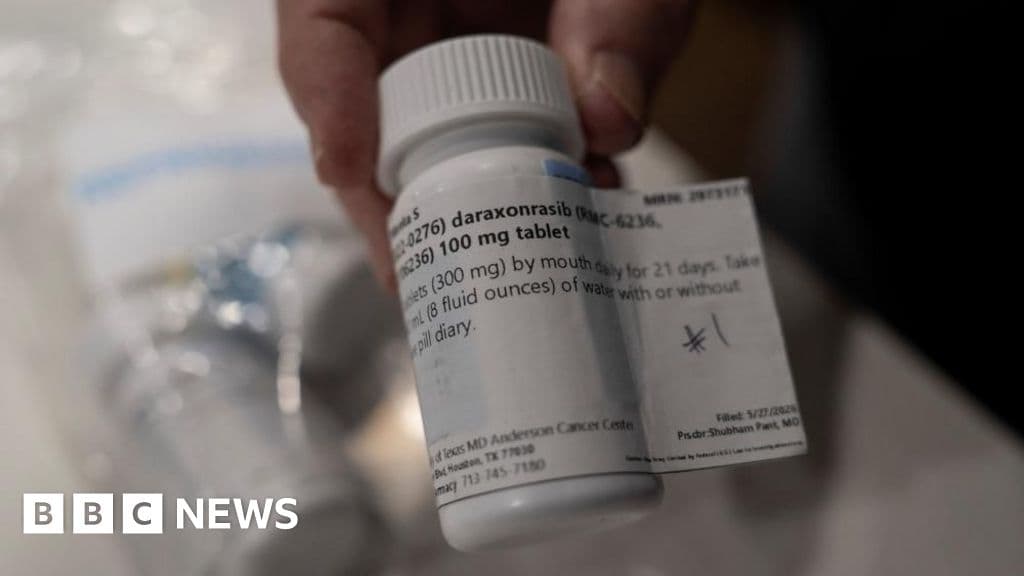
Discover how daraxonrasib, a new pill, is nearly doubling survival rates for pancreatic cancer patients, offering hope in a challenging battle against this deadly disease.
BBC Health
Waste companies propose a £5 deposit on vapes to encourage proper disposal and curb littering as the environmental impact of vapes increases.
BBC Business