
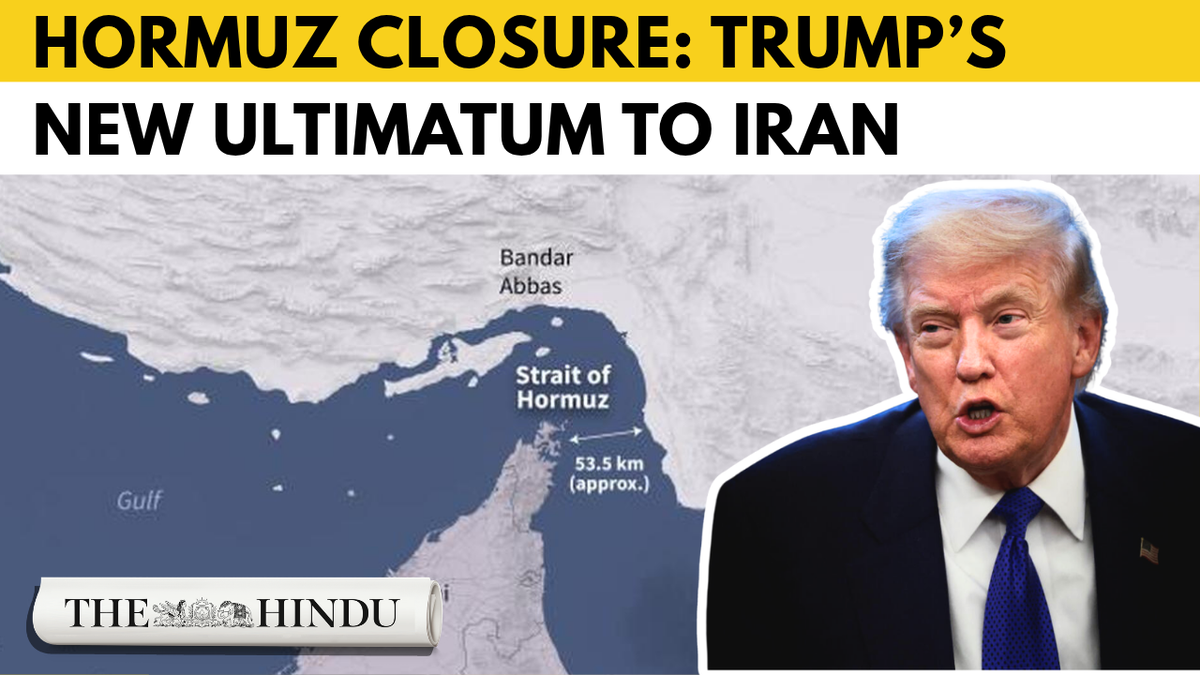
Image: The Hindu
Trump demands Iran reopen the Strait of Hormuz in 48 hours, threatening military action amid rising tensions over missile launches and regional conflicts.
GlipzoIn a dramatic escalation of tensions, U.S. President Donald Trump has issued a stark ultimatum to Iran, demanding the immediate reopening of the Strait of Hormuz within 48 hours. This warning comes amid rising hostilities following a series of U.S.-Israeli strikes that have seen Iran close off this critical maritime route, essential for global oil shipments. The Strait of Hormuz is a pivotal chokepoint through which around 20% of the world's oil passes, making its security crucial for international trade.
Trump's ultimatum highlights the fragile geopolitical situation in the Middle East, particularly as tensions have escalated with Iran's recent long-range missile launches and retaliatory actions against Israel. The threat of military action against Iranian power plants signals a shift in U.S. policy towards a more aggressive stance, aimed at preventing Iran from asserting its influence in the region.
The Strait of Hormuz has long been a flashpoint for conflict, and any disruption to its operations could have severe repercussions for global oil prices and security. Analysts suggest that the U.S. administration's hardline approach is intended to deter Iran from further military provocations and to reassure allies in the region, particularly Israel and Saudi Arabia.
The closure of the Strait comes in the wake of a series of military confrontations between Iran and Israel, exacerbated by ongoing tensions over Iran's nuclear program. Following recent strikes attributed to U.S. and Israeli forces, Iranian officials have vowed to respond militarily, indicating that the cycle of retaliation could spiral out of control.
Historically, the Strait of Hormuz has been the site of numerous confrontations, with both Iranian forces and U.S. naval ships frequently operating in close proximity. The potential for miscalculation remains high, especially with both sides on heightened alert.
Iran's government has remained defiant in the face of external pressure, claiming that it will not bow to threats from the United States. In response to Trump's ultimatum, Iranian officials have emphasized that any military action would be met with a robust response, potentially leading to wider regional conflict.
The closure impacts not only Iran but also global markets, particularly oil prices, which are sensitive to geopolitical tensions. Should Iran refuse to comply, the possibility of U.S. strikes could lead to a significant escalation, with far-reaching consequences for international trade and diplomacy.
This situation is critical not just for the United States and Iran but for the entire world. The Strait of Hormuz is a vital artery for oil transport, and instability in this region can lead to spikes in oil prices, affecting economies globally. The potential for military conflict could also draw in other nations, further complicating an already tense landscape.
Moreover, the U.S. response could set a precedent for how it engages with rogue states in the future. A decisive military action may embolden allies and deter adversaries, but it could also lead to unintended consequences, including retaliatory strikes against U.S. interests abroad.
As the 48-hour deadline looms, all eyes are on Iran’s response and the potential for U.S. military action. Observers will be looking for indications of Iran’s willingness to reopen the Strait, or whether it will stand firm in its defiance. Key factors to watch in the coming days include:
The coming days are crucial, as they could determine the trajectory of U.S.-Iran relations and the broader geopolitical landscape in the Middle East. Should military action occur, the implications could reverberate far beyond the region, affecting global diplomacy and economic stability.

Tensions soar as the US and Iran engage in air strikes near the Strait of Hormuz, raising concerns over global oil supply and regional stability.
BBC World
Trump's international interventions face serious stalemates. What will this mean for U.S. foreign policy? Explore the critical challenges ahead.
Indian Express
Tehran denies resignation of President Masoud Pezeshkian amid claims of IRGC influence. What does this mean for Iran's political stability? Click to learn more!
Indian Express