

Image: Mint (Business)
Trump claims the U.S. is 'totally destroying' Iran, escalating tensions amid military action and rising global energy prices.
GlipzoIn a provocative communication on Friday, President Donald Trump asserted that the United States is currently "totally destroying" Iran in a multitude of ways. This statement, shared on his Truth Social platform, was accompanied by a warning directed at Iran's leadership, stating: "Watch what happens to these deranged scumbags today."
Trump elaborated on his claims, stating, "Iran’s Navy is gone, their Air Force is no longer, missiles, drones, and everything else are being decimated, and their leaders have been wiped from the face of the earth." He emphasized the military superiority of the U.S., saying, "We have unparalleled firepower, unlimited ammunition, and plenty of time."
The comments come amid escalating military actions in the region. Shortly after Trump's post, U.S. and Israeli forces launched significant strikes against various targets within Iran, coinciding with Iran’s attacks on shipping and energy infrastructures in the Persian Gulf.
Following Trump's remarks, military tensions intensified as the U.S. and Israel conducted airstrikes on Iranian military sites. Israel reported hitting over 200 targets within Iran in just a 24-hour period. These targets included critical missile launchers, defense systems, and sites involved in weapons production.
In retaliation, Iran has been actively attacking oil and other infrastructure in the Gulf region. Reports indicate that Saudi Arabia successfully intercepted nearly 50 drones that were launched in multiple waves early on Friday morning.
Additionally, in Oman, two individuals tragically lost their lives when drones crashed in the industrial area of Sohar, as reported by the Oman News Agency. Sirens were activated in Bahrain to alert residents of incoming fire, while Dubai experienced disruptions due to debris from an intercepted drone, which caused a fire in an industrial zone and resulted in damage at the Dubai International Financial Center.
The backdrop to these events is the recent statement from Iran's Supreme Leader Ayatollah Mojtaba Khamenei, who declared that the nation would not shy away from avenging the deaths of its citizens. Khamenei also admonished Gulf Arab states for their reliance on U.S. military protection, labeling it a deceptive myth.
In parallel, French President Emmanuel Macron confirmed that a French soldier was killed in a drone attack near Irbil, located in Iraq’s northern Kurdish region. This incident forms part of a broader multinational counterterrorism operation involving French troops who are assisting local forces in combating Islamic State militants.
As military actions escalate, concerns about a potential energy crisis are mounting worldwide. The price of Brent crude oil, which serves as a global benchmark, remains elevated above $100 per barrel, reflecting the instability in the region. The conflict has led to fluctuations in oil prices, which have soared as high as $120 per barrel, marking a 40% increase since the initiation of hostilities on February 28.
The Strait of Hormuz, a crucial maritime passage through which 20% of the world's oil is transported, remains under Iran's influence, further exacerbating fears about energy security.
The escalating conflict between the U.S., Israel, and Iran marks a significant moment in international relations, with profound implications for global security and energy markets. President Trump’s assertive statements and the military actions that have followed underscore an increasingly volatile situation in the Middle East. As tensions continue to rise, the international community must closely monitor developments to understand their potential impact on global stability and energy supply.
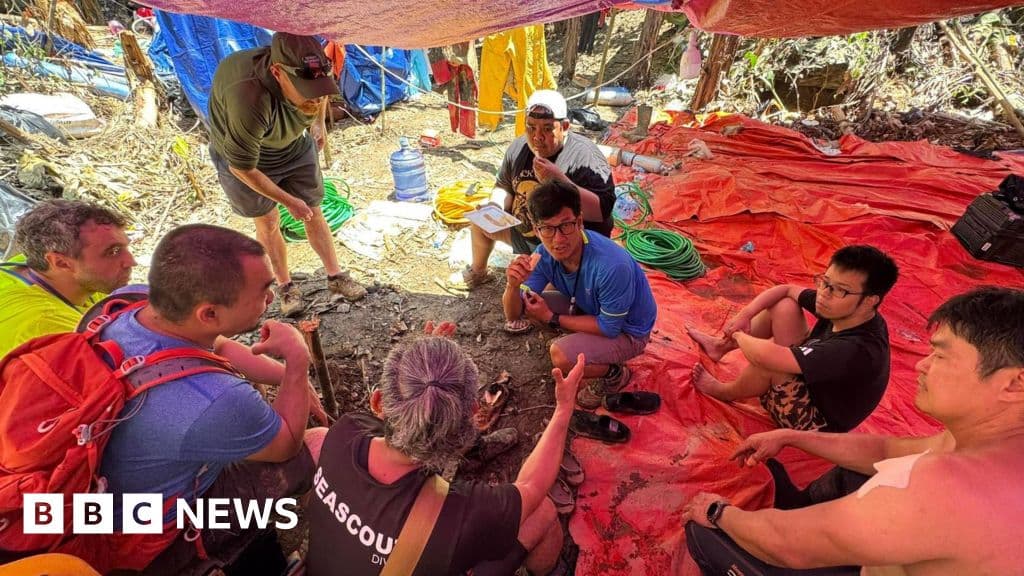
Survivors of the Laos cave rescue are aiding efforts to find the last two missing men trapped inside, sharing crucial insights for the search operation.
BBC World
A year after the tragic Air India crash, the Ali family reflects on grief, unanswered questions, and the enduring bonds of love in the face of loss.
BBC Business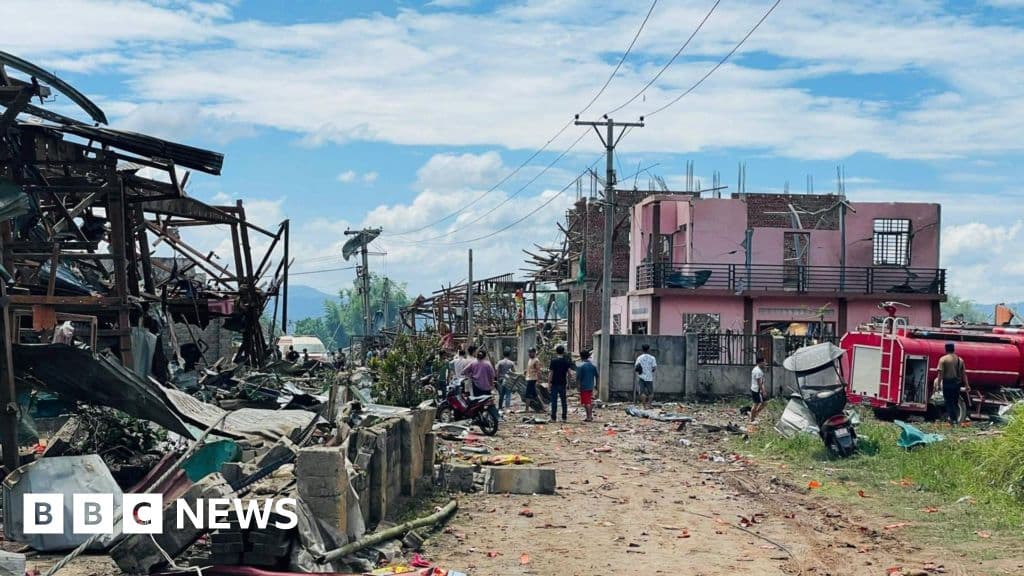
A devastating explosion in Myanmar's Kaung Tat village has killed at least 55 people, raising serious safety concerns and questions about civilian protection in conflict zones.
BBC World