
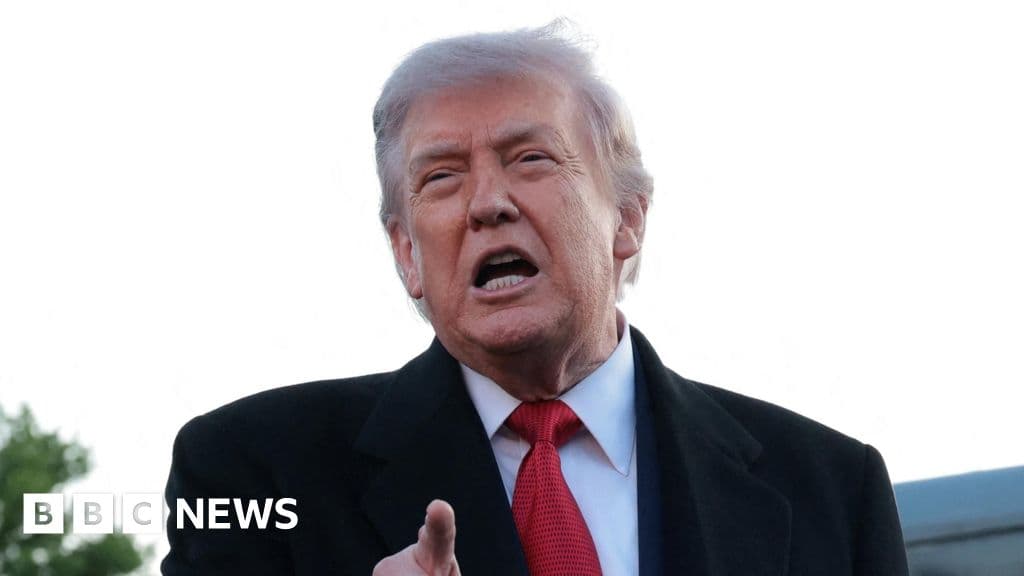
Image: BBC World
Tensions flare as Trump claims US-Iran ceasefire remains despite recent military exchanges in the Strait of Hormuz. What’s next for these nations?
GlipzoIn a dramatic turn of events, President Donald Trump asserted that a ceasefire remains intact between the United States and Iran following an exchange of fire late Thursday night. The situation erupted when both nations accused each other of initiating hostilities, leading to a dangerous escalation in the strategically vital Strait of Hormuz.
This flare-up comes just one day after Iran's foreign ministry indicated it was contemplating a U.S. proposal aimed at ending hostilities, raising questions about the future of diplomatic negotiations. Reports emerged from Iranian state media detailing explosions in the Strait, describing them as a confrontation with an “enemy.” Meanwhile, local media in Tehran reported hearing explosions, heightening concerns about an impending conflict.
Iran's military command stated that U.S. forces targeted an Iranian oil tanker as well as another vessel approaching the strait. They claimed that aerial attacks had struck coastal areas, including Bandar Khamir, Sirik, and Qeshm Island. In retaliation, Iranian forces asserted they launched attacks on U.S. Navy destroyers, claiming to have inflicted “significant damage” and accusing the U.S. of violating the ceasefire agreement.
Conversely, the U.S. Central Command (Centcom) denounced these Iranian attacks as “unprovoked.” Centcom reported that multiple missiles, drones, and small boats were launched at U.S. Navy vessels, prompting a decisive U.S. response. The command stated that it had neutralized incoming threats and targeted Iranian military installations responsible for the assaults, including missile sites and reconnaissance facilities. Their statement emphasized a commitment to protecting American forces while avoiding further escalation.
In a post on Truth Social, Trump boasted about the U.S. military’s effectiveness, noting that multiple Iranian boats were destroyed, likening their descent into the ocean to “a butterfly dropping to its grave.” He emphasized that “great damage” had been inflicted on the Iranian attackers, issuing a stark warning regarding future military actions if Iran fails to secure a peace deal promptly.
Trump stated, “Just like we knocked them out today, we’ll knock them out a lot harder, and a lot more violently, in the future, if they don’t get their Deal signed, FAST!” This rhetoric underscores the administration's hardline stance towards Iran amid rising tensions.
Despite the heated exchanges, there are ongoing diplomatic efforts. An Israeli source confirmed to the BBC that there was “no Israeli involvement” in the recent hostilities. The increased tensions unfold despite Trump's previous assurances that the conflict with Iran would conclude swiftly.
Reports from Axios suggest that the White House may be nearing a 14-point memorandum of understanding with Iran, which could lay the groundwork for more comprehensive nuclear negotiations. This development follows statements from an Iranian foreign ministry spokesperson, who indicated that Tehran was considering the latest U.S. proposal and would communicate its views through Pakistani mediators.
Pakistan's foreign minister expressed his country’s commitment to transforming the current ceasefire into a permanent resolution to the ongoing conflict. However, skepticism remains within Iranian political circles. A senior Iranian parliament member dismissed the proposed memorandum as merely a “wish list,” highlighting the complexities surrounding potential agreements.
Both nations have issued warnings of escalating violence should their respective conditions for a peace deal remain unmet. Trump previously stated that if Iran did not agree to a deal, “the bombing starts, and it will be, sadly, at a much higher level and intensity than it was before.” Such statements signal a precarious balance between diplomacy and military action.
As tensions continue to simmer, all eyes are on the potential for further escalation or diplomatic breakthroughs. The recent military exchanges have raised the stakes significantly, and the international community is watching closely. Iran's parliamentary spokesman, Ebrahim Rezaei, declared that Iran has “its finger on the trigger,” warning of a severe response if the U.S. does not concede to necessary conditions for a peace agreement.
With the specter of military confrontation looming, the next steps from both the U.S. and Iran will be crucial in determining whether a more peaceful resolution can be achieved or if the situation will spiral into further conflict. The upcoming days and weeks will be critical in shaping the geopolitical landscape of the region, as both nations navigate through a complex web of diplomatic relations, military readiness, and national interests.
In summary, the ongoing exchanges and military posturing between the U.S. and Iran not only threaten regional stability but also hold significant implications for international relations. The world watches as both parties grapple with their next moves in a high-stakes game of diplomacy and defense.

Survivors of the Laos cave rescue are aiding efforts to find the last two missing men trapped inside, sharing crucial insights for the search operation.
BBC World
A year after the tragic Air India crash, the Ali family reflects on grief, unanswered questions, and the enduring bonds of love in the face of loss.
BBC Business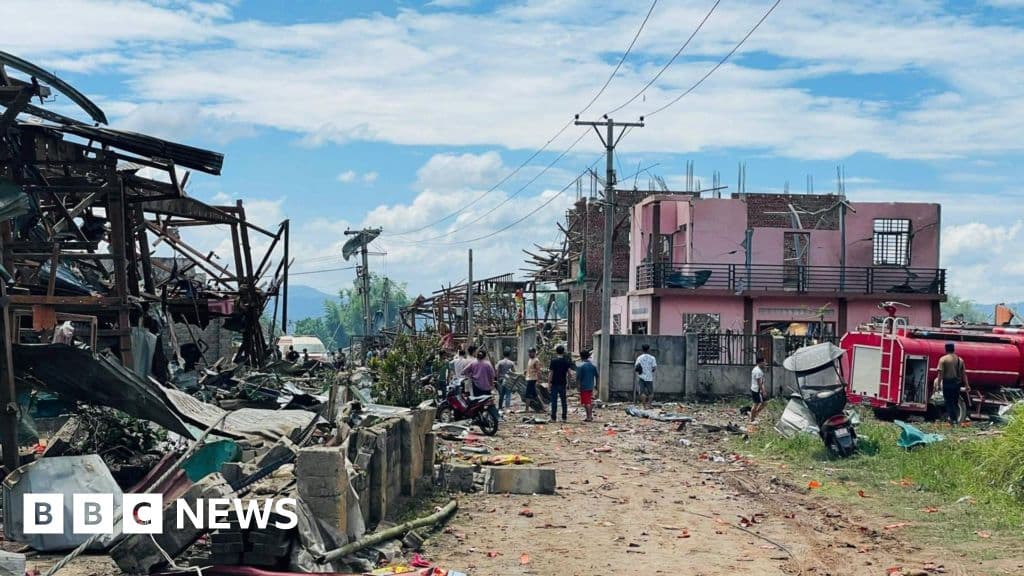
A devastating explosion in Myanmar's Kaung Tat village has killed at least 55 people, raising serious safety concerns and questions about civilian protection in conflict zones.
BBC World