
Image: BBC Business
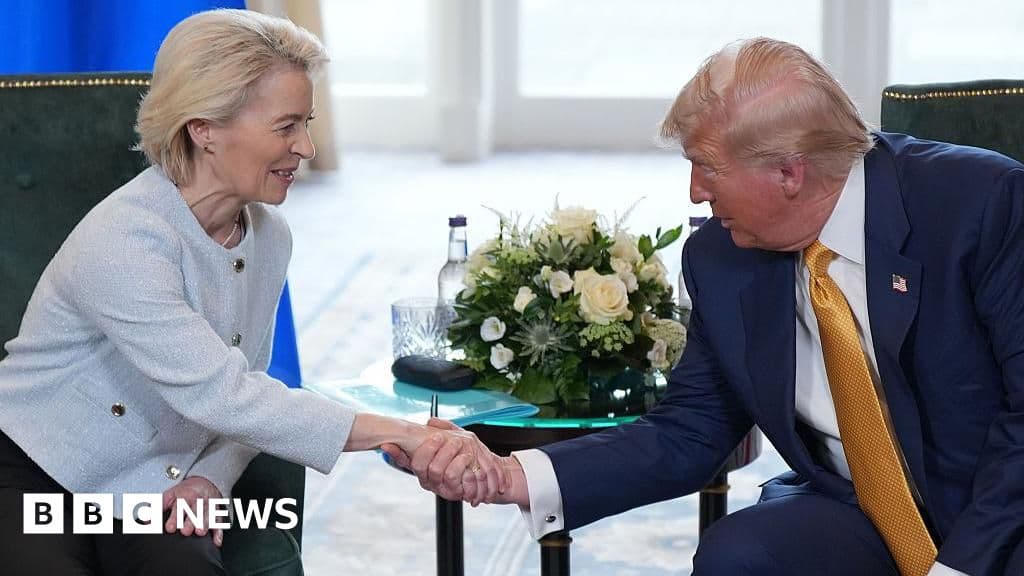
Trump escalates trade tensions by raising EU car tariffs to 25%. What does this mean for US-EU relations? Find out how it could impact the economy.
GlipzoIn a surprising escalation of trade tensions, Donald Trump revealed plans to increase tariffs on cars and trucks imported from the European Union to 25%. This announcement, made on November 3, 2023, through a post on Truth Social, has raised eyebrows and sparked concerns about the future of transatlantic trade relations.
Trump accused the EU of “not complying with our fully agreed to trade deal,” although he did not elaborate on the specifics of these alleged violations. He stated, “I am pleased to announce that… next week I will be increasing Tariffs charged to the European Union for Cars and Trucks.” This move signals a significant shift in the ongoing negotiations and could have far-reaching implications for both economies.
In response to Trump’s announcement, the European Commission made it clear that they would “keep our options open to protect EU interests.” The Commission emphasized its commitment to adhering to trade agreements but sought further clarity from the U.S. regarding its obligations. This situation highlights the delicate balance of international trade, particularly in the automotive sector, which is vital to the EU economy.
The decision to target the automotive industry is particularly provocative, given that car manufacturing constitutes a substantial part of Europe’s economic landscape. This tariff hike comes less than a year after the US and the EU reached a deal at Trump’s Turnberry golf course in Scotland, which initially set tariffs on most European goods at 15%. This previous agreement was seen as a reprieve from the 30% tariffs Trump had previously threatened.
In the months following the initial agreement, relations worsened, particularly after Trump made controversial remarks about annexing Greenland, which is a self-governing territory of Denmark. The European Parliament’s approval of the trade deal was delayed, reflecting the growing dissatisfaction with the US administration's approach.
After the eventual approval in March, a clause was added that allowed the EU to suspend the agreement if the United States was found to undermine its objectives or engage in economic coercion. This has created a precarious situation for both parties, as ongoing disputes over steel and aluminum tariffs contribute to the tension.
In his announcement, Trump urged European automakers to consider relocating production to the United States, promising that there would be “NO TARIFF” on vehicles manufactured domestically. He highlighted ongoing investments in US car and truck plants, claiming it represents “a record in the history of car and truck manufacturing.”
Trump’s push for local production aligns with his broader economic strategy of prioritizing American jobs and industries. He stated, “There has never been anything like what is happening in America today,” implying that the current manufacturing renaissance is a direct result of his administration’s policies.
The response from European leaders has been swift and critical. Bernd Lange, the chair of the European Parliament's international trade committee, labeled Trump's behavior as “unacceptable” and questioned the reliability of the US as a trading partner. He dismissed Trump’s claims that the EU was not fulfilling its obligations and noted that the European Parliament was actively working on legislation to finalize trade agreements despite the ongoing tensions.
Lange further pointed out that the US has “repeatedly breached the agreement” by imposing tariffs on steel and aluminum products, straining the relationship further.
As both sides brace for the implications of Trump's tariff hike, the future of US-EU trade relations remains uncertain. Observers are keenly watching how the EU will respond to these new tariffs and what measures it may take to protect its economic interests.
As these developments unfold, both businesses and consumers should stay informed, as the ramifications of these trade tensions will likely influence the automotive market, prices, and even job availability in both regions. The situation remains fluid, and it will be crucial to monitor the responses from both sides in the coming weeks and months.

Commercial LPG prices have risen again, with increases of ₹42 in Delhi and ₹53.50 in Kolkata impacting businesses and consumers alike. Find out more.
Indian Express
Discover how a tragic coal mine explosion in Shanxi, China, reveals ongoing safety concerns in the industry amidst a push for green energy.
BBC Business
Montek Singh Ahluwalia highlights key economic challenges for India, emphasizing the need for a strategic approach to balance payments and investment.
Indian Express