
Image: The Hindu
Japan's PM Takaichi meets Trump to strengthen ties and discuss Iran amid rising tensions in the Strait of Hormuz and a major nuclear reactor deal.
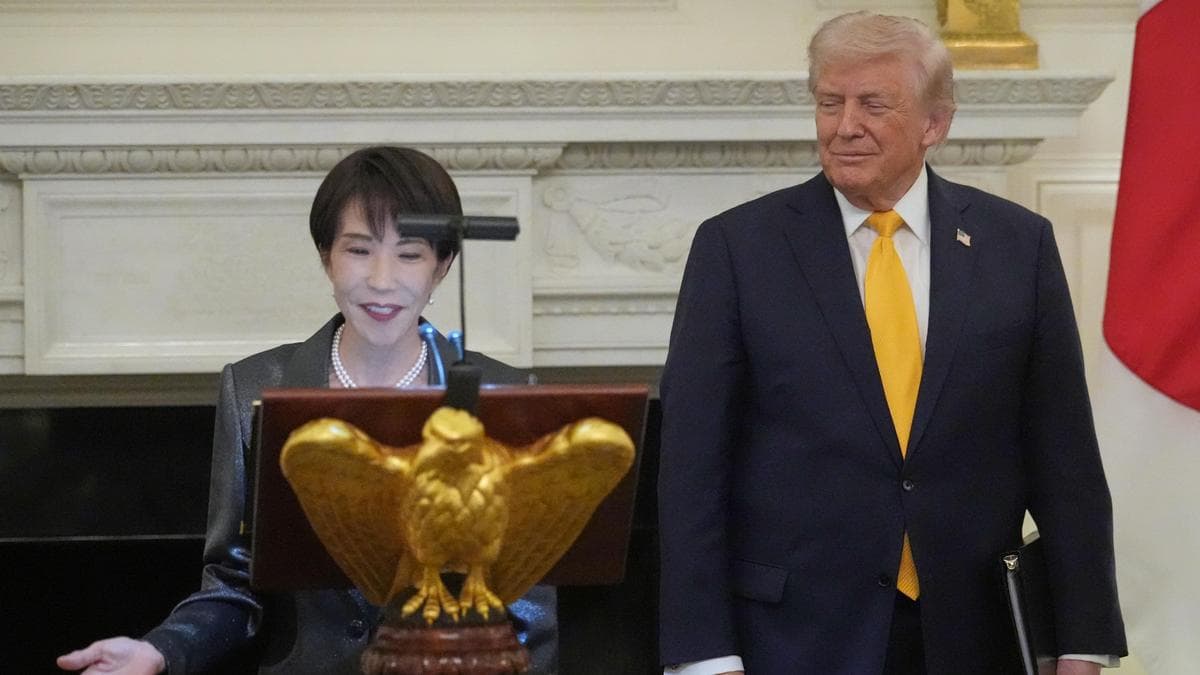
GlipzoOn March 19, 2026, Japanese Prime Minister Sanae Takaichi held a significant meeting with President Donald Trump at the White House. This encounter comes at a time of escalating tensions in the Strait of Hormuz, a crucial maritime route for global oil shipments. Takaichi's visit aimed to reaffirm Japan's alliance with the U.S., especially as Trump expressed dissatisfaction over Japan's delayed participation in efforts to secure the strait.
During their dinner and discussions, Takaichi emphasized Japan's longstanding opposition to Iran’s nuclear ambitions. She highlighted that despite the current security challenges in the Middle East, she believes that Trump is uniquely positioned to foster global peace. Takaichi stated, “Even against that backdrop, I firmly believe that it is only you, Donald, who can achieve peace across the world.” This remark underscores Japan's reliance on U.S. leadership in navigating international conflicts.
However, the meeting was not without its awkward moments. During a public appearance, Trump addressed reporters and made a controversial joke referencing Japan’s attack on Pearl Harbor in 1941. In response to a question about the lack of advance notice to allies regarding military actions in Iran, Trump quipped, “We didn’t tell anybody about it because we wanted surprise. Who knows better about surprise than Japan? Why didn’t you tell me about Pearl Harbor, OK?” This comment appeared to unsettle Takaichi, who visibly reacted to the historical reference.
The backdrop of this conversation includes a joint statement released by Takaichi along with leaders from five European nations, urging Iran to cease attacks threatening commercial shipping in the Strait of Hormuz. The statement reflects a unified stance among these nations, emphasizing their readiness to ensure the safety of maritime traffic through this vital corridor.
As Japan grapples with its role in regional security, Trump's administration is pressuring allies to contribute more significantly to military efforts in the region. He noted that Japan's economy heavily relies on oil that travels through the Strait of Hormuz, stating, “That’s a big reason to step up.” During their discussions, Trump reiterated that he expects Japan to enhance its support for U.S. initiatives, particularly in the context of the ongoing conflict with Iran.
The Prime Minister's visit was positioned as a key opportunity to strengthen ties before Trump embarks on a trip to China. However, ongoing complications with the war in Iran and the urgent calls for Japan's involvement have necessitated a reassessment of diplomatic priorities.
In addition to discussions about Iran, Takaichi and Trump are expected to unveil a $40 billion nuclear reactor deal. This deal, which aims to bolster energy cooperation between the two nations, signifies Japan's commitment to enhancing its energy security, particularly in light of its dependence on foreign oil and gas supplies.
However, the timing of this announcement raises questions about Japan's support amid military tensions. The complexities of balancing peace efforts while engaging in a lucrative energy alliance will be crucial as both countries navigate their geopolitical landscapes.
The meeting between Takaichi and Trump is a pivotal moment for Japan's foreign policy. Here’s why it matters: - Strengthening Alliances: Japan's commitment to reaffirming its alliance with the U.S. reflects the importance of unity among allies in facing international threats. - Navigating Tensions: The historical context of U.S.-Japan relations adds layers of complexity, particularly when discussing military actions and cooperation. - Energy Security and Diplomacy: The impending nuclear reactor deal highlights Japan's focus on securing energy resources while balancing international relations.
As both nations move forward, the implications of this meeting will likely shape future diplomatic interactions. The ongoing conflict in Iran and Japan's role in regional stability will be key areas to watch.
In the coming weeks, observers should pay attention to: - Japan's Response to U.S. Calls for More Support: As Trump continues to push for increased military cooperation, Japan's response will be critical in determining the future of U.S.-Japan relations. - Developments in the Strait of Hormuz: Any changes in security dynamics in this region could influence Japan's strategic decisions and its economic interests. - Progress on the Nuclear Reactor Deal: The announcement of the nuclear reactor agreement will likely lead to discussions about energy independence and cooperation, impacting Japan's future energy policies.
In summary, Takaichi’s meeting with Trump serves as a crucial juncture for Japan to redefine its role in international security while ensuring its economic interests are protected. The unfolding events will be watched closely as both countries navigate these complex challenges together.

Tensions soar as the US and Iran engage in air strikes near the Strait of Hormuz, raising concerns over global oil supply and regional stability.
BBC World
Trump's international interventions face serious stalemates. What will this mean for U.S. foreign policy? Explore the critical challenges ahead.
Indian Express
Tehran denies resignation of President Masoud Pezeshkian amid claims of IRGC influence. What does this mean for Iran's political stability? Click to learn more!
Indian Express