
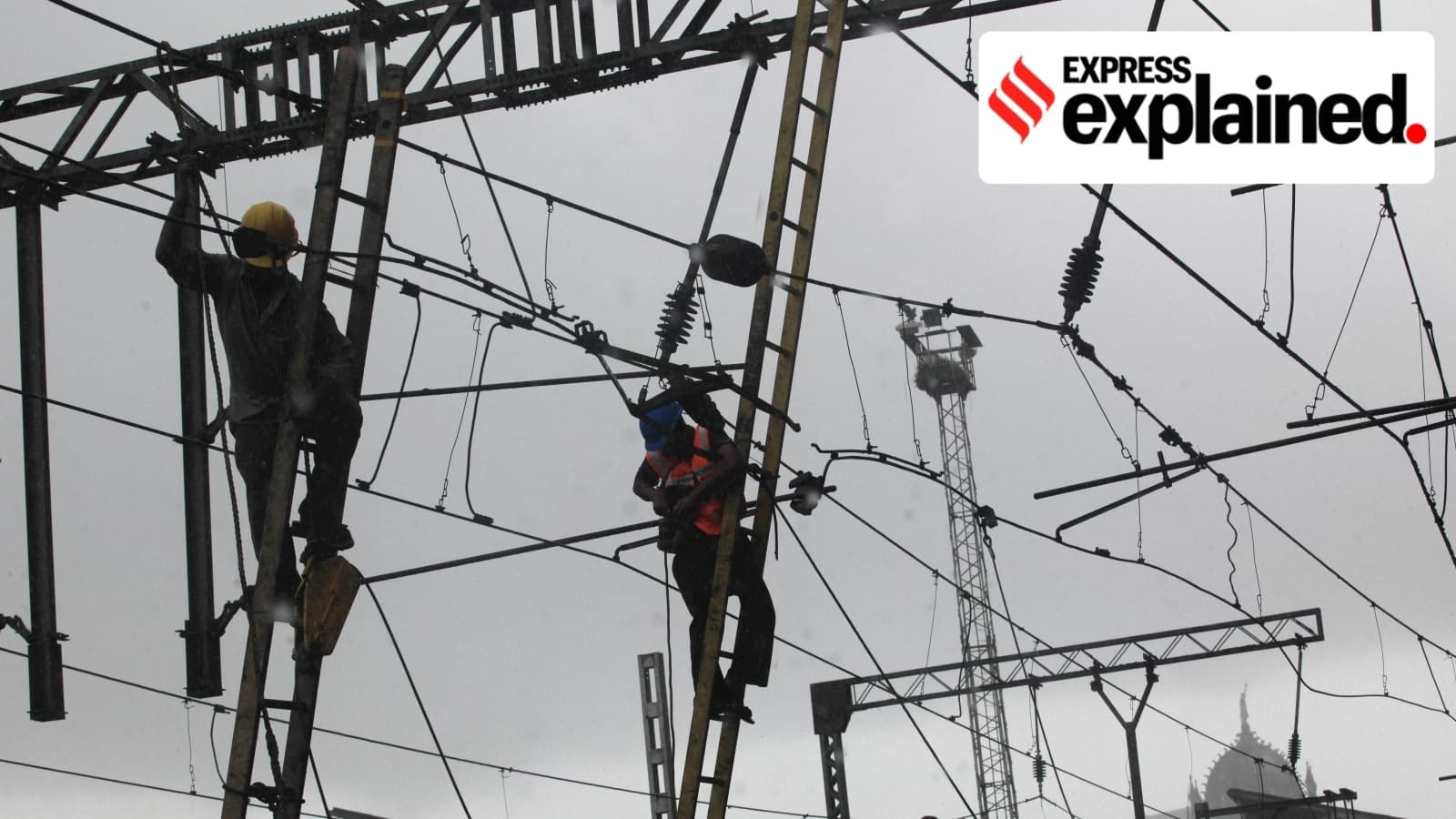
Image: Indian Express
The Supreme Court's ruling against Indian Railways' deemed licensee status could lead to soaring electricity costs and financial instability. What’s next?
GlipzoIn a significant development for the Indian Railways, the Supreme Court has recently overturned its “deemed licensee” status, a designation that allowed the Railways to purchase electricity at significantly reduced rates. This ruling comes at a precarious time when the Railways are already grappling with financial strains. With a projected expenditure of Rs 32,378 crore for the fiscal year 2024-25, the implications of this decision could be profound, especially as the Railways is the largest consumer of electricity in India, primarily for operating its electrified locomotives.
The consequences of the Supreme Court's order, announced on May 8, 2024, could lead to a staggering 30% increase in traction energy costs, according to a letter from the Railway Board dated May 15. This rise follows an already pressing situation characterized by an 11.6% increase in ordinary working expenses and a 9.1% rise in pension costs as reported in April. Furthermore, the freight operations, which account for 65% of the Railways’ revenue, have dipped by 5%, exacerbating the financial strain.
The operating ratio, a critical indicator of financial health in the Railways, has been a concern for years, typically remaining above 98%. This high ratio signifies that for every Rs 100 earned, the Railways spends more than Rs 98. Such a scenario indicates a precarious financial footing, and the recent developments could further worsen this ratio, limiting the Railways' capacity to invest in infrastructure improvements or service enhancements.
To fully grasp the implications of this ruling, it's essential to understand what it means to be a deemed distribution licensee. Essentially, this status allows an entity to function like a power distribution company, managing its own electricity distribution network rather than merely consuming electricity.
Consumers typically have two avenues to procure electricity: - From the local distribution licensee: This option often comes with higher costs due to surcharges. - Through open access: This requires the payment of two surcharges: - Cross-subsidy surcharge - Additional surcharge These fees are designed to balance the financial support provided to specific consumer categories, such as farmers and low-income households.
The Railways had argued that its extensive electricity distribution network justified its status as a deemed licensee. This classification allowed the organization to bypass the surcharges and procure electricity more effectively since November 2015, following a favorable order from the Central Electricity Regulatory Commission (CERC).
Initially, the Railways did not prioritize its deemed licensee status, primarily because it was heavily reliant on diesel locomotives—the largest consumer of diesel fuel in the country. In the fiscal year 2016-17, the Railways consumed nearly 287 crore liters of diesel, as only 40% of its broad gauge network was electrified at that time. However, with a strategic push for electrification, the Railways began to transition towards electric locomotives. By 2024-25, diesel usage had plummeted by 62%, and a remarkable 99.6% of the tracks are now electrified.
In light of this transition, the Railways sought the deemed licensee status to facilitate electricity access without the burden of surcharges. However, this move faced significant opposition from various distribution companies and State Electricity Regulatory Commissions (SERCs), with five out of eight SERCs asserting that the Railways did not meet the criteria for such status.
The legal saga culminated on February 12, 2024, when the Appellate Tribunal for Electricity ruled against the Railways, stating it did not qualify as a deemed licensee. Consequently, the Railways would now be liable for the surcharges like any other consumer. This ruling was subsequently upheld by the Supreme Court, effectively stripping the Railways of its advantageous status.
This ruling not only has immediate financial implications for the Railways but could also set a precedent for other public utilities seeking similar exemptions. The financial stress faced by the Railways could lead to a ripple effect, potentially impacting service delivery, infrastructure projects, and even employee benefits.
As the Indian Railways grapples with these challenges, several key areas will be critical to monitor: - Financial Strategies: How will the Railways adjust its budget to accommodate the potential surge in electricity costs? - Operational Efficiency: Will there be further efforts to increase electrification and reduce dependency on costly diesel? - Revenue Generation: How will the Railways adapt its freight operations to recover from the current decline? - Policy Responses: Will there be any government interventions to assist the Railways in navigating this financial turbulence?
In conclusion, the Supreme Court's decision poses a formidable challenge to the Indian Railways, and how it responds will shape the future of one of the country's most crucial transportation networks.

Commercial LPG prices have risen again, with increases of ₹42 in Delhi and ₹53.50 in Kolkata impacting businesses and consumers alike. Find out more.
Indian Express
Discover how a tragic coal mine explosion in Shanxi, China, reveals ongoing safety concerns in the industry amidst a push for green energy.
BBC Business
Montek Singh Ahluwalia highlights key economic challenges for India, emphasizing the need for a strategic approach to balance payments and investment.
Indian Express