
Image: BBC Business
Rishi Sunak warns that AI is reshaping the job market for youth, urging tax reforms to incentivize hiring while supporting the transformative tech landscape.
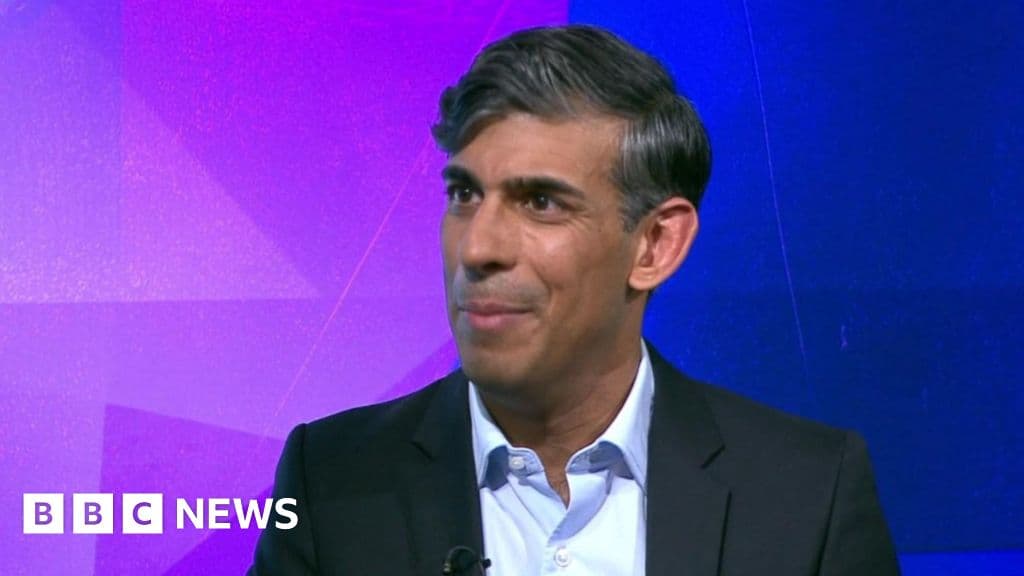
GlipzoIn a recent interview with the BBC, Rishi Sunak, the former Prime Minister of the United Kingdom, expressed alarming concerns about the effect of artificial intelligence (AI) on job opportunities for young people. Sunak, who now serves as an advisor for both the AI firm Anthropic and Microsoft, stated that the rising usage of AI technology is significantly flattening the jobs market for recent graduates and entry-level workers.
Sunak emphasized that while he is optimistic about AI's potential to transform industries, there are valid worries from young job seekers. He revealed that many corporate leaders have privately acknowledged the challenges young people face in securing employment due to advancements in AI technology. “There are reasons to be worried and think about the future. But we are able to do something about this,” Sunak remarked, highlighting the urgency of addressing this issue.
To combat the challenges posed by AI, Sunak proposed a radical shift in the tax structure, suggesting the abolition of National Insurance as a means to incentivize hiring. He advocates for a gradual transition towards taxing corporate profits instead, a move he believes would be facilitated by increased productivity as AI becomes more integrated into business practices.
Sunak specifically noted that sectors such as law, accountancy, and creative industries are particularly affected by these changes, making it increasingly difficult for young talent to enter the workforce. He referenced conversations with CEOs who indicate that “flat is the new up,” suggesting that companies feel they can sustain growth without significantly increasing their workforce by leveraging AI.
The former Chancellor voiced the need to ensure that AI is utilized in a manner that enhances job performance rather than replacing human workers. “We should be thinking about, well, how do we tip the balance in favour of AI being used in that positive way… to help people do their jobs better,” he stated.
Sunak cautioned that the implications of AI on employment could differ from past technological revolutions, urging countries to reassess their revenue models as they may collect less from employment taxes in the future. This proactive approach aims to redirect the economic landscape towards a more favorable outcome for young workers.
Rishi Sunak's dedication to technology regulation was evident during his time as Prime Minister, where he prioritized setting up an AI safety summit in 2023. His recent advisory roles at Anthropic and Microsoft, alongside his position as a senior advisor at Goldman Sachs, place him at the forefront of discussions surrounding AI's future.
In a notable development earlier this month, Anthropic unveiled its latest AI model, Claude Mythos, which reportedly excels in certain cybersecurity tasks, leading to heightened scrutiny from regulators and financial institutions regarding its potential risks. Sunak underscored the importance of independent evaluations in AI development, stating, “We shouldn't rely on companies to mark their own homework.” He credited the UK's AI Security Institute, established during his premiership, for being the first to assess Mythos' capabilities.
In a show of bipartisan cooperation, Sunak recently teamed up with David Lammy, Labour's deputy prime minister, to promote investment in the UK tech sector during an AI summit. He expressed his belief in the concept of “Londonmaxxing” and “Britmaxxing,” which reflects the wave of significant investments flowing into the UK tech industry.
“We are an AI superpower any which way you look at it,” Sunak asserted, expressing confidence in the UK’s potential to lead globally in AI utilization. He highlighted the presence of major companies like DeepMind, Anthropic, and OpenAI in Britain, affirming the country’s stance as a hub for technological innovation.
As the job market continues to evolve in the wake of AI advancements, the emphasis on creating policies that encourage hiring and support young workers is crucial. The conversation initiated by Rishi Sunak highlights a significant crossroads where the future of work will be shaped by the balance between technology and employment.
Moving forward, it will be essential to monitor how governments respond to the challenges posed by AI, including potential tax reforms and workforce strategies that prioritize human employment alongside technological growth. The ongoing dialogue around the role of AI in various sectors will likely intensify, prompting further action from policymakers and business leaders alike.
In conclusion, as the landscape of work transforms, the call for a thoughtful approach to integrating AI while safeguarding job opportunities for the youth remains more pertinent than ever. The outcome of these discussions will determine not only the future of employment for young people in the UK but potentially shape global standards for AI deployment and labor market dynamics.

Tensions soar as the US and Iran engage in air strikes near the Strait of Hormuz, raising concerns over global oil supply and regional stability.
BBC World
Trump's international interventions face serious stalemates. What will this mean for U.S. foreign policy? Explore the critical challenges ahead.
Indian Express
Tehran denies resignation of President Masoud Pezeshkian amid claims of IRGC influence. What does this mean for Iran's political stability? Click to learn more!
Indian Express