
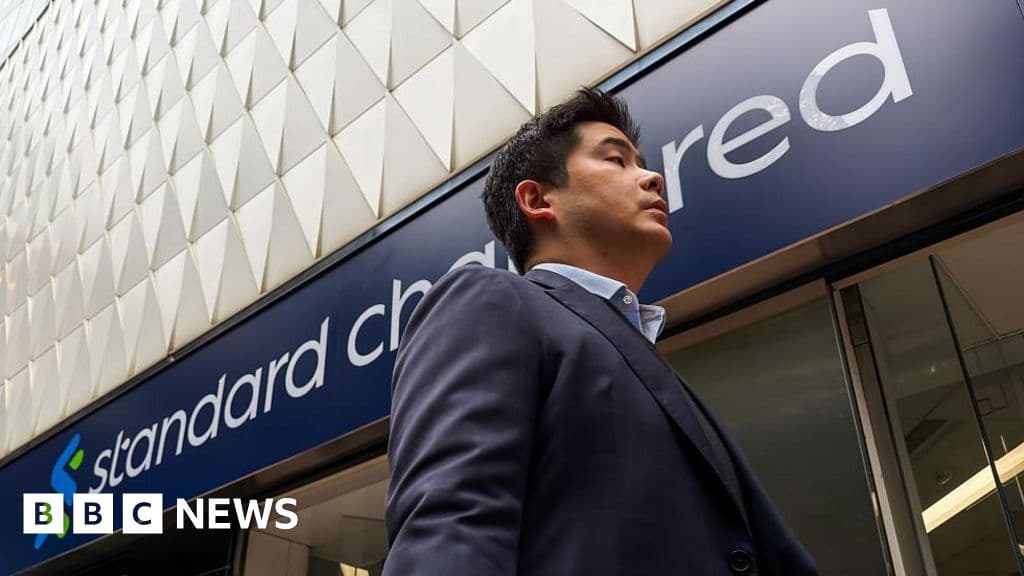
Image: BBC Business
Standard Chartered plans to cut 7,800 jobs by 2030 as AI adoption rises, reflecting broader trends in the finance and tech industries. What’s next?
GlipzoIn a significant shift towards automation, Standard Chartered, the UK-based banking giant, has revealed plans to eliminate 7,800 jobs, representing over 15% of its back-office workforce by 2030. This decision reflects a growing trend among major corporations to leverage artificial intelligence (AI) to enhance operational efficiency and profitability.
The bank's announcement highlights a strategic pivot under the leadership of CEO Bill Winters, who aims to harness automation, advanced analytics, and AI to streamline processes. The impact of this decision is expected to resonate across the financial sector, as companies globally adapt to technological advancements. Standard Chartered has emphasized its commitment to transitioning affected employees into other roles within the organization, although specific details regarding the locations of the job cuts remain undisclosed. The firm operates substantial back-office functions in countries such as India, China, Malaysia, and Poland.
Standard Chartered's move underscores a larger trend within the financial services industry as firms increasingly adopt AI technologies to replace tasks traditionally performed by humans. The integration of these tools aims to improve decision-making processes, enhance client services, and boost internal efficiency. In a statement, the bank expressed its commitment to scaling practical AI applications, indicating that the adoption of these technologies is not just a temporary response but a cornerstone of its long-term strategy.
This trend is not isolated to Standard Chartered. In February, Singapore's largest bank, DBS, announced plans to reduce its workforce by around 4,000 contract and temporary roles over the next three years, citing similar motivations to leverage AI and automation. This pattern of job reductions, particularly in back-office operations, is likely to continue as the industry adapts to technological advancements.
The ramifications of AI adoption in banking extend beyond just financial institutions. Many technology workers and recent graduates are bracing for a wave of job losses as companies streamline their operations. The tech industry, which is investing heavily in developing AI tools and infrastructure, has already seen significant layoffs this year. Notably, Meta, the parent company of Facebook, announced in April that it would downsize its workforce by 10%, equating to about 8,000 jobs, while simultaneously ramping up investments in AI projects.
Additionally, Amazon revealed in January that it would let go of over 30,000 employees, and Oracle followed suit with layoffs affecting more than 10,000 workers. These developments indicate a broader pattern of workforce reductions across various sectors as businesses prioritize automation and AI technologies.
The significant job cuts at Standard Chartered and similar announcements from other major corporations raise critical questions about the future of work. As companies increasingly rely on AI, the need for human labor in certain roles may diminish, leading to a fundamental transformation in the job market. This trend not only affects employees directly impacted by layoffs but also raises concerns about the future of employment for current and aspiring workers in the tech and finance industries.
Key considerations include: - Job Displacement: As AI technologies become more capable, the potential for job displacement increases, particularly in roles that involve repetitive tasks. - Skill Development: There will be a heightened demand for workers skilled in AI and automation, prompting the need for educational programs and training initiatives to prepare the workforce for the evolving landscape. - Corporate Responsibility: Companies may need to take a more active role in reskilling affected employees and providing support for those transitioning to new roles.
As the adoption of AI technologies continues to accelerate, several factors will shape the future of work in the banking and tech industries: - Transitional Strategies: Observing how Standard Chartered and other companies manage workforce transitions will be critical. Their approaches to reskilling and redeploying employees could set standards for the industry. - Technological Advancements: Keeping an eye on the advancements in AI and automation tools will provide insights into which jobs are most at risk and which may evolve. - Regulatory Responses: Potential regulatory changes aimed at managing the impact of AI on employment could emerge, necessitating close attention from both businesses and policymakers.
In conclusion, the wave of job cuts initiated by Standard Chartered marks a significant moment in the evolution of the banking sector as it embraces AI. The implications of this shift will undoubtedly resonate across the workforce, prompting discussions on the future of work and the necessary adaptations for both employers and employees alike.

Commercial LPG prices have risen again, with increases of ₹42 in Delhi and ₹53.50 in Kolkata impacting businesses and consumers alike. Find out more.
Indian Express
Discover how a tragic coal mine explosion in Shanxi, China, reveals ongoing safety concerns in the industry amidst a push for green energy.
BBC Business
Montek Singh Ahluwalia highlights key economic challenges for India, emphasizing the need for a strategic approach to balance payments and investment.
Indian Express