
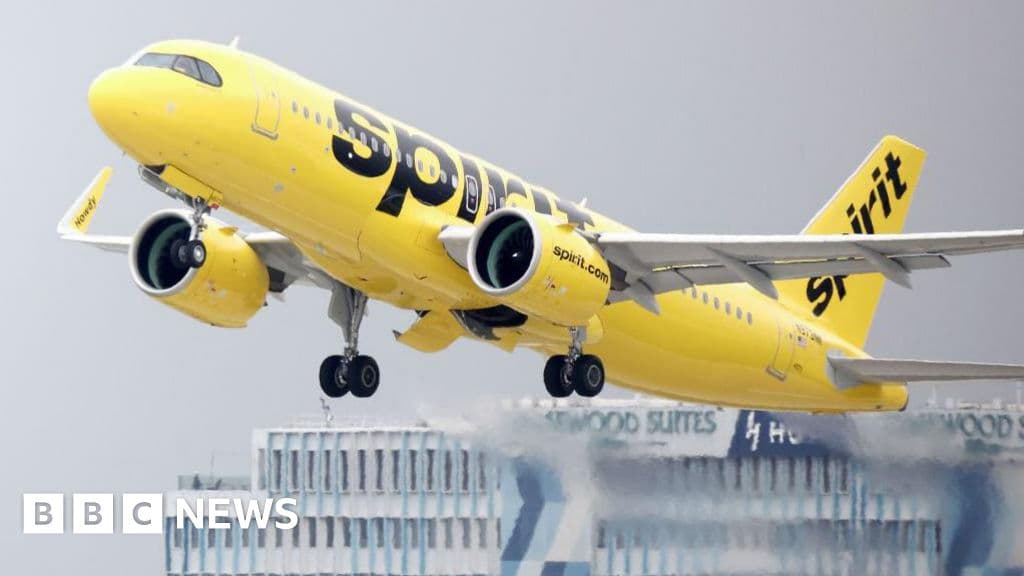
Image: BBC Business
Spirit Airlines abruptly shuts down after failed rescue talks, leaving passengers stranded. What does this mean for the airline industry and future travel?
GlipzoIn a shocking turn of events, Spirit Airlines has declared an immediate cessation of its operations following the collapse of negotiations for a $500 million bailout from the Trump administration. The budget airline, which was struggling to recover after two previous bankruptcy filings, faced insurmountable challenges exacerbated by a dramatic rise in jet fuel prices linked to conflicts in the region.
The announcement was made on Saturday via a statement on the airline's website. Spirit Airlines expressed its deep disappointment, stating it had begun an "orderly wind-down of our operations, effective immediately." This abrupt decision led to the cancellation of all flights, leaving numerous passengers stranded and employees in uncertainty.
Spirit Airlines had been in discussions with the U.S. government to secure financial support that could have potentially saved the carrier from bankruptcy. However, these talks fell apart, prompting the airline to take drastic measures. The company cautioned travelers not to head to the airport, as all Spirit flights were canceled.
As passengers began receiving notifications about the cancellations, many were already en route to airports, unaware of the airline's fate. Spirit's customer service lines were also rendered inactive, leaving customers to grapple with the chaos of last-minute travel adjustments.
In a bid to address the situation, Spirit stated that it would process refunds automatically for those who booked flights through credit or debit cards. However, those who used vouchers, credits, or airline points would have to await the decisions of a bankruptcy court regarding their refunds. The airline also clarified that it would not cover any emergency hotel stays or alternative travel arrangements for affected passengers.
In the statement, Spirit's CEO, Dave Davis, reflected on the airline's attempts to restructure, explaining that a plan was agreed upon with bondholders back in March 2026. He emphasized that the sharp increase in fuel prices in recent weeks left the airline with no viable options but to cease operations.
However, Transportation Secretary Sean Duffy contested Davis’s claims, asserting that Spirit Airlines was already in a precarious position long before the recent fuel price hikes. Duffy pointed out that the airline's financial troubles predated the ongoing conflict in Iran and attributed its failure to an unsustainable business model.
The abrupt nature of Spirit Airlines' closure has left many passengers scrambling. One traveler, Yash Kothari, recounted his experience arriving at Philadelphia International Airport at 5:45 AM local time only to discover the airline had shut down. He stated that he received the notification via email at 1 AM, which he had missed due to the late hour.
Another passenger expressed disbelief upon receiving a notification through Spirit's app in the middle of the night. Initially thinking it was a hack, she quickly realized the seriousness of the situation and began searching for alternative flights. She managed to secure a ticket with Frontier Airlines for $180, significantly higher than her original round-trip fare of $108 on Spirit.
The situation has prompted other airlines, including Delta, United, American, and Frontier, to offer rescue fares for those affected by Spirit's shutdown. Many travelers are now left reflecting on the broader implications of the airline's closure for both the industry and the working class.
One affected passenger lamented the impact on Spirit employees and the ongoing challenges faced by middle-class families in affording air travel. With fuel costs comprising up to 40% of an airline's expenses, the financial strain on carriers has proven to be overwhelming.
As Spirit Airlines exits the market, the airline industry must brace for potential ripple effects. The sudden closure raises questions about the stability of other budget airlines and the broader implications for air travel in the U.S.
Travelers and industry analysts alike will be watching to see how other airlines adjust to absorb Spirit's stranded customers and whether this incident will prompt discussions on regulatory support for struggling airlines in the future. With rising fuel costs and geopolitical tensions, the sustainability of low-cost travel options remains uncertain.
The future landscape of U.S. air travel may shift dramatically as passengers seek alternatives and airlines navigate the financial fallout from Spirit's unexpected closure. It is essential for consumers to remain vigilant and adaptable in the face of these developments, as the travel industry continues to evolve amidst ongoing challenges.
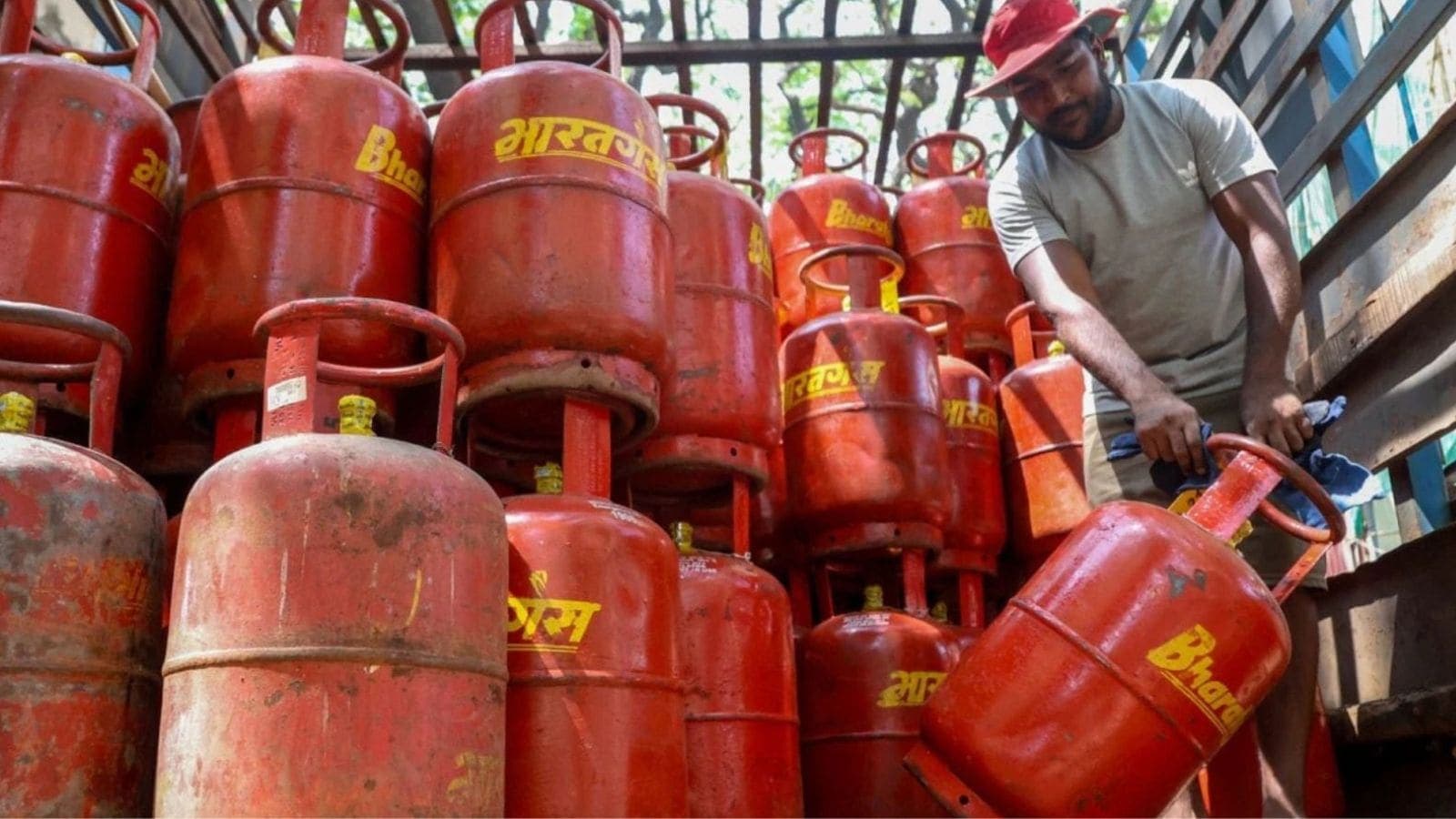
Commercial LPG prices have risen again, with increases of ₹42 in Delhi and ₹53.50 in Kolkata impacting businesses and consumers alike. Find out more.
Indian Express
Discover how a tragic coal mine explosion in Shanxi, China, reveals ongoing safety concerns in the industry amidst a push for green energy.
BBC Business
Montek Singh Ahluwalia highlights key economic challenges for India, emphasizing the need for a strategic approach to balance payments and investment.
Indian Express