

Image: The Hindu
Indian professors face pressure to prioritize citations over creativity, raising critical questions about the future of Humanities in academia. Discover the implications.
GlipzoIn the evolving landscape of Indian higher education, a troubling trend is emerging: many professors are feeling pressured to prioritize citations over creativity. This dilemma is particularly evident within the Humanities, where traditional forms of scholarship are often overshadowed by quantitative metrics that do not adequately reflect the value of creative work. As institutions increasingly focus on global rankings, the systemic disadvantages faced by creative and practice-based research are becoming alarmingly clear.
Imagine an esteemed writer, perhaps a recipient of the Sahitya Akademi award, being told that their life’s work holds no value in academic circles simply because it isn’t cataloged in the Scopus database. This scenario highlights a significant paradox within the academic system, where the worth of scholarly contributions is often measured by their indexability rather than their cultural or intellectual importance.
The current evaluation frameworks, such as those from the National Assessment and Accreditation Council (NAAC) and the National Board of Accreditation (NBA), display a bias that favors conventional research outputs. In this environment, a landmark collection of poetry may be deemed less significant than a poorly executed article indexed in Scopus. This raises a vital question: Are we truly measuring the essence of scholarly work, or are we merely applying a rigid set of standards to a diverse set of disciplines?
The crux of the problem lies in what has been termed the Scopus: Web of Science Trap. Global ranking systems heavily favor standardized scientific outputs, leaving creative expressions such as poetry and fiction marginalized. The absence of these works in major databases leads to a “Humanities Gap,” where the richness of human experience captured in artistic endeavors is rendered invisible.
Standardized research often reiterates existing knowledge. In contrast, creative writing serves as a conduit for new ideas and perspectives. For instance, a research article providing statistics on social isolation in urban India may present data points, but a play depicting the life of a lonely elderly man evokes empathy and understanding in a way that figures alone cannot. Creative works resonate on an emotional level and preserve cultural nuances in a manner that academic jargon often fails to achieve.
Globally, there's a growing recognition of Non-Traditional Research Outputs (NTROs), which challenge the notion that all valuable knowledge must be encapsulated in journal articles. In the United Kingdom, the Research Excellence Framework (REF) has begun to evaluate poetry and other forms of creative writing as legitimate outputs, even allowing for certain works to receive a “double-weighted” status to reflect their intellectual contributions. Similarly, Australia’s Excellence in Research for Australia (ERA) framework includes a category for poetry, requiring scholars to submit a Research Statement to explain the scholarly impact of their works.
In Europe, creative contributions are often regarded as research artifacts, emphasizing the artwork as the primary site of knowledge acquisition. Meanwhile, in the United States, tenure committees increasingly acknowledge poetry as a legitimate output, assessing its value based on both publisher reputation and critical reception. These progressive frameworks illustrate that recognizing artistic contributions does not diminish scholarly rigor; instead, it necessitates redefining academic standards to accommodate diverse forms of knowledge.
India stands at a crossroads, needing to rethink its academic evaluation processes to better value creative research. While it’s unnecessary to replicate frameworks from other countries, adopting their conceptual clarity can significantly benefit Indian scholars in the Humanities. Here are several actionable steps that could bridge the existing gap between creative output and research evaluation:
The implications of this academic shift extend far beyond the confines of university walls. By recognizing and valuing creative outputs, Indian academia can enhance cultural discourse, foster innovation, and enrich the educational landscape. Creativity is not just an extracurricular pursuit; it is a powerful mode of inquiry that reflects societal values and human experience.
As the conversation around NTROs gains momentum, it is crucial for academic institutions to adapt and evolve. The future of Indian higher education depends on its ability to embrace diverse forms of knowledge, ensuring that creativity is celebrated alongside conventional research. The coming years will likely see a push for reforms that prioritize a broader understanding of scholarship, one that values artistic contributions as essential components of intellectual inquiry.
In conclusion, the ongoing debate surrounding the value of creative work in academia is not merely an academic concern but a reflection of the cultural values we uphold as a society. As India navigates this complex landscape, it is essential to foster an environment where all forms of knowledge can thrive, ultimately enriching the academic community and society at large.
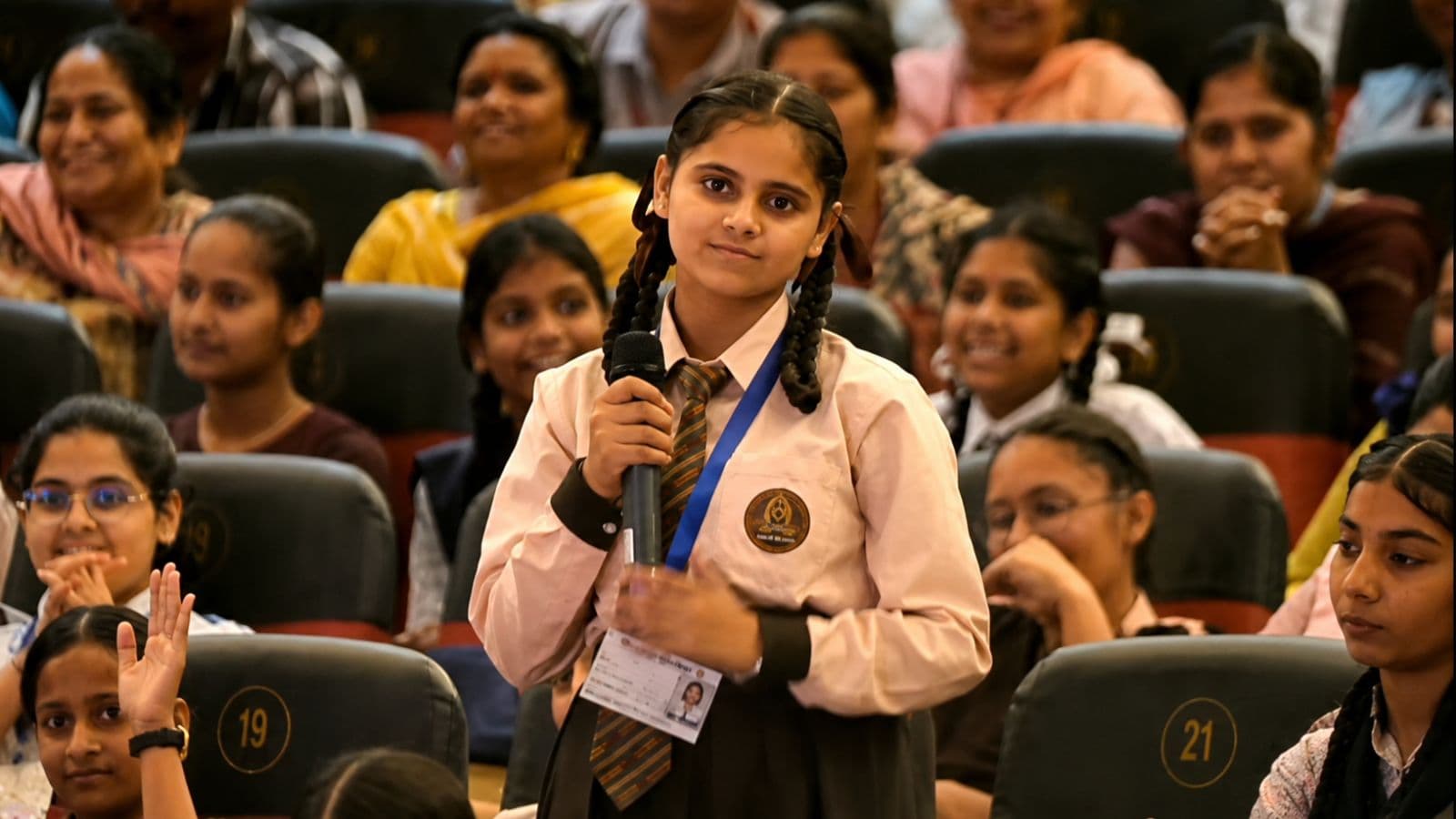
Amritsar student questions age-based ranking, prompting Punjab CM to reform PSEB policies. A significant change towards merit-based recognition is underway.
Indian Express
AP EAMCET 2026 results are out! Discover how to check your scorecard and navigate the upcoming counselling process for college admissions.
Indian Express
CBSE's new OSM system faces backlash as students struggle with re-evaluation. Will their futures be jeopardized by technical flaws?
Indian Express