
Image: BBC World
A police officer recalls a daring rescue operation to retrieve human remains from a crocodile in South Africa. Discover the challenges faced during this mission.
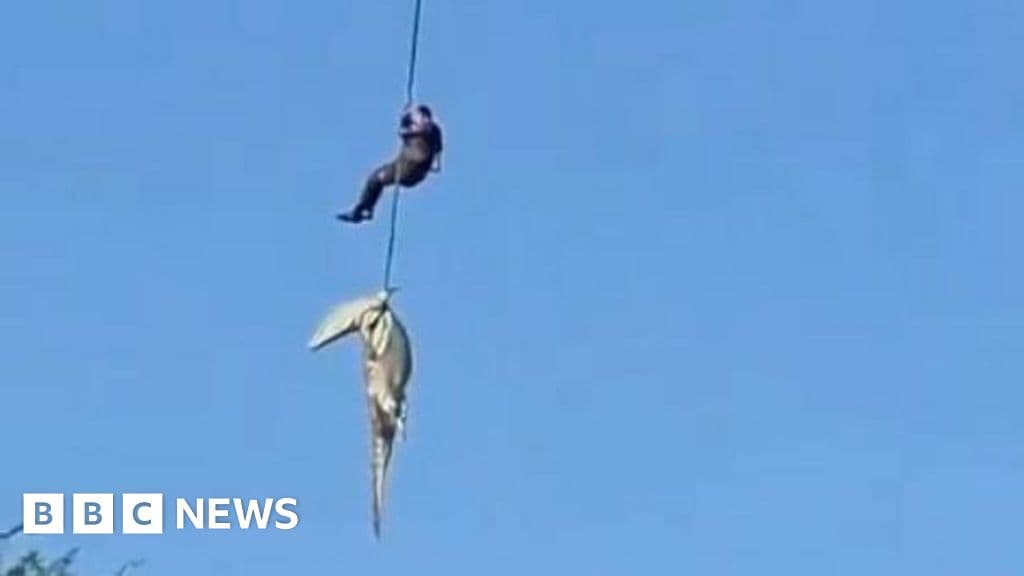
GlipzoIn a harrowing rescue operation that captured global attention, Captain Johan Potgieter of the South African Police Service was lowered from a helicopter into a river teeming with crocodiles to retrieve human remains. This critical mission came after a businessman was swept away by floodwaters in the Komati River and was believed to have been consumed by one of the reptiles.
On the day of the incident, Potgieter and his team faced not just the threat of crocodiles but also the treacherous conditions of the flooded river. The officer recalled, "The crocodile itself was lying on an island... there really was no other way to get to it except from the air," as reported by the BBC. The urgency of the situation escalated as DNA tests are now underway to confirm the identity of the remains discovered inside the 4.5-meter (15-foot) crocodile weighing 500 kilograms (1,100 pounds).
The tragedy began when the victim's vehicle became stranded while attempting to cross a low bridge during last week's severe flooding. When authorities arrived, the car was found abandoned, raising fears that the man had been swept away by the rushing waters. Utilizing drones and helicopters, the search led police to a small island where several crocodiles were basking in the sun, prompting the operation to capture the one suspected of the gruesome act.
Before Potgieter was called in, the crocodile was shot by his colleagues, who believed it to be dead. However, as Potgieter detailed, “It turned onto its back and they thought that it was dead. But by the time we went back, it was back onto its right side and it had swum a bit upstream.” The presence of additional crocodiles, hippos, and submerged rocks rendered the use of boats or canoes impractical and extremely risky.
Potgieter's descent into the crocodile-infested waters was fraught with danger. He explained, “There were other crocodiles next to that one that were probably there because of the blood in the water.” However, the noise from the helicopter provided some advantage, causing the other reptiles to retreat.
Once he was airborne, the officer faced a moment of truth. “When I was hanging there, there was no way for me to communicate with the pilot. So irrespective of whether I changed my mind and decided not to do it, there was no way that that was going to happen,” he said. The urgency of the mission meant that Potgieter had to adhere strictly to the plan, or risk jeopardizing the entire operation.
Following the successful retrieval, South Africa's acting police chief commended Potgieter for his “extraordinary bravery,” labeling the mission as “highly dangerous and complex.” The veteran officer, who has dedicated 38 years to the force, noted that he had never encountered a situation quite like this before. “This was definitely a first and hopefully it will also be the last time...there's really no way to prepare,” Potgieter remarked.
Once he was lowered into the water, Potgieter confirmed the crocodile was indeed dead after securing a rope around it. “Then I knew it was 100% dead. Because if it wasn't, it would have definitely attacked me,” he stated. During the recovery, body parts and shoes were discovered inside the reptile, heightening the urgency for successful identification of the remains.
Despite the grave nature of his task, Potgieter's resolve is driven by a profound sense of empathy for the families of the victims. He explained, “We have a lot of empathy for the families of the victims. They are grieving a loved one. It's never nice losing someone you love and it's even worse if you don't even know where they are or what happened to them.” His dedication to providing closure for grieving families remains a potent motivator behind his commitment to the police force.
As investigations continue, authorities will conduct DNA tests on the recovered remains to confirm the identity of the missing businessman. Meanwhile, the police department is likely to evaluate the methods and safety protocols involved in such high-stakes operations involving wildlife encounters.
For Potgieter, returning home safely to his family was a relief, especially as they remained unaware of how perilous the operation truly was until they viewed footage online. As the community grapples with the aftermath of this tragic loss, Potgieter's efforts remind us of the profound risks that law enforcement officers undertake in their quest to bring closure to families in distress.
The situation remains fluid, and the impact of flooding in the region must be monitored closely to prevent similar tragedies in the future. As rescue operations continue across South Africa, the bravery demonstrated by officers like Potgieter will surely inspire hope and resilience in the face of adversity.
For ongoing updates on this story and more, visit BBCAfrica.com.
Follow us on Twitter @BBCAfrica, on Facebook at BBC Africa, or on Instagram at bbcafrica.
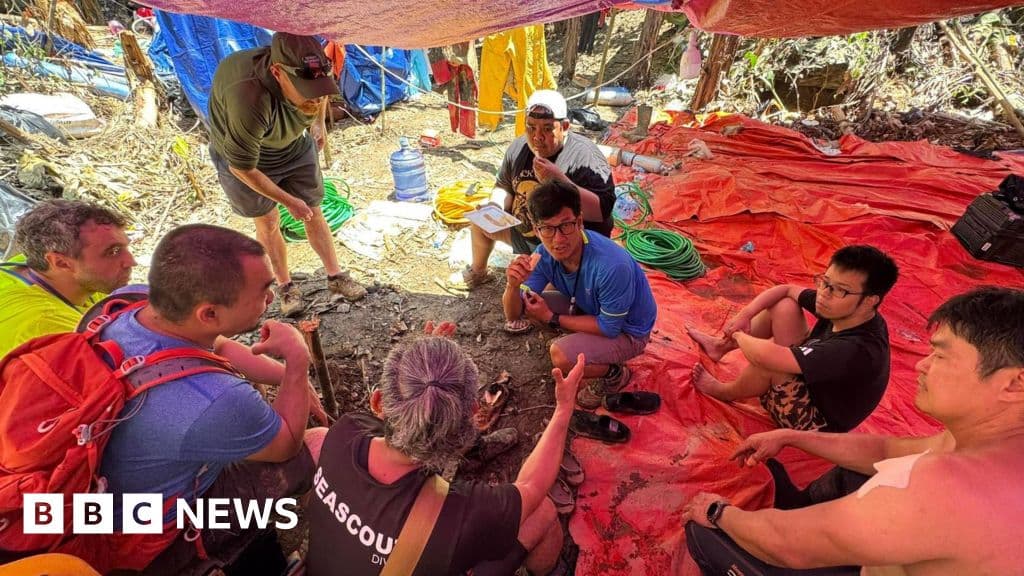
Survivors of the Laos cave rescue are aiding efforts to find the last two missing men trapped inside, sharing crucial insights for the search operation.
BBC World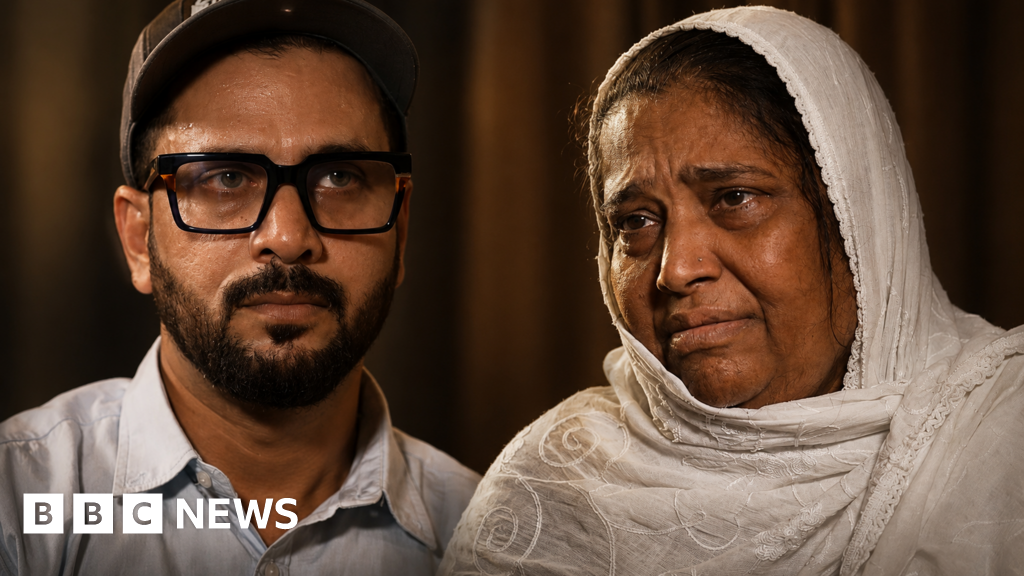
A year after the tragic Air India crash, the Ali family reflects on grief, unanswered questions, and the enduring bonds of love in the face of loss.
BBC Business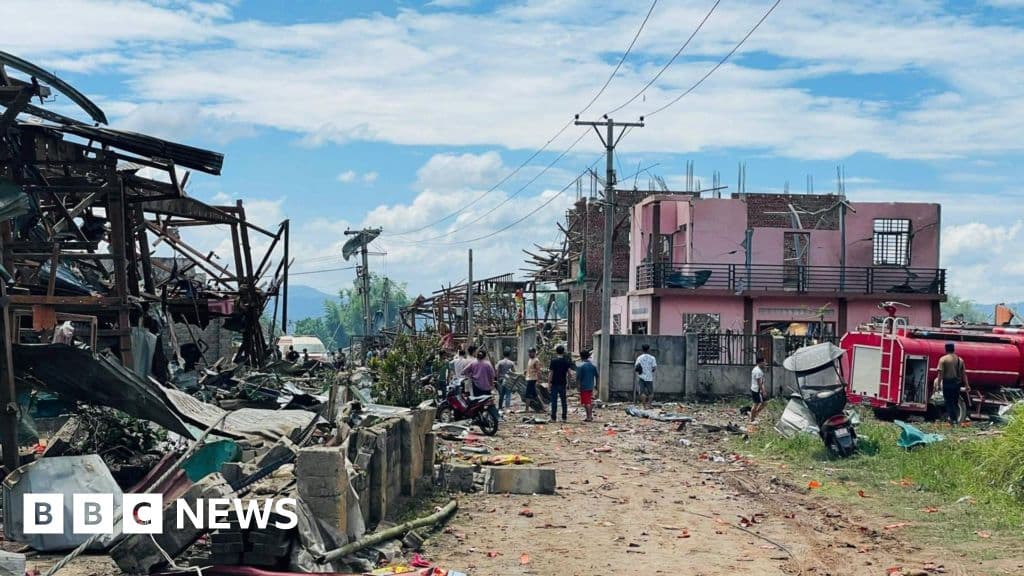
A devastating explosion in Myanmar's Kaung Tat village has killed at least 55 people, raising serious safety concerns and questions about civilian protection in conflict zones.
BBC World