
Image: BBC Technology
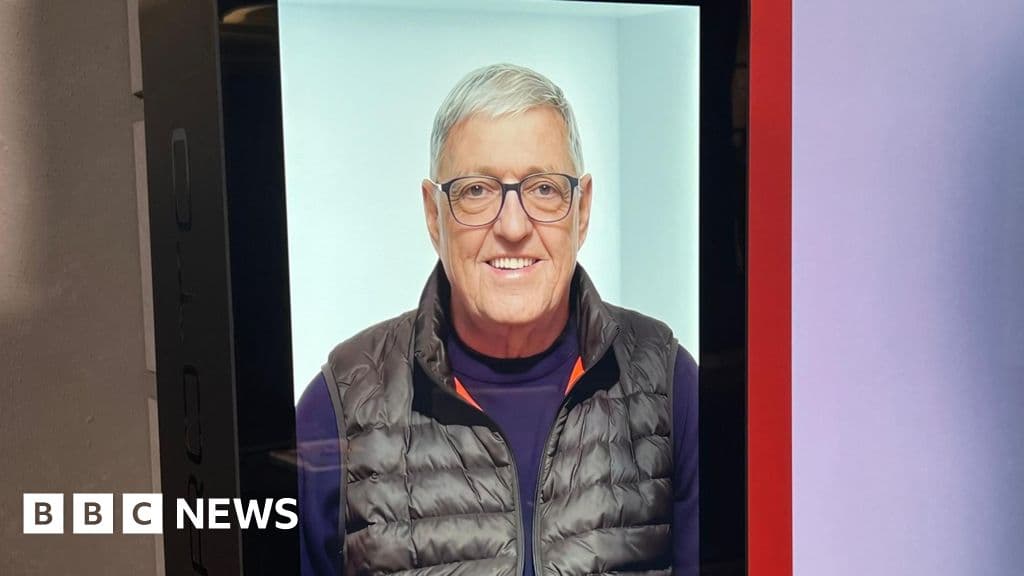
Discover how Pam Cronrath created a hologram of her late husband Bill for a memorial service, blending technology with heartfelt remembrance.
GlipzoWhen Pam Cronrath faced the heartbreaking loss of her husband Bill last year after nearly 60 years of marriage, she made a promise to create a memorable farewell. "I promised him a super wake," Pam shared in an interview. Little did she anticipate that fulfilling this promise would plunge her into the innovative realm of holography, a technology often reserved for celebrities rather than for personal memorials in small-town Wenatchee, Washington.
At the age of 78, Pam's journey into the world of holograms is not just a story of grief; it reflects her lifelong passion for technology that dates back to the early days of the internet. A pivotal moment occurred during a medical conference where she witnessed a doctor appear as a full-body hologram, a sight that left her in awe. "I was completely impressed," she recalled. With the memory of that experience still fresh, Pam began to explore whether such technology could be adapted for a deeply personal remembrance of her late husband.
Pam's quest to create a hologram of Bill was not without its challenges. Although she was eager to move forward, many companies either quoted exorbitant prices or showed disinterest in her project. Realizing the urgency of her timeline, Pam eventually connected with Proto Hologram and Hyperreal, both companies specializing in holographic and avatar technology.
Pam expressed her concerns to the companies, particularly about the disparity between her small-town project and the high-profile work they did, including collaborations with the Michael Jackson estate. Initially, she had set aside $2,000 (£1,480) for the “super wake,” but as the project developed, the costs skyrocketed to an estimated 10 to 15 times her original budget. Despite the financial leap, Pam felt confident that Bill would have appreciated the effort. "I still think he would be very much inspired by all of this, and thankful that it happened," she said.
Recent advancements in technology have allowed for various methods of posthumous communication, such as pre-recorded messages that respond to specific questions. However, Remington Scott, founder of Hyperreal, emphasizes that their method is distinct. "Those systems are meaningful, but they're constructed," he explained. Instead, Hyperreal focuses on comprehensive capture, which includes the likeness, voice, motion, and performance of the deceased to create an authentic experience.
For Pam's project, the challenge was compounded by the fact that Bill had already passed away. Without the opportunity for live recordings, Pam took it upon herself to craft a script that reflected 60 years of shared life. "I knew him for 60 years, so I wrote it the way I believed he would speak," she explained. The most daunting task was capturing Bill's voice, especially since he had become quieter in his later years, leaving few recent recordings.
On the day of the memorial service, approximately 200 attendees gathered, most of whom were unaware of the surprise Pam had prepared. As Bill's hologram made its appearance—life-sized and speaking directly to the guests—the atmosphere shifted dramatically. "Now, before anyone gets confused, I'm not actually here in Valhalla today," the hologram quipped, lightening the mood.
The response was astonishing. Pam noted that many attendees were visibly shocked, with some struggling to comprehend the technology at play. The hologram engaged in a staged Q&A, hosted by Bill’s nephew, even cracking jokes about his marriage to Pam, humorously stating it was the "best decision I ever didn’t make." Interestingly, some guests believed that the interaction was happening live, illustrating the effectiveness of the holographic representation.
Amidst the awe and excitement, one of Pam's sons remarked on a minor detail, saying, "His voice is just a little bit off." For Pam, this feedback confirmed that they had come remarkably close to capturing Bill's likeness. Yet, she emphasizes that the hologram does not replace her husband or diminish her grief. "It's like looking at photos or old videos," she asserts, highlighting the hologram's role as a tool for remembrance rather than a substitute for genuine emotions.
Pam Cronrath's innovative approach to honoring her husband highlights a growing trend in memorial services, where technology meets personal storytelling. The use of holograms offers a unique way to celebrate lives and create lasting memories, blending the realms of technology and human emotion. As society continues to evolve, we may see more individuals embracing such advanced methods to preserve memories of their loved ones.
The success of Pam's holographic tribute could pave the way for a new frontier in how we commemorate those we have lost. As technology advances, we may witness a surge in personalized memorial services that utilize holograms and other interactive elements. Companies like Hyperreal and Proto Hologram are likely to refine their offerings, making these experiences more accessible and affordable.
In conclusion, Pam Cronrath's story serves as an inspiring example of love, innovation, and the enduring human spirit. As we look to the future, it will be fascinating to see how technology continues to shape our rituals of remembrance and connection with those who have passed on.

Survivors of the Laos cave rescue are aiding efforts to find the last two missing men trapped inside, sharing crucial insights for the search operation.
BBC World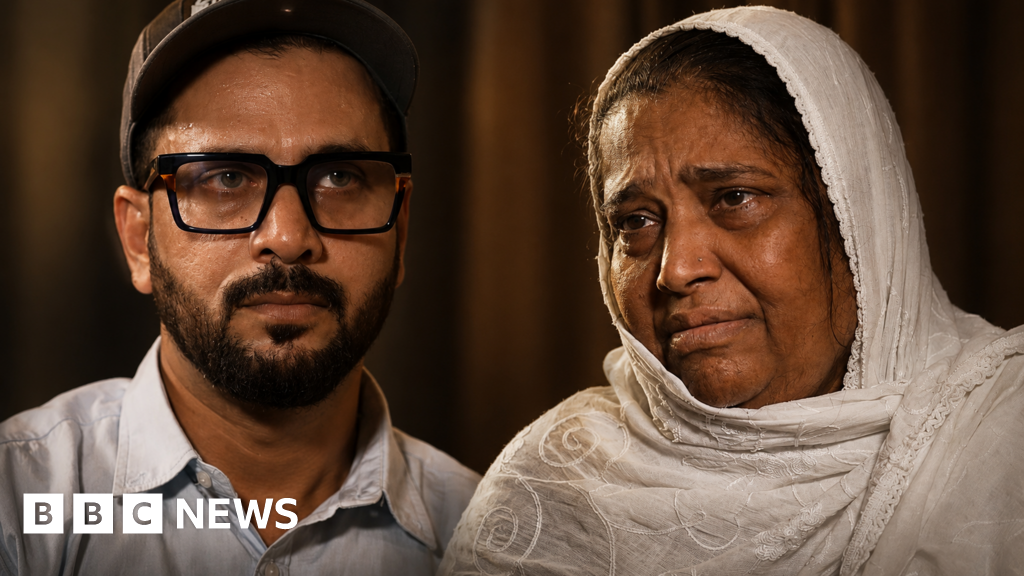
A year after the tragic Air India crash, the Ali family reflects on grief, unanswered questions, and the enduring bonds of love in the face of loss.
BBC Business
A devastating explosion in Myanmar's Kaung Tat village has killed at least 55 people, raising serious safety concerns and questions about civilian protection in conflict zones.
BBC World