
Image: BBC World
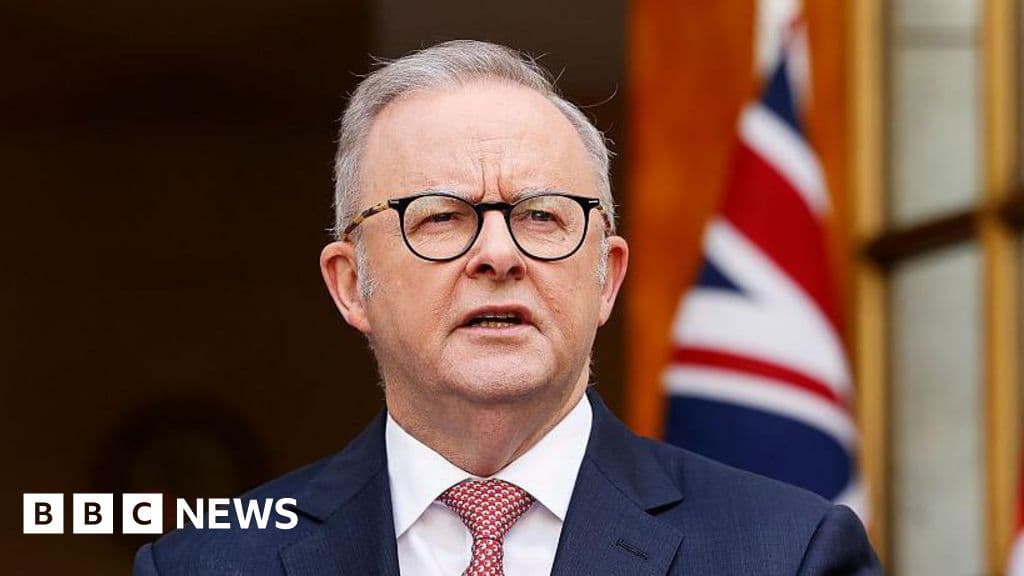
Australian PM Anthony Albanese faces heckling during Eid prayers at a Sydney mosque, reflecting rising tensions within the Muslim community over current events.
GlipzoIn a surprising turn of events during a significant religious occasion, Australian Prime Minister Anthony Albanese faced heckling while attending a mosque in Sydney to commemorate the conclusion of Ramadan. This incident occurred at the Lakemba Mosque, one of the largest mosques in Australia, where Albanese and Home Affairs Minister Tony Burke were invited to join the community for Eid prayers on Friday morning.
As the event unfolded, several attendees expressed their discontent vocally, accusing the Prime Minister and his minister of being "genocide supporters". Shouts of "boo" and "get out of here" echoed through the mosque as a community leader spoke about the need for the government to engage more constructively with Muslim Australians. This disturbance reflects the broader frustrations within the Muslim community regarding the government's stance on the ongoing conflict between Israel and Gaza, as well as rising Islamophobia in Australia.
The heckling incident is emblematic of the growing anger felt by many in the Muslim community, especially amidst escalating violence in the Middle East. Tensions have heightened since Hamas attacked Israel on October 7, 2023, resulting in over 1,200 deaths and numerous hostages, while the Israeli response has led to more than 72,000 Palestinian deaths, according to the Hamas-run health ministry. These events have intensified feelings of vulnerability and frustration within communities affected by both international and domestic issues.
A man who was particularly vocal in his protests against Albanese was removed by police but was later released without any charges. As the Prime Minister exited the mosque, he continued to face shouts from attendees, with one individual questioning, "Why is he here? Get him out of here! It's a disgrace."
Despite the vocal protests, the Lebanese Muslim Association, which oversees the mosque, later issued a statement affirming that Albanese was indeed welcome to the prayers. They emphasized the need for engagement with political leadership, stating, "Choosing to engage with the elected leadership of this country is not a betrayal of those concerns. It is how we give them a voice."
Following the tumultuous event, Prime Minister Albanese addressed the media, claiming that he received a warm reception from the majority of the 30,000 attendees present at the mosque. He noted that the overall response was largely positive despite the protests from a small group. Albanese also hinted that the unrest might stem from his government’s recent initiatives aimed at banning extremist organizations, including Hizb ut-Tahrir, known for its radical views on establishing a global Islamic government.
Earlier in the day, the Prime Minister took to social media to express his gratitude for the invitation, describing it as "an honour" to participate in the prayers, sharing images of himself interacting with worshippers. His attendance marked the first time he had been invited to participate in Eid prayers since the start of the Israel-Gaza conflict.
The heckling faced by Albanese is not an isolated incident. Previous years have seen politicians receive mixed responses at Eid celebrations. For example, in the lead-up to the last federal election, Jason Wood from the Liberal Party had to be escorted from a Melbourne mosque due to heckling during an Eid event. Critics argue that such religious celebrations should remain separate from political discourse.
The Albanese government has faced increasing scrutiny for its handling of the Gaza conflict and its implications for domestic security, particularly following a tragic mass shooting at a Jewish event in Bondi in December, which left 15 people dead. This shooting, allegedly inspired by Islamic State ideology, was one of Australia’s worst mass shootings in nearly three decades.
As the tension between communities continues to rise, the need for constructive dialogue has never been more critical. The Lebanese Muslim Association’s statement reflects a desire for ongoing engagement rather than alienation, suggesting that political leaders should be part of the solution rather than viewed as adversaries.
Moving forward, all eyes will be on how the Albanese government addresses these concerns while navigating the sensitive landscape of community relations. The Prime Minister's future engagements with the Muslim community and responses to rising incidents of antisemitism and Islamophobia will be crucial in shaping public sentiment.
In light of the ongoing conflict and domestic challenges, it remains vital for leaders to foster an environment of understanding and collaboration. As the situation develops, communities will be watching closely to see how their voices are heard and integrated into national conversations about identity, security, and multiculturalism in Australia.

Tensions soar as the US and Iran engage in air strikes near the Strait of Hormuz, raising concerns over global oil supply and regional stability.
BBC World
Trump's international interventions face serious stalemates. What will this mean for U.S. foreign policy? Explore the critical challenges ahead.
Indian Express
Tehran denies resignation of President Masoud Pezeshkian amid claims of IRGC influence. What does this mean for Iran's political stability? Click to learn more!
Indian Express