
Image: BBC Business
The UK's brewing industry faces a shocking decline, with 320 breweries closing last year. Find out why this matters and what’s next for local breweries.
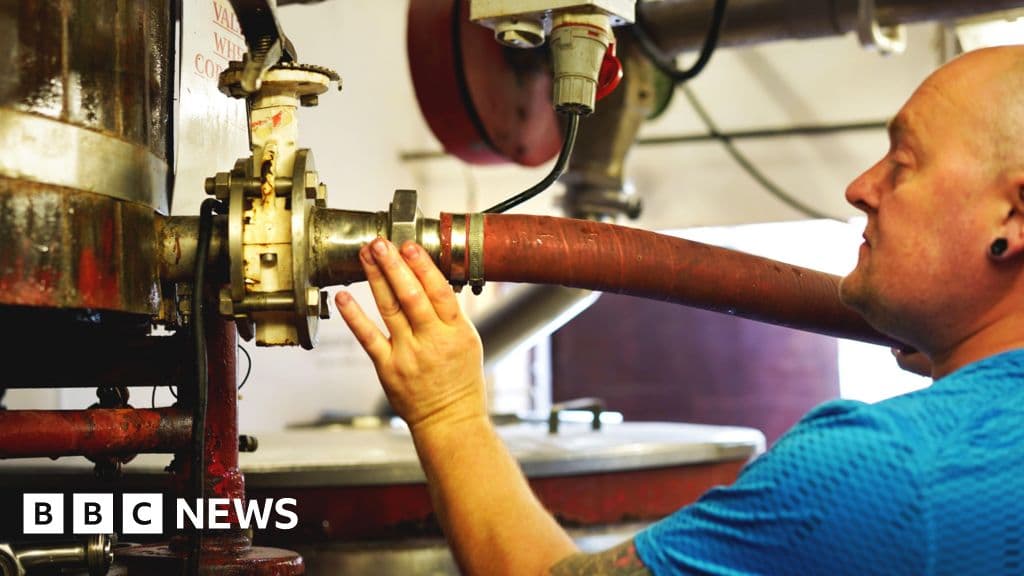
GlipzoOnce hailed as the heartbeat of British brewing, Burton-upon-Trent is witnessing a significant downturn in its beer industry. Al Wall, head brewer at the oldest independent brewery in the area, reflects on a time when the air was filled with the rich aromas of brewing. Now, those days seem distant as the town grapples with a stark decline in its brewing activity.
Over the past year, the UK has seen a dramatic shift in its brewing landscape, with 320 breweries shuttering their doors. According to data from Companies House, this decline is a sobering reality, as only 170 new breweries opened during the same period, leading to a net loss of 150 businesses. The situation has worsened in 2023, with the total number of UK beer brewing companies dropping to 2,320, down from a peak of 2,594 in 2022.
One of the critical issues facing smaller breweries is the overwhelming market control exercised by big brands. Tim Webb from the Campaign for Real Ale (CAMRA) highlights a significant hurdle:
> "The big problem that breweries have got, and it is getting worse, is access to market."
This market access issue stems from larger brewing corporations owning the draught lines in pubs, effectively sidelining smaller competitors. Moreover, many local breweries struggle to gain entry into supermarket sales, as they are often undercut on price by the larger entities.
While some of the closures can be traced back to the lingering effects of the COVID-19 pandemic, changing consumer preferences play an equally important role. Once thriving, the UK's beer market saw a surge in new breweries, with 317 new establishments opening in 2017 alone—more than double the number from the previous year. However, this year, for the first time since 2018, the total number of brewing businesses in England has dipped below 2,000.
James Clarke, the fifth-generation owner of Hook Norton Brewery in Oxfordshire, has witnessed a seismic shift in beer consumption over the years. He explains that back in the early nineties, the brewery focused on just three types of beer: - A mild - A bitter - Old Hooky
In contrast, Clarke notes that beer consumption in the UK was about double the current volume. Today, Hook Norton brews only half as much beer as it did 15 years ago, albeit offering a wider variety of styles. Clarke believes there is a silver lining, noting a small resurgence in traditional beer styles, which he sees as a response to evolving consumer tastes.
Webb adds, "The part of the beer market that's holding up or growing is the interesting part."
This includes: - Heritage beers - Craft beers - Innovative and unconventional beer types
However, the market for standard lagers has been consistently declining, presenting a challenge for many traditional breweries.
To navigate these turbulent waters, breweries are increasingly turning to diversification as a survival strategy. Clarke's Hook Norton was one of the first to establish a visitor center and launch a microbrewery within its main facility. This innovative approach has allowed the brewery to connect directly with customers and provide an immersive experience.
Andy Slee, CEO of the Society of Independent Brewers and Associates (Siba), emphasizes the necessity of adapting to market changes:
> "In order to survive, you just can't stay doing what you were doing before."
Many independent breweries are now exploring avenues such as taprooms, where they can serve beer directly to customers. Despite the overall decline in the beer market, demand for independent beers remains relatively strong, providing a glimmer of hope for these establishments.
However, the brewing industry is facing what Slee describes as a "suffocating level of taxation." He advocates for a reduction in taxes on draught beer served in pubs to alleviate some of the financial pressures on breweries.
> "When a brewery or a pub dies, something in that community dies," Slee emphasizes, highlighting the importance of local breweries as community hubs.
While London was the only English region to avoid a net loss of companies last year, the West Midlands, once the heart of beer brewing, experienced a troubling trend. Nine new companies launched, but a staggering 21 were dissolved, resulting in a net loss of 12 breweries.
As the brewing industry continues to evolve, the future remains uncertain. With Al Wall and other brewing leaders in Burton witnessing the decline firsthand, the need for innovation and adaptation is more pressing than ever. As they navigate challenges from market dominance, shifting consumer preferences, and high taxation, the survival of these local breweries hinges on their ability to evolve and connect with their communities.
Key Takeaway: The UK beer industry is at a crossroads, and the coming months will be critical in determining its trajectory. Will breweries find new ways to thrive in an increasingly competitive landscape? Only time will tell, but their legacy and impact on local communities make it essential to keep a close watch on this evolving story.
Commercial LPG prices have risen again, with increases of ₹42 in Delhi and ₹53.50 in Kolkata impacting businesses and consumers alike. Find out more.
Indian Express
Discover how a tragic coal mine explosion in Shanxi, China, reveals ongoing safety concerns in the industry amidst a push for green energy.
BBC Business
Montek Singh Ahluwalia highlights key economic challenges for India, emphasizing the need for a strategic approach to balance payments and investment.
Indian Express