
Image: Mint (Business)
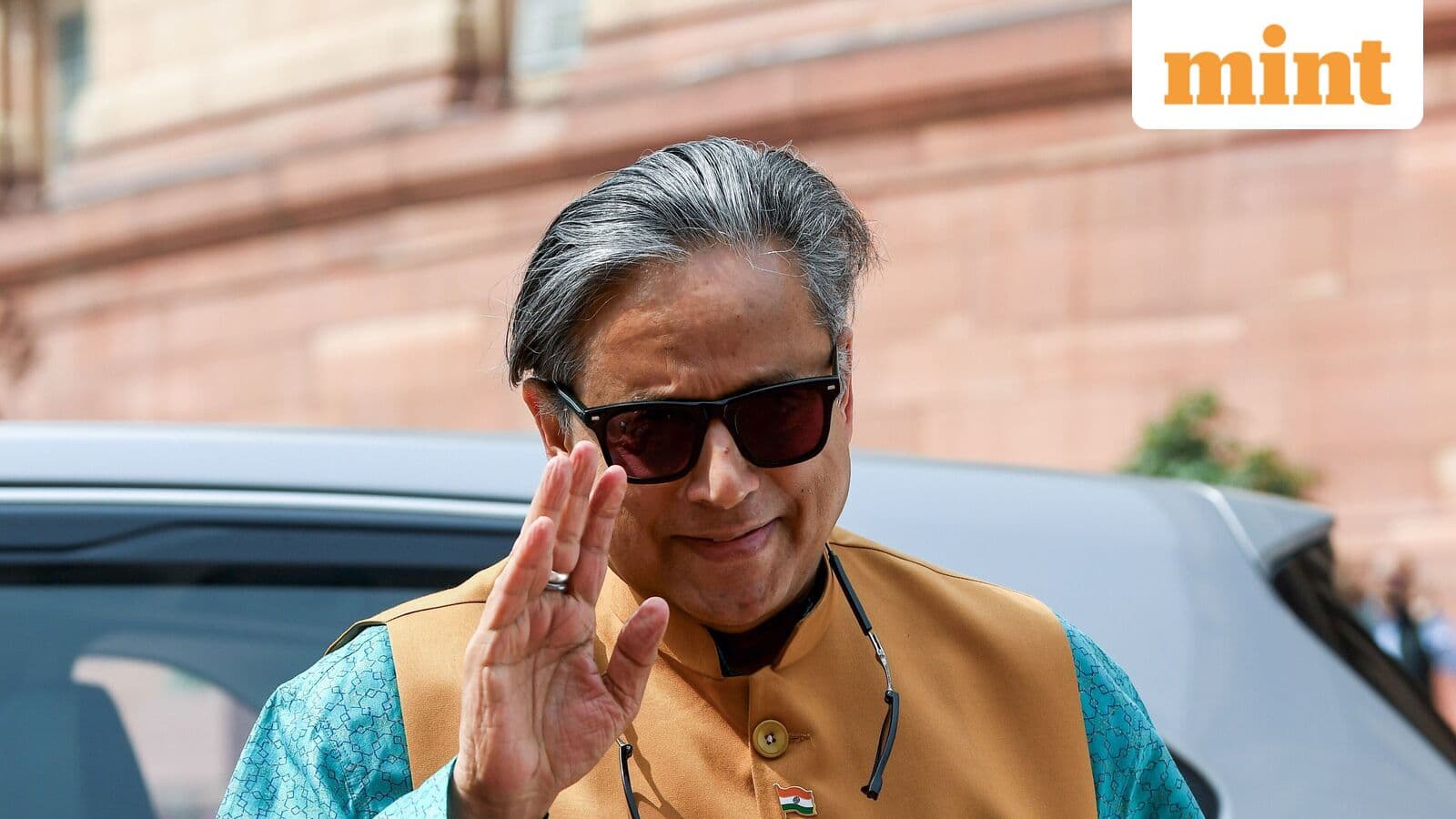
Shashi Tharoor argues India should have expressed condolences for Khamenei's death, emphasizing the importance of diplomatic gestures amid conflict.
GlipzoIn a significant statement regarding international relations, Shashi Tharoor, a prominent Congress leader and Lok Sabha MP, emphasized that India should have expressed condolences following the assassination of Iran's Supreme Leader, Ayatollah Ali Khamenei. This expression of sympathy, he argues, would have been appropriate despite the controversial nature of the US-Israeli actions that led to Khamenei's death. Tharoor's comments were made on March 3, shortly after the assassination, highlighting the importance of diplomatic gestures in times of conflict.
Tharoor stated, "I agree with the critics. The very first day of the conflict, when Supreme Leader Ayatollah Khamenei was killed, we should have expressed our condolences. That would have been the most appropriate thing to do. It would have been the right thing to do given his role in the country." This perspective sheds light on the complexities of international diplomacy, especially when political alliances and conflicts are at play.
The assassination of Khamenei occurred on February 28 during a joint airstrike conducted by US and Israeli forces, a move that has drawn widespread condemnation and concern globally. Tharoor's call for condolence comes in the wake of heightened tensions in the region, which have escalated into a significant conflict involving multiple nations.
Historically, India has maintained a balanced stance in Middle Eastern geopolitics, often opting for diplomacy over outright condemnation. Tharoor pointed to a previous incident in 2024, when former Iranian President Ebrahim Raisi died in a helicopter crash. In that instance, India swiftly expressed condolences, showcasing a readiness to recognize the loss of a significant political figure.
Tharoor remarked, "When President Raisi died in the helicopter crash, we immediately declared mourning and issued condolences. However, I am glad that when the Iranian Embassy in Delhi opened a condolence book, our Foreign Secretary was sent immediately to express condolences." This past response indicates that India has precedent for acknowledging the deaths of foreign leaders, making the absence of a similar gesture for Khamenei all the more notable.
In his remarks, Tharoor made a crucial distinction between expressing condolences and condemning the actions that led to Khamenei's death. He suggested that while the Indian government might choose to refrain from condemning the US-Israeli airstrike for political reasons, it could still extend sympathy to the Iranian people and government.
He articulated, "There's a difference between condolence and condemnation. If you feel politically that you are not going to condemn what the American-Israeli attack has done, that's fine. However, condolence is an expression of sympathy for the bereaved one and to the government and people of Iran. That's something we could have done." This perspective speaks to the delicate balancing act that nations must maintain in their foreign policy, where actions are often scrutinized for their diplomatic implications.
The aftermath of Khamenei's assassination has not only affected Iran but has also sent shockwaves through international relations. On March 5, India finally expressed its condolences when Foreign Secretary Vikram Misri signed a condolence book at the Iranian Embassy in New Delhi, marking the first official diplomatic gesture from the Indian government in response to Khamenei's death. Misri's meeting with the Iranian ambassador further emphasized India’s intent to maintain cordial relations despite the underlying tensions.
As the conflict in the Middle East continues to unfold, Israeli Prime Minister Benjamin Netanyahu has made new assertions regarding Iran's military capabilities, declaring that the nation no longer possesses the ability to enrich uranium or produce ballistic missiles following 20 days of sustained US-Israeli airstrikes. Netanyahu noted, however, that air operations alone are insufficient for achieving a decisive victory, indicating the need for a ground component.
Tharoor's comments and the subsequent actions by the Indian government reflect a broader strategy in foreign relations, particularly in how nations respond to significant geopolitical events. The decision to express condolences can carry profound implications for diplomatic relationships, particularly with nations like Iran, which holds considerable influence in the region.
India's cautious approach to international conflicts often aims to maintain its strategic autonomy while fostering relationships that benefit its national interests. As the situation in the Middle East evolves, it will be crucial for India to navigate its foreign policy carefully, balancing its responses to align with its long-term goals.
Looking ahead, observers will be keen to see how India continues to manage its diplomatic relationships amid ongoing tensions in the Middle East. Will India take a more proactive stance in expressing its sympathies in future conflicts? The coming weeks will likely reveal whether India opts for a more vocal approach in its international relations, particularly with nations embroiled in conflict.
Stay informed about the latest developments in international politics and their implications for India’s foreign policy as this situation unfolds.

Tensions soar as the US and Iran engage in air strikes near the Strait of Hormuz, raising concerns over global oil supply and regional stability.
BBC World
Trump's international interventions face serious stalemates. What will this mean for U.S. foreign policy? Explore the critical challenges ahead.
Indian Express
Tehran denies resignation of President Masoud Pezeshkian amid claims of IRGC influence. What does this mean for Iran's political stability? Click to learn more!
Indian Express