
Image: Indian Express
Sambhal district demolishes illegal religious structures on public land, following CM Yogi Adityanath's orders. What’s next for the region?
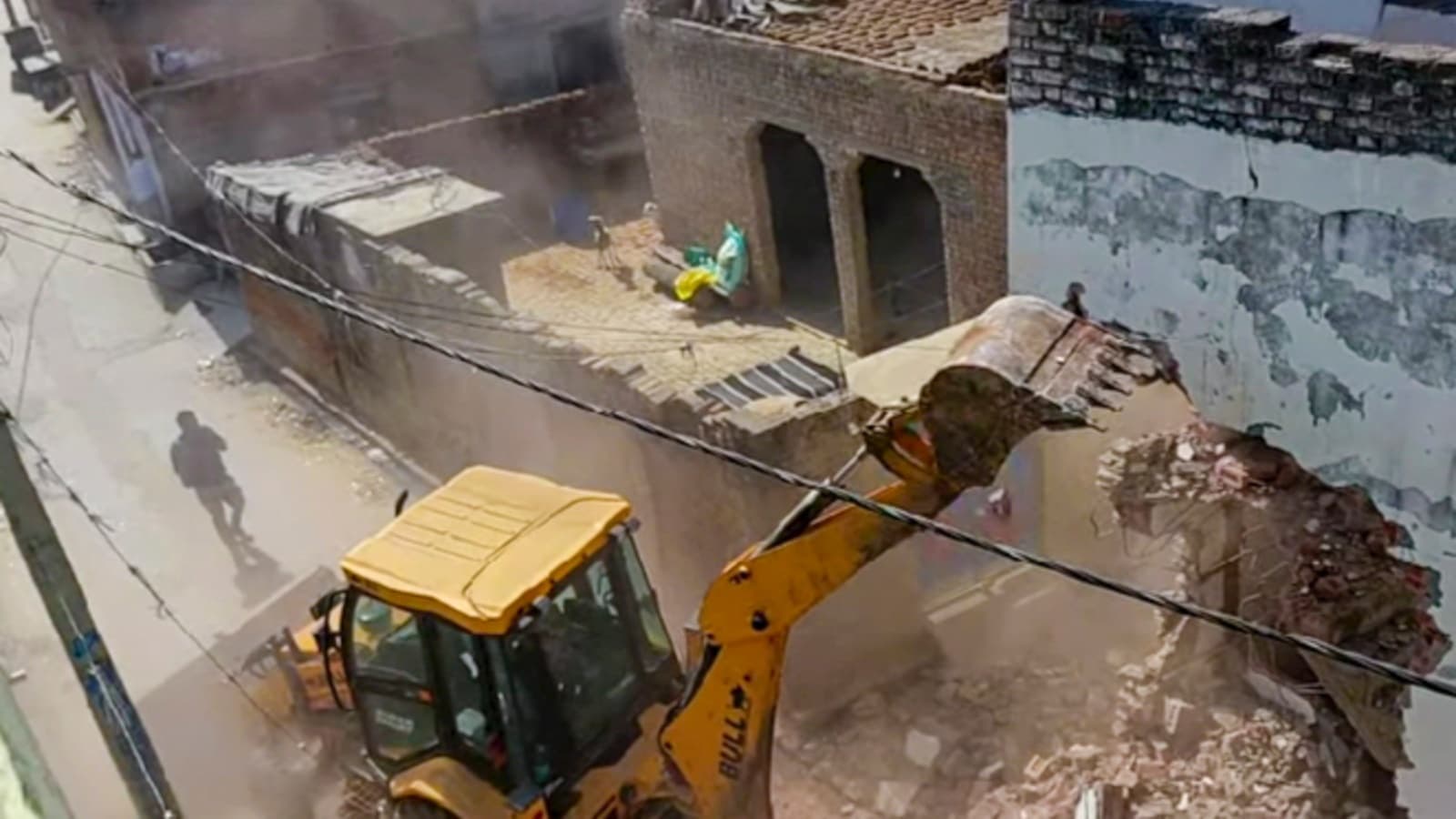
GlipzoOn Friday, the Sambhal district administration executed a significant operation aimed at demolishing alleged illegal encroachments by religious structures, including an eidgah, imambara, mosque, and madrasas. This initiative unfolded across two villages, as the administration sought to reclaim public land for its intended use. The decision to proceed with this demolition was spurred by directives from Chief Minister Yogi Adityanath, emphasizing the need to clear Gram Sabha land of unauthorized constructions.
The operation was not only extensive but also heavily policed to ensure law and order during the process. The authorities aimed to mitigate any potential unrest that might arise from such a sensitive action, especially considering the religious nature of the structures involved.
In the Bicholi village of Sambhal tehsil, the administration identified illegal constructions of an imambara and an eidgah situated on land designated for manure pits and grazing purposes. According to the district officials, the tehsildar court had already taken legal steps, issuing an eviction order on January 31. Since no appeal was lodged against this order, the administration proceeded to enforce the demolition.
In another instance, the village of Mubarakpur Band faced similar scrutiny. Following complaints about encroachments on Gram Sabha land, an inquiry revealed the presence of a mosque and a madrasa illegally constructed on public property. The administration initially offered the caretakers a chance to remove the structures voluntarily. However, the caretakers cited a lack of resources, prompting the administration to intervene directly.
The demolition efforts resulted in the removal of illegal structures across a total of 1.1 hectares of land in both Bicholi and Mubarakpur Band. The District Magistrate Rajendra Painsia emphasized that this operation was conducted in strict adherence to revenue records and court directives. He reassured the public that any encroachment on Gram Sabha land, playgrounds, or other essential public-use areas would not be tolerated.
Painsia remarked, “Due opportunity is given to concerned parties before action is taken. The anti-encroachment drive will continue in the district, and any illegal occupation found will be removed. All actions are completed within a time-bound period of three months, including a 30-day window for appeal.”
This operation holds significant implications for land management and governance in the region. The drive to clear encroachments is reflective of the government's commitment to maintaining the integrity of public land and ensuring that it is utilized for its intended purposes. This initiative also signals a broader effort to enforce land-use regulations uniformly, regardless of the structures involved.
The drive is particularly noteworthy given the cultural and religious sensitivities surrounding the structures involved. It raises essential questions about the balance between religious freedoms and the enforcement of land laws. As the administration moves forward, the community's response and the potential for legal challenges will be critical to observe.
Looking ahead, the Sambhal administration plans to expand its anti-encroachment efforts across the district. This initiative aims to deter future illegal constructions and enforce compliance with land-use regulations. The government will be closely monitoring the areas previously affected to prevent re-encroachment and ensure that public lands remain available for community use.
Residents and stakeholders in the region may also need to prepare for potential pushback or legal appeals from those affected by the demolitions. The administration's stance indicates that it is ready to defend its actions, aiming to set a precedent for land management in the state. This situation will continue to evolve, and it will be crucial for the community to engage in dialogue about land use and religious structures in the coming months.
As this story develops, staying informed about the administration’s future actions and their implications for community relations and land use in Sambhal will be essential.

Tensions soar as the US and Iran engage in air strikes near the Strait of Hormuz, raising concerns over global oil supply and regional stability.
BBC World
Trump's international interventions face serious stalemates. What will this mean for U.S. foreign policy? Explore the critical challenges ahead.
Indian Express
Tehran denies resignation of President Masoud Pezeshkian amid claims of IRGC influence. What does this mean for Iran's political stability? Click to learn more!
Indian Express