
Image: Ars Technica
Discover how True Anomaly is changing space warfare with its innovative Jackal spacecraft designed for military applications in low-Earth orbit.
GlipzoIn the ever-evolving landscape of military technology, True Anomaly is setting its sights on a groundbreaking approach to orbital warfare. Unlike the high-octane battles portrayed in cinematic classics like Star Wars, True Anomaly envisions a more calculated and methodical form of conflict in the cosmos. Founded just three years ago, this innovative startup aims to redefine how nations engage in military operations beyond Earth’s atmosphere.
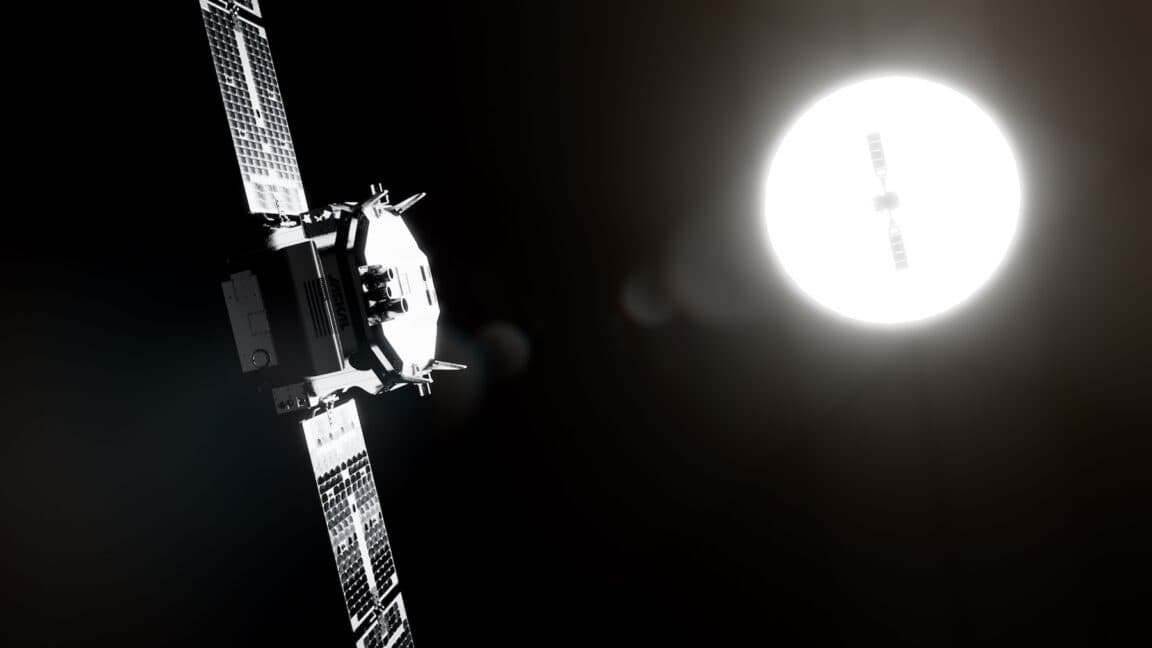
The company’s flagship product, the Jackal satellite platform, is not just another spacecraft; it’s a war-ready system designed for agility and precision. Drawing inspiration from the cunning nature of jackals, the spacecraft is engineered to adapt and maneuver through the complexities of space, poised to tackle future challenges in military engagements.
The Jackal spacecraft stands out due to its unique design, roughly the size of a refrigerator and built to function as a flying fuel tank. This innovative structure accommodates advanced thrusters and sensors, enabling it to conduct rapid maneuvers and surveillance of other objects in orbit. True Anomaly has already executed two successful test missions of the Jackal, with a third mission scheduled for launch in the upcoming months.
The company’s ambition doesn't stop at testing. True Anomaly is committed to a vision where the Jackal could eventually engage in orbital combat. Co-founded by Even Rogers, a former Air Force space operations officer, True Anomaly has already garnered significant attention and investment, attracting approximately $400 million in funding, including support from a venture capital firm co-founded by Vice President JD Vance. With a growing team of several hundred employees, True Anomaly is prepared for significant advancements in its operations.
True Anomaly’s primary objective is securing contracts with the U.S. military, particularly the Space Force. The startup has successfully landed several projects, including a notable mission called Victus Haze, which is set to launch later this year. This mission will see a Jackal spacecraft deployed into low-Earth orbit, simulating a satellite from a potential adversary nation like China or Russia. A secondary satellite, launched by Rocket Lab, will attempt to intercept the Jackal, mimicking the Space Force’s response strategies to emerging threats in space.
Rogers draws from his experience in the space aggressors unit of the Air Force, a role that involved training military personnel to handle potential threats in space. He likens his former position to the characters in Top Gun, where aggressor pilots simulate enemy tactics to prepare their counterparts for real-world scenarios. Rogers emphasizes the importance of teaching military personnel how to effectively strategize against an intellectual adversary.
With the establishment of the Space Force in 2019, the need for innovative strategies in space warfare has become increasingly evident. As Rogers points out, traditional military contractors and practices are not equipped to handle the complexities of modern space threats. As global tensions rise and space becomes a battleground, the militarization of this frontier is no longer a mere possibility—it’s a reality.
Rogers identified critical gaps in the military’s readiness for space conflict, which he believes are unacceptable for engaging adversaries. He argues for a significant investment of capital and talent to address these issues, which is precisely what True Anomaly aims to provide.
The developments at True Anomaly signal a pivotal shift in how nations may conduct warfare in the future. The integration of advanced technologies and strategic thinking into space operations could redefine military engagement on a global scale. As nations like the U.S. invest in their capabilities to counter threats in space, the implications for international relations and defense strategies are profound.
The emergence of companies like True Anomaly also highlights the growing importance of private-sector involvement in national defense. As traditional military operations adapt to new technological landscapes, collaborations between startups and government entities may become essential for maintaining strategic advantages.
Looking ahead, True Anomaly is positioned to play a crucial role in shaping the future of space warfare. With ongoing test missions and a focus on securing military contracts, the company is on the brink of significant advancements. As they prepare for their next launch, all eyes will be on how the Jackal performs in simulated combat scenarios and what that could mean for U.S. space strategy.
As True Anomaly continues to innovate, the company’s progress will be closely monitored by military analysts and defense experts worldwide. The outcomes of their missions could pave the way for new doctrines in space engagement, and ultimately, influence global military dynamics as nations vie for supremacy in this uncharted territory.
In conclusion, the vision of space warfare is evolving, and True Anomaly is at the forefront of this transformation. As they navigate the complexities of orbital operations, the world will watch closely to see how their innovations redefine the rules of engagement in the final frontier.

Nvidia's new RTX Spark chip aims to transform personal computing with AI, marking a significant shift in technology. Discover what this means for consumers.
BBC Business
The explosion of Blue Origin's New Glenn rocket raises significant concerns over NASA's lunar ambitions and the future of Amazon's satellite projects. Discover the implications.
BBC Science
Discover how Meta's lack of engagement on user bans raises critical concerns about accountability and transparency in social media governance.
BBC Technology