Glipzo
WorldTechnologyBusinessSportsEntertainmentScienceHealthPolitics
Glipzo
WorldTechnologyBusinessSportsEntertainmentScienceHealthPolitics
  1. Home
  2. /
  3. Technology
  4. /
  5. Revolutionizing AI Debate: The Rise of Jagged Intelligence
Revolutionizing AI Debate: The Rise of Jagged Intelligence

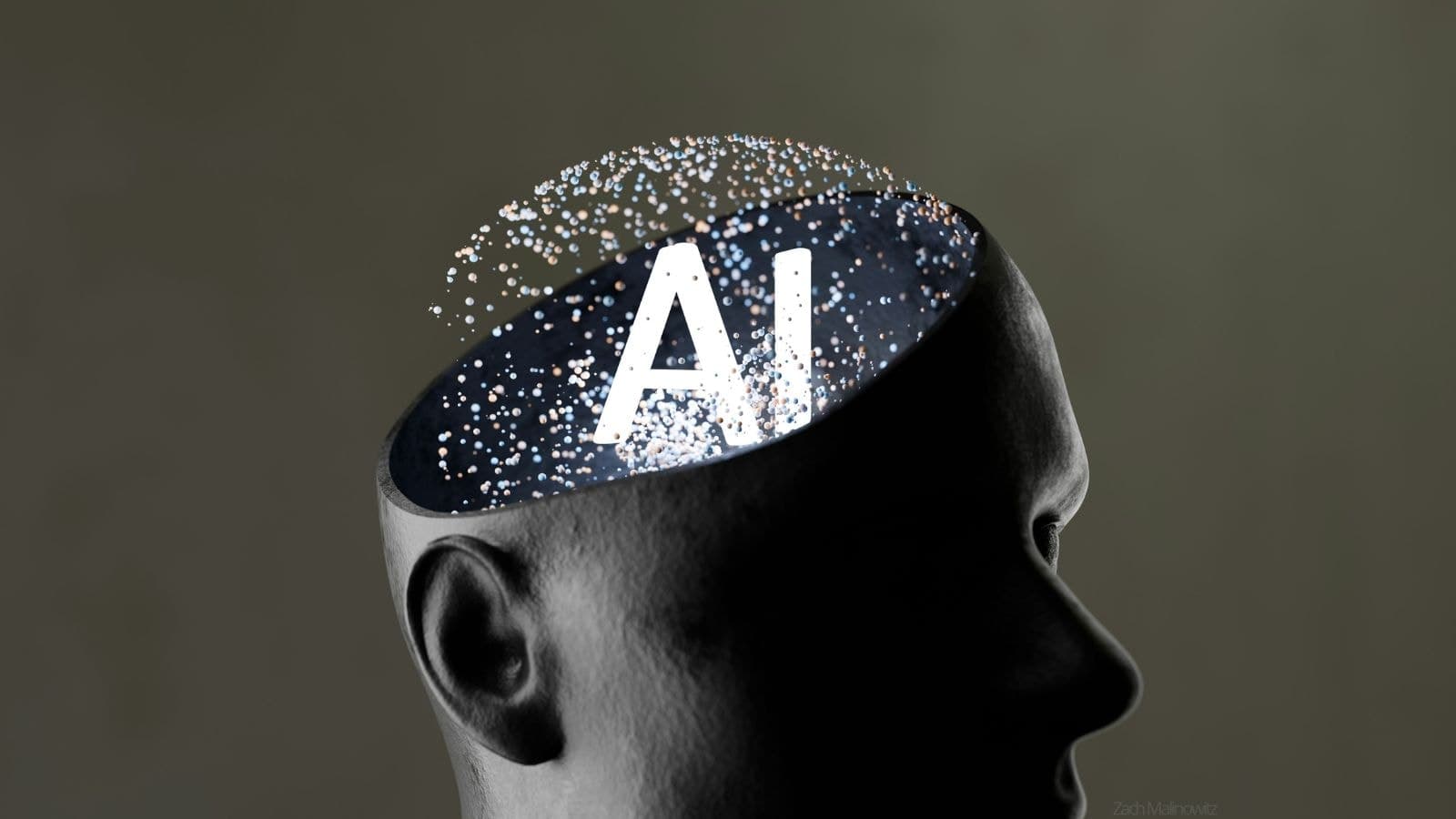
Image: Indian Express

Technology
Monday, April 20, 20265 min read

Revolutionizing AI Debate: The Rise of Jagged Intelligence

Explore how 'jagged intelligence' reshapes the AI discussion, revealing strengths and weaknesses that impact the future of employment.

Glipzo News Desk|Source: Indian Express
Share
Glipzo

Key Highlights

  • AI showcased its math prowess at the International Math Olympiad.
  • Jagged intelligence explains AI's uneven performance across tasks.
  • Experts believe AI's impact on jobs is a matter of 'when,' not 'if.'
  • History shows technology often complements rather than replaces jobs.
  • Monitoring AI advancements can help predict job market shifts.

In this article

  • Understanding Jagged Intelligence in AI The conversation surrounding **artificial intelligence** continues to evolve, especially as new developments reshape our understanding of its capabilities. While the debate rages on about whether AI will ever reach human-level intelligence, there's an undeniable fact: AI has emerged as a formidable force in fields such as mathematics. Last summer, during the **International Math Olympiad**, AI systems developed by **Google** and **OpenAI** showcased their prowess by successfully solving five out of six complex mathematical problems posed at the event—a remarkable feat that underscores their growing capabilities.
  • The Concept of Jagged Intelligence Jagged intelligence refers to the uneven performance of AI systems across different tasks. While they may outperform humans in specific domains, such as **mathematics** and **programming**, they can struggle with common sense reasoning and everyday decision-making. This term has gained traction among those involved in AI research and development, providing a new lens through which to assess the ongoing discussions about AI capabilities.
  • Origin of the Term The term jagged intelligence was introduced by **Andrej Karpathy**, a prominent figure in the AI field and a former head of self-driving technology at **Tesla**. Karpathy has been a vocal commentator on AI’s evolution, highlighting its dual nature. He stated on social media, "Some things work extremely well (by human standards) while some things fail catastrophically (again by human standards), and it’s not always obvious which is which."
  • Job Market Implications of AI Since the AI boom initiated by **OpenAI** in 2022, tech leaders have oscillated between cautioning about the disruptive potential of AI on white-collar jobs and downplaying its long-term employment impact. To date, evidence of AI significantly displacing jobs outside the tech industry remains largely anecdotal. Nonetheless, many experts believe that the question is not whether AI will replace jobs, but rather when this will happen.
  • Historical Context: AI as a Tool Rather Than a Replacement Despite the fear surrounding job losses due to AI, history suggests that technological advancements often complement rather than replace human labor. For example, calculators have been around since the **1960s**, dramatically speeding up arithmetic calculations without eliminating the need for accountants. Similarly, modern AI systems like **Anthropic’s Claude** and **OpenAI’s Codex** can generate code efficiently, but they still lack a comprehensive understanding of how different pieces of code integrate into larger software applications.
  • Looking Ahead: The Future of AI and Employment As AI continues to develop, understanding its jagged intelligence will be essential for anticipating its impact on various sectors. **Key areas to watch include:** - **Job displacement:** Keep an eye on sectors heavily reliant on routine tasks, such as programming and data entry. - **Economic shifts:** Monitor how AI improvements reshape job markets and create new types of employment opportunities. - **Human-AI collaboration:** Observe how industries adapt to integrate AI systems as collaborators rather than replacements.

Understanding Jagged Intelligence in AI The conversation surrounding **artificial intelligence** continues to evolve, especially as new developments reshape our understanding of its capabilities. While the debate rages on about whether AI will ever reach human-level intelligence, there's an undeniable fact: AI has emerged as a formidable force in fields such as mathematics. Last summer, during the **International Math Olympiad**, AI systems developed by **Google** and **OpenAI** showcased their prowess by successfully solving five out of six complex mathematical problems posed at the event—a remarkable feat that underscores their growing capabilities.

However, the same AI that excels in mathematics can sometimes falter in more straightforward tasks. A striking example of this was witnessed by Anuradha Weeraman, a software engineer from Sri Lanka. When Weeraman posed a seemingly simple question to various chatbots—whether he should walk or drive to a repair shop located just 50 meters away—the responses from these advanced systems were puzzlingly simplistic, suggesting that he should walk. This phenomenon where AI exhibits brilliance in one area and ignorance in another has led researchers to coin the term "jagged intelligence."

The Concept of Jagged Intelligence Jagged intelligence refers to the uneven performance of AI systems across different tasks. While they may outperform humans in specific domains, such as **mathematics** and **programming**, they can struggle with common sense reasoning and everyday decision-making. This term has gained traction among those involved in AI research and development, providing a new lens through which to assess the ongoing discussions about AI capabilities.

Understanding jagged intelligence is crucial for evaluating the future impact of AI on the job market. For instance, entry-level programmers may find themselves at risk of displacement due to AI advancements. However, the effects on other professions remain uncertain. By closely monitoring areas where AI shows rapid improvement, economists and researchers can better predict the potential disruptions to various job sectors.

Weeraman succinctly articulated this dilemma: "The performance of these systems varies, and it is not easy to tell when they will fail to do things a human can do."

Origin of the Term The term jagged intelligence was introduced by **Andrej Karpathy**, a prominent figure in the AI field and a former head of self-driving technology at **Tesla**. Karpathy has been a vocal commentator on AI’s evolution, highlighting its dual nature. He stated on social media, "Some things work extremely well (by human standards) while some things fail catastrophically (again by human standards), and it’s not always obvious which is which."

Karpathy's observation draws a stark contrast between AI and the human brain, which typically develops knowledge and problem-solving skills in a more linear and correlated fashion throughout a person's life.

Job Market Implications of AI Since the AI boom initiated by **OpenAI** in 2022, tech leaders have oscillated between cautioning about the disruptive potential of AI on white-collar jobs and downplaying its long-term employment impact. To date, evidence of AI significantly displacing jobs outside the tech industry remains largely anecdotal. Nonetheless, many experts believe that the question is not whether AI will replace jobs, but rather when this will happen.

AI technologies have made astonishing strides in a short period. Alex Imas, an economist from the University of Chicago’s Booth School of Business, noted, "These systems have been showing incredible improvements. Every time there is a major new release, people are surprised by how much it can do."

Historical Context: AI as a Tool Rather Than a Replacement Despite the fear surrounding job losses due to AI, history suggests that technological advancements often complement rather than replace human labor. For example, calculators have been around since the **1960s**, dramatically speeding up arithmetic calculations without eliminating the need for accountants. Similarly, modern AI systems like **Anthropic’s Claude** and **OpenAI’s Codex** can generate code efficiently, but they still lack a comprehensive understanding of how different pieces of code integrate into larger software applications.

The historical context emphasizes that technology can enhance productivity and capabilities without necessarily displacing workers. As such, the evolution of AI may lead to a new paradigm where workers and AI systems collaborate, creating a more efficient workforce rather than a redundant one.

Looking Ahead: The Future of AI and Employment As AI continues to develop, understanding its jagged intelligence will be essential for anticipating its impact on various sectors. **Key areas to watch include:** - **Job displacement:** Keep an eye on sectors heavily reliant on routine tasks, such as programming and data entry. - **Economic shifts:** Monitor how AI improvements reshape job markets and create new types of employment opportunities. - **Human-AI collaboration:** Observe how industries adapt to integrate AI systems as collaborators rather than replacements.

In conclusion, jagged intelligence offers a nuanced understanding of AI's capabilities, shedding light on both its strengths and limitations. As we navigate this complex landscape, it is vital to engage in informed discussions about the future of work and the role AI will play in shaping it. The journey ahead is filled with potential, but it requires careful consideration of the implications for society as a whole.

Did you find this article useful? Share it!

Share

Related Articles

Google Partners with Marvell to Revolutionize AI Chips
Technology
Apr 20, 2026

Google Partners with Marvell to Revolutionize AI Chips

Google and Marvell are teaming up to develop AI chips, aiming to enhance efficiency and challenge Nvidia's dominance in the market. Discover the details!

Indian Express
How the METR Chart Is Shaping the AI Boom's Future
Technology
Apr 19, 2026

How the METR Chart Is Shaping the AI Boom's Future

Discover how the METR time-horizon chart is reshaping the AI boom and influencing investments, public discourse, and technology development.

Indian Express
Shocking Humanoid Robots Outrun Humans in Beijing Marathon
Technology
Apr 19, 2026

Shocking Humanoid Robots Outrun Humans in Beijing Marathon

Humanoid robots outrun human athletes in Beijing's half-marathon, showcasing China's advanced robotics and AI capabilities. Discover what’s next for this technology!

Indian Express

Categories

  • World
  • Technology
  • Business
  • Sports

More

  • Entertainment
  • Science
  • Health
  • Politics

Explore

  • Web Stories
  • About Us
  • Contact

Legal

  • Privacy Policy
  • Terms of Service

© 2026 Glipzo. All rights reserved.