

Image: TechCrunch
Discover how Memories.ai is transforming wearables with groundbreaking visual memory technology, partnering with Nvidia to redefine AI's role in the physical world.
GlipzoIn an era where artificial intelligence is reshaping our interaction with technology, Shawn Shen, the co-founder of Memories.ai, asserts that true success for AI in the physical realm hinges on its ability to remember what it observes. At the forefront of this innovative development, Memories.ai is pioneering the creation of a visual memory layer specifically designed for wearables and robotics. This groundbreaking initiative was highlighted during Nvidia's GTC conference on Monday, where the two companies announced their collaboration.
Through this partnership, Memories.ai harnesses the power of Nvidia’s Cosmos-Reason 2, a sophisticated reasoning vision language model, and Nvidia Metropolis, an advanced application for video search and summarization. This collaboration aims to refine and expand the capabilities of visual memory technology, significantly enhancing the functionality of wearables and robotic systems.
Shen, alongside co-founder and CTO Ben Zhou, conceived the idea for Memories.ai while developing the AI framework for Meta’s Ray-Ban glasses. Their experience with these smart glasses ignited a critical question: how would users benefit from recording video data if they lacked the ability to recall it effectively? This inquiry led them on a quest, ultimately resulting in the realization that no one was tackling the challenge of creating a visual memory solution for AI.
Shen explained, “AI is already doing really well in the digital world. What about the physical world? AI wearables and robotics need memories as well. Ultimately, you need AI to have visual memories. We believe in that future.” This perspective underscores the urgency and necessity for AI systems to develop a robust mechanism for visual recall, setting the stage for a transformative evolution in AI technology.
While AI memory capabilities have made significant strides recently, most developments have centered around text-based memory systems. For instance, OpenAI introduced memory features to ChatGPT in 2024, with refinements following in 2025. Similarly, Elon Musk’s xAI and Google's Gemini have rolled out their memory tools within the last two years. However, Shen points out that these advancements predominantly address text memory, which is inherently structured and easier to manage, but falls short for AI applications that primarily engage with the tangible world through visuals.
Founded in 2024, Memories.ai has successfully raised $16 million in funding, comprised of an $8 million seed round in July 2025, followed by an additional $8 million extension. The funding round was spearheaded by Susa Ventures, with participation from Seedcamp, Fusion Fund, and Crane Venture Partners, among others. This financial backing underscores the growing interest and belief in the necessity of visual memory technology.
To realize its vision, Memories.ai requires a dual approach: the first involves constructing a robust infrastructure capable of embedding and indexing video content into a retrievable data format, while the second focuses on collecting the necessary data to train their advanced model. In July 2025, the company launched its Large Visual Memory Model (LVMM), which can be likened to a scaled-down version of Gemini Embedding 2—a model designed for multimodal indexing and retrieval released recently.
For data collection, Memories.ai developed LUCI, a specialized hardware device utilized by the company’s “data collectors.” This device captures video footage essential for training the visual memory model. Shen clarified that the goal is not to pivot into hardware manufacturing but rather to create a bespoke solution that overcomes the limitations of existing high-definition video recorders that often drain battery life.
Recently, the company introduced the second generation of its LVMM, marking a significant milestone in their development journey. Additionally, a partnership with Qualcomm has been established to utilize Qualcomm’s processors, set to commence later this year. This collaboration is a strategic move that positions Memories.ai at the intersection of cutting-edge technology and practical application.
Shen revealed that Memories.ai is already collaborating with several major wearable companies, although he refrained from naming them. Despite the current demand for visual memory solutions, he envisions even greater opportunities in the wearable and robotics sectors that have yet to be fully realized. “In terms of commercialization, we are more focused on the model and the infrastructure, because ultimately we think the wearables and robotics market will come, but it’s probably just not now,” Shen stated.
The implications of developing a robust visual memory framework are profound. As AI continues to integrate into everyday life through wearables and robotics, the ability to recall and utilize visual data effectively could revolutionize how these devices interact with users and the environment. Whether it's enhancing personal safety, improving navigation, or providing contextual awareness in various applications, the potential benefits are immense.
As Memories.ai progresses, the tech landscape will be watching closely. The fusion of visual memory with AI technology may usher in a new era of interactive and intelligent systems, fundamentally transforming our relationship with technology. As this journey unfolds, industry leaders and consumers alike will be eager to see how these innovations can enhance human experiences and capabilities in the physical world.
Moving forward, it will be crucial to monitor how Memories.ai continues to evolve its technology and partnerships. With a promising foundation already in place, the company is poised to lead the charge in visual memory solutions for AI. The next steps will likely involve further refining their models, expanding their collaborations, and addressing the unique challenges associated with implementing these technologies in real-world applications. As the demand for smarter wearables and robotics grows, so too will the spotlight on the crucial role of memory in AI, making the journey of Memories.ai a pivotal one in the tech industry’s narrative.
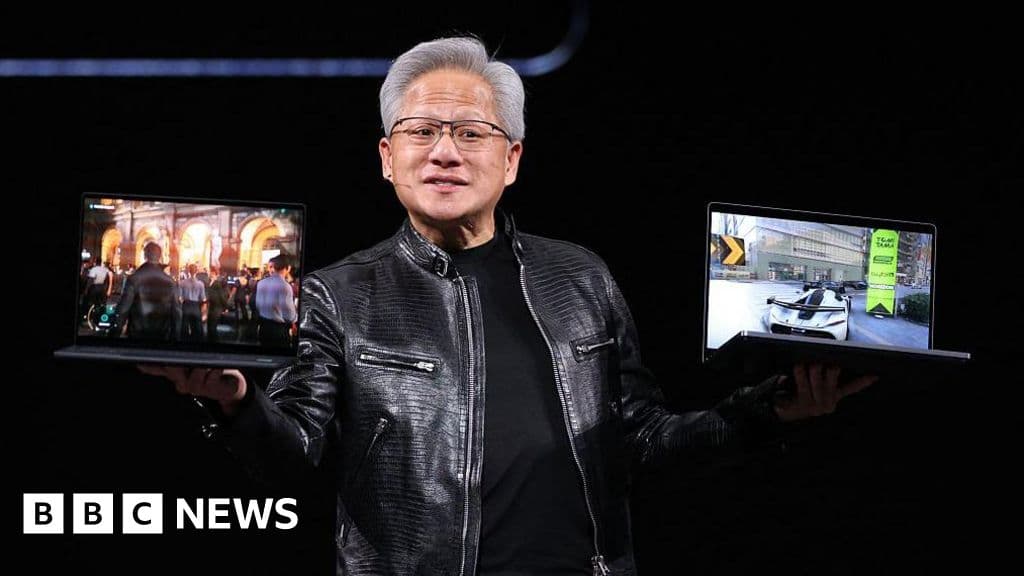
Nvidia's new RTX Spark chip aims to transform personal computing with AI, marking a significant shift in technology. Discover what this means for consumers.
BBC Business
The explosion of Blue Origin's New Glenn rocket raises significant concerns over NASA's lunar ambitions and the future of Amazon's satellite projects. Discover the implications.
BBC Science
Discover how Meta's lack of engagement on user bans raises critical concerns about accountability and transparency in social media governance.
BBC Technology