Glipzo
WorldTechnologyBusinessSportsEntertainmentScienceHealthPolitics
Glipzo
WorldTechnologyBusinessSportsEntertainmentScienceHealthPolitics
  1. Home
  2. /
  3. Health
  4. /
  5. Revolutionary Cancer ‘Flashlight’ Illuminates Tumors for Treatment
Revolutionary Cancer ‘Flashlight’ Illuminates Tumors for Treatment

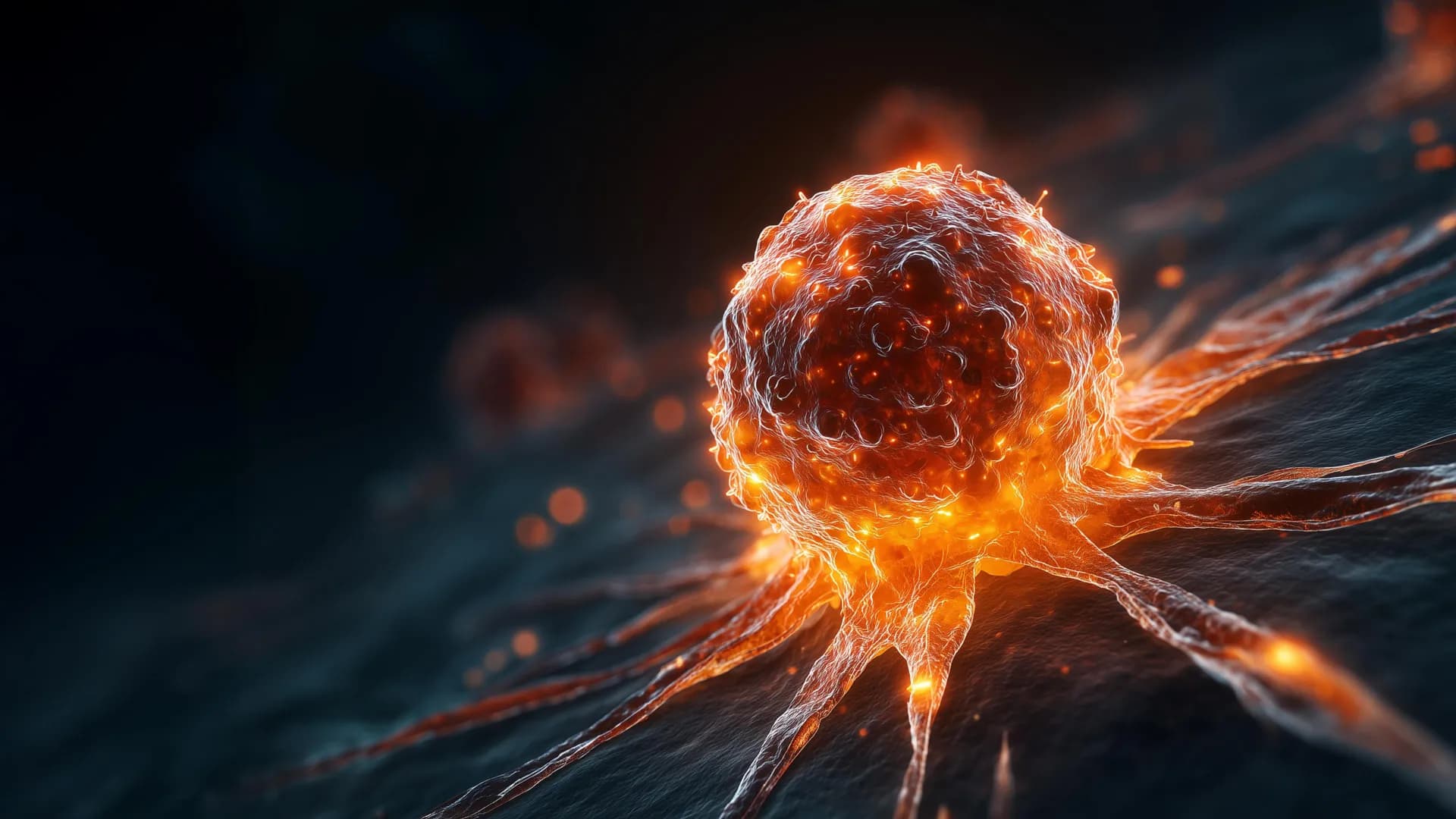
Image: Science Daily

Health
Monday, March 16, 20264 min read

Revolutionary Cancer ‘Flashlight’ Illuminates Tumors for Treatment

Discover how a groundbreaking cancer 'flashlight' developed by MU researchers illuminates tumors, revolutionizing targeted therapies and patient outcomes.

Glipzo News Desk|Source: Science Daily
Share
Glipzo

Key Highlights

  • New cancer 'flashlight' illuminates tumors for targeted therapy.
  • EphA2 protein detection could personalize cancer treatments.
  • Fast, noninvasive imaging could transform cancer diagnostics.
  • Research promises to enhance precision medicine in oncology.

In this article

  • Groundbreaking Development in Cancer Detection Researchers at the **University of Missouri** have unveiled a pioneering technique that could revolutionize how medical professionals identify which cancer patients will benefit most from targeted therapies. This innovative method uses a specialized antibody to effectively illuminate tumors during medical imaging, allowing for precise detection and treatment planning.
  • The Science Behind the ‘Cancer Flashlight’ In initial experiments conducted on mice, Edwards demonstrated that this innovative cancer-detecting ‘flashlight’ could vividly highlight tumors that express the EphA2 protein. This discovery holds potential for oncologists, enabling them to pinpoint which patients may respond positively to therapies specifically targeting EphA2-positive tumor cells, all while sparing healthy tissue from damage.
  • Advantages Over Traditional Diagnostic Methods Currently, medical professionals rely heavily on **biopsies** and **MRI scans** to assess tumors in cancer patients. However, these conventional methods can be invasive and time-consuming, often yielding limited insights into the specific proteins present in cancer cells. In contrast, Edwards’ method, which leverages advanced imaging technology at Mizzou's **Molecular Imaging and Theranostics Center**, promises to transition from preclinical studies to human clinical trials within a seven-year timeframe.
  • Implications for Future Cancer Treatments The implications of this research go beyond mere detection. By accurately identifying EphA2 expression levels in tumors, oncology teams will be better equipped to tailor treatments, ensuring that patients receive the most effective therapies while minimizing unnecessary side effects from ineffective treatments. This could fundamentally change the landscape of cancer treatment, emphasizing the need for personalized healthcare solutions.
  • Why This Research Matters This breakthrough is a critical step towards the future of cancer diagnostics and treatment. By enhancing the ability to visualize tumors, this technology could lead to more precise treatment plans, ultimately improving patient outcomes. The noninvasive nature of the procedure means that patients can undergo testing with minimal discomfort, a significant consideration in cancer care.
  • What’s Next for Cancer Research? Looking ahead, the journey from preclinical studies to human applications involves numerous steps, including rigorous clinical trials to ensure safety and efficacy. Researchers will need to navigate regulatory processes and gather comprehensive data on the performance of this new technique across diverse patient populations.

Groundbreaking Development in Cancer Detection Researchers at the **University of Missouri** have unveiled a pioneering technique that could revolutionize how medical professionals identify which cancer patients will benefit most from targeted therapies. This innovative method uses a specialized antibody to effectively illuminate tumors during medical imaging, allowing for precise detection and treatment planning.

The brainchild of Barry Edwards, an associate professor of biochemistry within the School of Medicine, this approach involves a newly designed, minuscule antibody that zeroes in on EphA2, a protein that frequently appears in cancerous tumors. Edwards and his team have cleverly attached a radioactive marker to this antibody, enabling it to become visible during a positron emission tomography (PET) scan, effectively acting as a ‘flashlight’ to illuminate cancer cells.

The Science Behind the ‘Cancer Flashlight’ In initial experiments conducted on mice, Edwards demonstrated that this innovative cancer-detecting ‘flashlight’ could vividly highlight tumors that express the EphA2 protein. This discovery holds potential for oncologists, enabling them to pinpoint which patients may respond positively to therapies specifically targeting EphA2-positive tumor cells, all while sparing healthy tissue from damage.

Edwards articulated the significance of this advancement, stating, “By finding out which patients have high or low amounts of EphA2, we can determine who is most likely to benefit from a targeted cancer treatment. There is no sense in giving a treatment that won't work to a patient, so this new process we created saves time and money while advancing precision medicine.”

Advantages Over Traditional Diagnostic Methods Currently, medical professionals rely heavily on **biopsies** and **MRI scans** to assess tumors in cancer patients. However, these conventional methods can be invasive and time-consuming, often yielding limited insights into the specific proteins present in cancer cells. In contrast, Edwards’ method, which leverages advanced imaging technology at Mizzou's **Molecular Imaging and Theranostics Center**, promises to transition from preclinical studies to human clinical trials within a seven-year timeframe.

As Edwards noted, “This new targeted approach is noninvasive, and you can get results from the imaging in hours rather than days, which can be huge for patients traveling long distances to seek treatment.” This speed is not just a convenience; it represents a significant shift towards more accessible and efficient cancer care, showcasing the potential of precision medicine.

Implications for Future Cancer Treatments The implications of this research go beyond mere detection. By accurately identifying EphA2 expression levels in tumors, oncology teams will be better equipped to tailor treatments, ensuring that patients receive the most effective therapies while minimizing unnecessary side effects from ineffective treatments. This could fundamentally change the landscape of cancer treatment, emphasizing the need for personalized healthcare solutions.

The study, titled “Preclinical evaluation of anti-EphA2 minibody-based immunoPET agent as a diagnostic tool for cancer,” was recently published in Molecular Imaging and Biology, further validating its scientific rigor and potential impact.

Why This Research Matters This breakthrough is a critical step towards the future of cancer diagnostics and treatment. By enhancing the ability to visualize tumors, this technology could lead to more precise treatment plans, ultimately improving patient outcomes. The noninvasive nature of the procedure means that patients can undergo testing with minimal discomfort, a significant consideration in cancer care.

Furthermore, this development highlights the ongoing shift towards precision medicine, where treatments are tailored not just to the type of cancer but to the individual’s specific tumor characteristics. As cancer research continues to evolve, innovations like Edwards' cancer ‘flashlight’ could become standard practice, ushering in a new era of healthcare that prioritizes patient-specific solutions.

What’s Next for Cancer Research? Looking ahead, the journey from preclinical studies to human applications involves numerous steps, including rigorous clinical trials to ensure safety and efficacy. Researchers will need to navigate regulatory processes and gather comprehensive data on the performance of this new technique across diverse patient populations.

In conclusion, as the medical community observes the advancements in this area, stakeholders will be keenly watching for updates on clinical trials and further research findings. This ‘flashlight’ could illuminate not just tumors, but also the path towards more effective and personalized cancer treatments, marking a significant stride in the fight against cancer.

With a promise of faster results and a focus on patient-centric care, the future of cancer treatment looks brighter than ever.

Did you find this article useful? Share it!

Share

Related Articles

Lawmakers Confront RFK Jr. Amid Vaccine Controversy
Health
Apr 17, 2026

Lawmakers Confront RFK Jr. Amid Vaccine Controversy

Robert F. Kennedy Jr. faces lawmakers' scrutiny over vaccine policies amid a major measles outbreak. What does this mean for public health moving forward?

BBC World
NHS Waiting Times Tracker: Are Improvements Coming Soon?
Health
Apr 17, 2026

NHS Waiting Times Tracker: Are Improvements Coming Soon?

Discover how NHS waiting times are changing and find out if you're affected. Use our tracker to see improvements near you and stay informed.

BBC Health
Shocking Vitamin D Overdose Leaves Young Boy Hospitalized
Health
Apr 17, 2026

Shocking Vitamin D Overdose Leaves Young Boy Hospitalized

A shocking vitamin D overdose hospitalized a young boy, raising urgent questions about supplement regulations. Discover the full story and its implications.

BBC Health

Categories

  • World
  • Technology
  • Business
  • Sports

More

  • Entertainment
  • Science
  • Health
  • Politics

Explore

  • Web Stories
  • About Us
  • Contact

Legal

  • Privacy Policy
  • Terms of Service

© 2026 Glipzo. All rights reserved.