
Image: The Hindu
President Murmu links devotion to Lord Ram with patriotism, envisioning an inclusive India by 2047 during a temple event in Ayodhya.
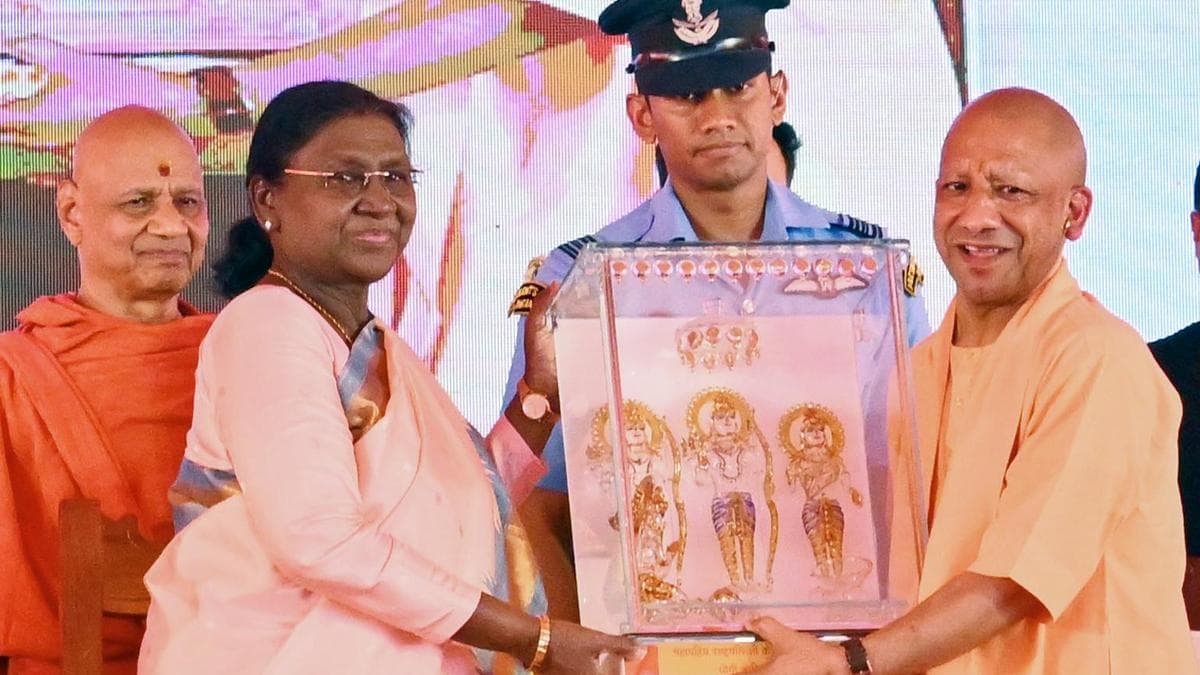
GlipzoIn a powerful address at the Shri Ram Yantra Sthapana event held on March 19, 2026, President Droupadi Murmu emphasized the profound connection between worshiping Lord Ram and honoring Mother India. Speaking from the Shri Ram Janmabhoomi Mandir in Ayodhya, she described significant events surrounding the temple as "golden moments" in India's historical narrative, reinforcing the idea that reverence for Lord Ram is inherently tied to the patriotic spirit of the nation.
Opening her remarks with a fervent chant of "Jai Shri Ram," President Murmu declared, "The path of both devout followers and devotion is the same. Bowing before Lord Shri Ram and paying homage to Mother India are the same." Her words resonated deeply with attendees as she participated in religious ceremonies and oversaw the installation of a 150-kg gold-plated metal plate, known as the 'Shri Ram Yantra.'
During her address, President Murmu articulated a vision for India's development, noting that with the blessings of Lord Ram, the country could evolve into an "inclusive society" and a "developed nation by 2047 or even sooner." She highlighted the importance of fostering unity and progress, stating, "We are all moving forward in the direction of building an inclusive society and a developed nation."
Murmu drew parallels between devotion to Lord Ram and national pride, saying, "The same heart that resonates with 'Namami Ramam Raghuvansh Natham' is the same heart from which our national song 'Vande Mataram' is sung." This connection underscores her belief that spiritual devotion can inspire civic responsibility and patriotism.
The President did not shy away from expressing her deep appreciation for Ayodhya, referring to it as "dearer than heaven" to Lord Ram. She quoted Ramcharitmanas, emphasizing that Lord Ram himself regarded Ayodhya as superior to the celestial abode. "In Ramcharitmanas, Lord Shri Ram tells Sita ji that although everyone has described Vaikunth, I find Avadhpuri dearer to me," she remarked.
Her sentiments resonated with the audience, reinforcing Ayodhya's cultural significance as a cherished site for millions of devotees. "This city of Ayodhya is most dear to all Ram devotees," she asserted, highlighting the temple's role as a beacon of cultural and spiritual identity for Indians.
In her speech, President Murmu also touched upon the constitutional implications of Lord Ram's legacy. She noted how the artistic depiction of Lord Ram's return to Ayodhya after defeating Ravan is intricately linked to the Fundamental Rights enshrined in India's constitution.
She expressed her satisfaction over the growing awareness of this depiction, stating, "I am happy to know that this painting is spreading awareness and knowledge, and connecting the public with constitutional ideals and sacred cultural symbols." Such connections between spirituality and constitutional values highlight the integral role that cultural heritage plays in shaping national identity.
As the President extended her festive greetings to all Indians and Ram devotees worldwide, she expressed her hopes for the new year, particularly in the context of Ram Navami, which marks the birth anniversary of Lord Ram. "I extend my heartfelt greetings to all Indians and Ram devotees living in India and abroad for the New Year," she said, emphasizing the significance of this occasion in the Hindu calendar.
Murmu also highlighted the burgeoning status of Ayodhya as a hub for religious tourism, noting that millions of devotees have visited the Ram Janmabhoomi temple. "Ayodhya Dham has emerged as a major centre of religious tourism," she declared, reinforcing the city's importance not just as a spiritual site but also as a focal point for cultural and economic growth.
In her concluding remarks, President Murmu stated that the temple complex symbolizes a broader cultural resurgence in India. "This temple complex, linked to our spiritual roots, represents the resurgence of our cultural identity and the values we hold dear as a nation," she said.
As the nation looks toward a future intertwined with its spiritual heritage, President Murmu's address serves as a reminder of the enduring bond between faith, culture, and national identity. The emphasis on unity, development, and inclusivity reflects a vision that resonates with many in contemporary India.
Looking forward, the focus will likely remain on the continuing development of Ayodhya as both a spiritual and cultural epicenter. As India approaches 2047, the centenary of its independence, the aspirations articulated by President Murmu could play a crucial role in guiding national policy and public sentiment toward creating a more inclusive society. The intersection of faith and national identity will be pivotal as India navigates its future challenges and opportunities.

Tensions soar as the US and Iran engage in air strikes near the Strait of Hormuz, raising concerns over global oil supply and regional stability.
BBC World
Trump's international interventions face serious stalemates. What will this mean for U.S. foreign policy? Explore the critical challenges ahead.
Indian Express
Tehran denies resignation of President Masoud Pezeshkian amid claims of IRGC influence. What does this mean for Iran's political stability? Click to learn more!
Indian Express