
Image: BBC World
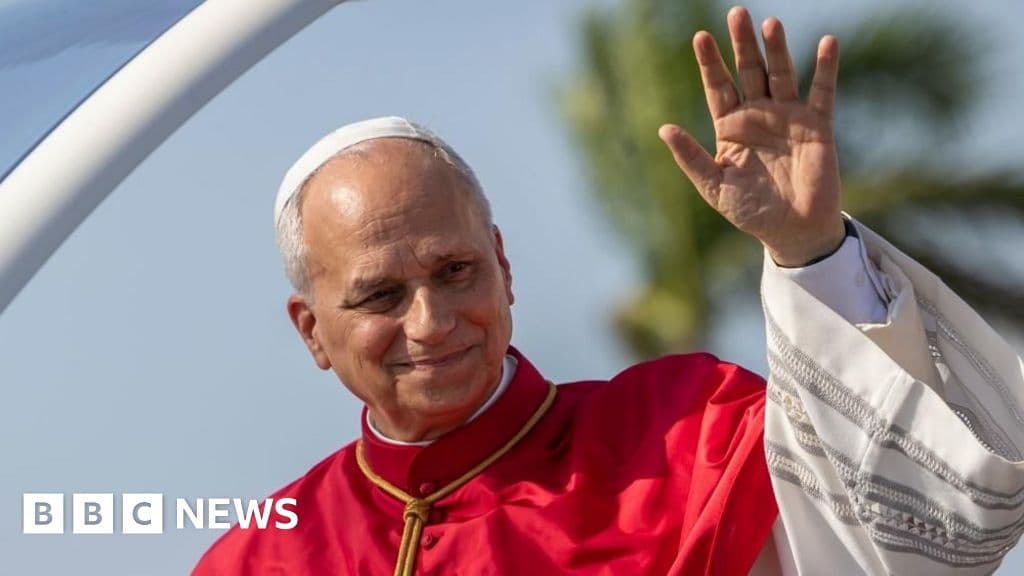
Pope Leo clarifies his recent 'tyrants' speech wasn't aimed at Trump. Discover the implications of their exchange on global humanitarian priorities.
GlipzoIn a recent address during his African tour, Pope Leo made headlines by criticizing global leaders he referred to as "tyrants" for their extravagant military spending, which he argued detracts from essential humanitarian needs. However, following a heated exchange with Donald Trump, the Pope clarified that his comments were not directed at the former president.
The pontiff explained that the speech was prepared two weeks prior, long before Trump's commentary about him. "I was not trying to engage in a debate with the president, which is not my intention at all," he stated during a press conference while traveling to Angola. This clarification comes in the wake of heightened tensions between the two figures, particularly after Trump's recent remarks criticizing the Pope's foreign policy stance.
During his speech in Cameroon, Pope Leo expressed deep concern over the allocation of financial resources towards warfare instead of necessary services like health care and education. He highlighted the stark contrast between the funds used for military conflicts and the lack of investment in societal healing and restoration.
He poignantly noted, "The masters of war pretend not to know that it takes only a moment to destroy, yet often a lifetime is not enough to rebuild." This statement, while powerful, was perceived by some as a veiled critique of Trump's administration, particularly in light of escalating military tensions in regions like the Middle East.
Trump, reacting to the Pope's comments, labeled him as "terrible for foreign policy" and expressed his lack of admiration for the pontiff, stating he is "not a big fan". He emphasized that while the Pope can voice his opinions, he disagrees with him on various issues, further escalating the back-and-forth between the two influential figures.
The Pope's remarks are significant not only for their immediate political implications but also for the broader context of the Catholic Church's role in global humanitarian issues. As the leader of a faith that counts over 1.3 billion followers, including 288 million in Africa alone, the Pope's voice carries substantial weight in advocating for justice and peace.
Pope Leo's Africa tour is his second significant international visit since assuming the papacy, highlighting the Vatican's commitment to engaging with the African continent, where Catholicism is witnessing substantial growth. With more than 20% of the world's Catholics residing in Africa, this tour underscores the importance of addressing issues pertinent to this demographic.
The pontiff's itinerary includes visits to 11 cities across four countries, reflecting his dedication to fostering dialogue and understanding among diverse cultures and communities. The Pope's presence in Africa also serves as a reminder of the Church's historical roots and its mission to promote peace, charity, and social justice across the globe.
As both Pope Leo and Donald Trump continue to navigate their respective roles in the public eye, observers will be keenly watching how their interactions evolve. The Pope's emphasis on peace and humanitarian needs stands in stark contrast to Trump's more militaristic approach to foreign policy.
In the coming months, key questions arise: - Will the Pope's remarks influence global leaders to reconsider their spending priorities? - How will Trump respond as he continues to engage with international figures? - What impact will this ongoing dialogue have on the relationship between the Catholic Church and political leaders?
As the world watches, the Pope’s advocacy for peace and the emphasis on humanitarian priorities will likely remain central themes in the discourse surrounding global leadership and responsibility. The conversations ignited by these two powerful figures may very well shape the narrative around faith, politics, and the collective responsibility to address the pressing issues facing humanity today.

Tensions soar as the US and Iran engage in air strikes near the Strait of Hormuz, raising concerns over global oil supply and regional stability.
BBC World
Trump's international interventions face serious stalemates. What will this mean for U.S. foreign policy? Explore the critical challenges ahead.
Indian Express
Tehran denies resignation of President Masoud Pezeshkian amid claims of IRGC influence. What does this mean for Iran's political stability? Click to learn more!
Indian Express