
Image: BBC World
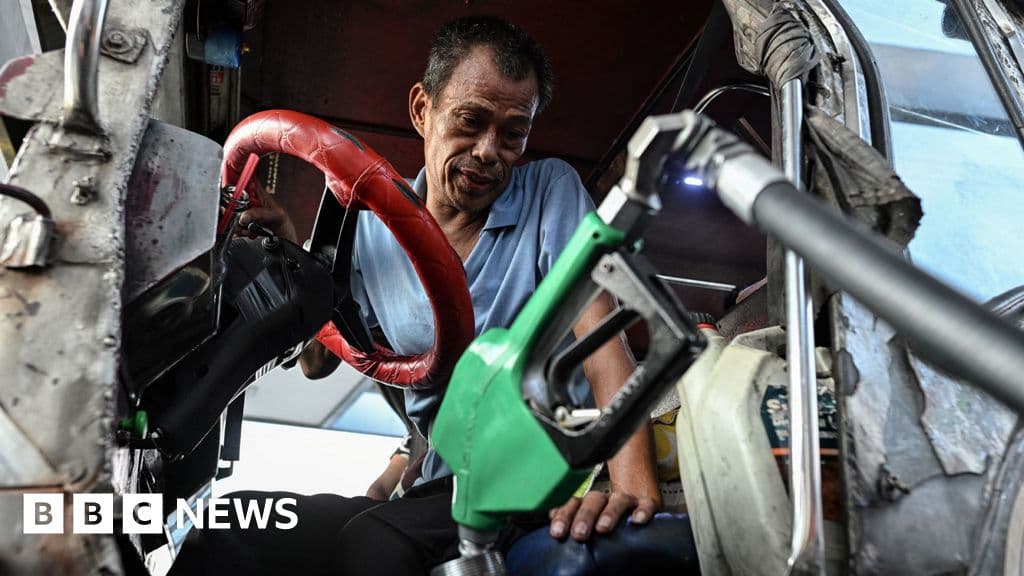
The Philippines declares a national energy emergency as oil prices soar due to the Iran conflict. President Marcos vows to secure fuel supply.
GlipzoIn a significant move, Philippine President Ferdinand Marcos has declared a national energy emergency as the country grapples with soaring oil prices amid the ongoing conflict in the Middle East. During a televised address, Marcos revealed plans to secure new oil sources, aiming to enhance the nation’s fuel supply in response to the crisis that began with the war in Iran on February 28. This declaration makes the Philippines the first nation to officially address an energy emergency as prices of diesel and petrol have skyrocketed, more than doubling since the onset of the conflict.
"We will have a flow of oil. Not just one delivery, not two deliveries, but a flow of oil-related products," Marcos stated, reassuring citizens that the government is taking swift action to stabilize energy supply. The country heavily relies on imports, sourcing 98% of its oil from the Gulf, which has now been severely disrupted.
The declaration empowers the Philippine government with the legal authority necessary to implement measures aimed at ensuring energy stability, thereby protecting the economy from further disruption. Marcos affirmed that no options are off the table, saying, "We are looking at everything we can do, whatever suggestion, whatever idea."
As part of the emergency measures, a newly formed committee will oversee the distribution of essential goods, including fuel and food, to mitigate the crisis. The government will also have the ability to directly purchase fuel and petroleum products to replenish dwindling supplies. This state of emergency is set to last for one year, contingent upon potential extensions or lifting by the president.
In the wake of this crisis, several senators had urged Marcos to recognize the emergency-level hardships faced by Filipino families due to the escalating oil prices. On Tuesday, petrol and diesel prices surged yet again, reaching levels that are more than double what they were before the war began.
Amidst this turmoil, the Kilusang Mayo Uno (KMU), one of the country’s primary labor coalitions, has sharply criticized the emergency declaration. They argue that it is an admission of the government’s failure to effectively manage the oil crisis, accusing the administration of previously downplaying the situation by claiming that “everything is normal.”
The KMU expressed particular concern regarding what they consider anti-worker provisions within the executive order, which may restrict protests and strikes during a time when families are struggling to cope with inflated fuel prices.
Despite criticism from labor groups, prominent business figures, including tycoon Manuel V. Pangilinan, have voiced their support for the emergency measures. Pangilinan, whose companies are significantly impacted by rising energy costs, emphasized the need for the government to utilize every available option to navigate through these challenging times. He warned that the crisis is already affecting business operations, highlighting the urgency of the situation.
In response to the rising fuel costs and what many perceive as the government’s inadequate handling of the crisis, transport workers and various groups, including ride-hailing services, are preparing for a two-day strike on Thursday and Friday. The transport union coalition Piston is leading the charge, demanding multiple reforms including the elimination of fuel taxes, a rollback of oil prices, and the establishment of state control over oil pricing. They are also advocating for fare increases and wage hikes for workers in light of the increased cost of living.
To alleviate some of the pressures caused by the oil price hikes, the government has introduced measures such as subsidies for transport drivers, reduced ferry services, and a four-day work week for civil servants to conserve fuel.
Energy Secretary Sharon Garin indicated that the Philippines currently has approximately 45 days worth of fuel supply remaining. This precarious situation underscores the urgency of the government's actions as the country navigates through an unprecedented energy crisis.
As the situation develops, many are left wondering how effective these emergency measures will be in the long run. Will the government be able to stabilize fuel prices and ensure adequate supply? The next few weeks will be crucial in determining the success of these initiatives, as public frustration mounts and the potential for widespread protests looms.
This energy crisis not only threatens the daily lives of Filipinos but also poses a significant risk to the broader economy. The Philippines’ reliance on imported oil makes it particularly vulnerable to global energy market fluctuations. The government’s response to this emergency will be closely monitored, as its effectiveness could set a precedent for how nations manage similar crises in the future.
As the country faces a critical juncture, the steps taken by President Marcos and his administration will be pivotal. Observers will be keenly watching how the government balances the need for economic stability with the rights of workers and the public’s growing unrest over rising living costs. Continued collaboration with allies, like the United States, could also play a role in navigating this challenging landscape.
With the energy emergency declared, the Philippines stands at a crossroads that could have lasting implications for its economy and social fabric. The coming months will reveal whether these measures can effectively curb the crisis and restore confidence among the populace.

Commercial LPG prices have risen again, with increases of ₹42 in Delhi and ₹53.50 in Kolkata impacting businesses and consumers alike. Find out more.
Indian Express
Discover how a tragic coal mine explosion in Shanxi, China, reveals ongoing safety concerns in the industry amidst a push for green energy.
BBC Business
Montek Singh Ahluwalia highlights key economic challenges for India, emphasizing the need for a strategic approach to balance payments and investment.
Indian Express