Glipzo
WorldTechnologyBusinessSportsEntertainmentScienceHealthPolitics
Glipzo
WorldTechnologyBusinessSportsEntertainmentScienceHealthPolitics
  1. Home
  2. /
  3. Technology
  4. /
  5. Nvidia's Networking Division: The Silent Giant of AI Growth
Nvidia's Networking Division: The Silent Giant of AI Growth

Image: TechCrunch

Technology
Wednesday, March 18, 20265 min read

Nvidia's Networking Division: The Silent Giant of AI Growth

Discover how Nvidia's lesser-known networking division is quietly booming, driving AI growth and reshaping the tech landscape with innovative solutions.

Glipzo News Desk|Source: TechCrunch
Share
Glipzo

Key Highlights

  • Nvidia's networking division generated $11 billion last quarter!
  • Analysts say Nvidia's networking revenue surpasses Cisco's!
  • Acquisition of Mellanox crucial for Nvidia's networking success.
  • Nvidia launches new AI supercomputer chips at GTC 2023!
  • Full-stack solutions set Nvidia apart in the networking market.

In this article

  • Nvidia's Visionary Leadership in AI Chip Development In the tech world, **Nvidia** CEO **Jensen Huang** is a name synonymous with innovation, particularly in artificial intelligence (AI). More than a decade ago, in **2010**, he foresaw the potential of AI and initiated the development of specialized chips tailored for this burgeoning field. Fast forward to **2020**, Nvidia made a pivotal move by acquiring a networking company that has since transformed its business landscape. This strategic pivot has enabled Nvidia to establish a thriving networking division, rapidly becoming a critical player in the AI ecosystem, albeit with less public attention than its chip business.
  • The Components of Nvidia's Networking Success Nvidia's networking division is built around advanced technologies that facilitate communication and data transfer within data centers. Key components include: - **NVLink**: This technology enhances communication between GPUs within data center racks. - **Nvidia InfiniBand Switches**: An in-network computing platform that boosts data transfer efficiency. - **Spectrum-X**: An Ethernet platform designed specifically for AI networking. - **Co-packaged optics switches**: These switches further optimize data flow within complex networking environments.
  • The Industry Response to Nvidia's Networking Division Industry analysts have taken note of Nvidia's rapid ascent in networking. **Kevin Cook**, a senior equity strategist at **Zacks Investment Research**, remarked on the impressive scale of Nvidia's networking revenue. He compared it to **Cisco**, a longstanding giant in networking, stating that Nvidia's quarterly earnings surpass Cisco's annual totals. "[Nvidia’s networking business] reports $11 billion for the quarter; that number is greater than Cisco’s networking business," Cook noted, highlighting the division's extraordinary growth trajectory.
  • The Roots of Innovation: The Mellanox Acquisition The foundation of Nvidia’s networking capabilities can be traced back to its acquisition of **Mellanox Technologies**, a networking company established in **1999** in Israel. Nvidia purchased Mellanox in **2020** for **$7 billion**, a move that has since proven pivotal for the company. **Kevin Deierling**, Senior VP of Networking at Nvidia, joined the company through the Mellanox acquisition. He reflects on the initial skepticism surrounding the acquisition but now recognizes its critical role in Nvidia's strategy.
  • A Unique Full-Stack Approach One distinguishing factor of Nvidia’s networking success is its approach to technology sales. Rather than offering individual components, Nvidia provides a **full-stack solution**. This integrated model allows them to sell their GPUs alongside the networking technologies that enhance their performance. Deierling remarked, "We build the full compute stack, fully integrated stack, and then we go to market through all of our partners," underscoring the collaborative nature of Nvidia's strategy.
  • Recent Innovations and Future Outlook During **Nvidia’s annual GTC technology conference** on **March 16**, Huang unveiled a series of groundbreaking updates to their networking system, including the **Nvidia Rubin platform** featuring six new chips designed to power an **“AI supercomputer.”** Additionally, the company introduced the **Nvidia Inference Context Memory Storage platform** and upgraded its **Nvidia Spectrum-X Ethernet Photonics switches**. These innovations signal Nvidia's ongoing commitment to advancing AI technology and its networking capabilities.
  • Why This Matters The rapid expansion of Nvidia's networking division highlights a significant evolution in the tech landscape, where AI is increasingly central to business operations. As data centers evolve to meet the demands of AI training and processing, companies like Nvidia that integrate networking solutions with AI technology are poised for continued growth. With AI adoption projected to accelerate across various industries, Nvidia's foresight in building a robust networking division could position it as a leader in the next wave of technological advancement.
  • What’s Next for Nvidia? Looking ahead, industry observers will be keenly watching how Nvidia leverages its networking division to capitalize on the rising demand for AI solutions. The integration of advanced networking technologies with AI capabilities will be critical as businesses seek to optimize their operations and improve efficiency. As Nvidia continues to innovate and expand its offerings, the tech giant is well-positioned to navigate the competitive landscape and maintain its status as a leader in the AI revolution.

Nvidia's Visionary Leadership in AI Chip Development In the tech world, **Nvidia** CEO **Jensen Huang** is a name synonymous with innovation, particularly in artificial intelligence (AI). More than a decade ago, in **2010**, he foresaw the potential of AI and initiated the development of specialized chips tailored for this burgeoning field. Fast forward to **2020**, Nvidia made a pivotal move by acquiring a networking company that has since transformed its business landscape. This strategic pivot has enabled Nvidia to establish a thriving networking division, rapidly becoming a critical player in the AI ecosystem, albeit with less public attention than its chip business.

Nvidia's networking segment has emerged as a powerhouse, generating $11 billion in revenue last quarter, marking an astounding 267% year-over-year growth. Over the past year, this division has accrued more than $31 billion in revenue, reinforcing its position as Nvidia’s second-largest revenue source, trailing only its compute division. This impressive financial performance raises questions about why this segment hasn't garnered more spotlight compared to Nvidia's more established chip and gaming businesses.

The Components of Nvidia's Networking Success Nvidia's networking division is built around advanced technologies that facilitate communication and data transfer within data centers. Key components include: - **NVLink**: This technology enhances communication between GPUs within data center racks. - **Nvidia InfiniBand Switches**: An in-network computing platform that boosts data transfer efficiency. - **Spectrum-X**: An Ethernet platform designed specifically for AI networking. - **Co-packaged optics switches**: These switches further optimize data flow within complex networking environments.

Together, these technologies create a comprehensive infrastructure necessary for building what is termed an “AI factory”—a data center engineered for training AI models. This integrated approach not only streamlines operations but also positions Nvidia as the go-to provider for AI-centric networking solutions.

The Industry Response to Nvidia's Networking Division Industry analysts have taken note of Nvidia's rapid ascent in networking. **Kevin Cook**, a senior equity strategist at **Zacks Investment Research**, remarked on the impressive scale of Nvidia's networking revenue. He compared it to **Cisco**, a longstanding giant in networking, stating that Nvidia's quarterly earnings surpass Cisco's annual totals. "[Nvidia’s networking business] reports $11 billion for the quarter; that number is greater than Cisco’s networking business," Cook noted, highlighting the division's extraordinary growth trajectory.

Despite these incredible figures, Nvidia's networking division still operates in the shadows of its more recognized segments. The gaming sector, which was once Nvidia's primary revenue driver, has seen its prominence wane as AI and data center operations gain traction. The company’s networking business, while lucrative, remains a lesser-known entity to many outside the tech industry.

The Roots of Innovation: The Mellanox Acquisition The foundation of Nvidia’s networking capabilities can be traced back to its acquisition of **Mellanox Technologies**, a networking company established in **1999** in Israel. Nvidia purchased Mellanox in **2020** for **$7 billion**, a move that has since proven pivotal for the company. **Kevin Deierling**, Senior VP of Networking at Nvidia, joined the company through the Mellanox acquisition. He reflects on the initial skepticism surrounding the acquisition but now recognizes its critical role in Nvidia's strategy.

Deierling emphasized the misconception surrounding networking as merely connecting devices, noting Huang's vision to redefine data centers as the new computing units. He stated, "Networking is a lot more than just moving smaller amounts of data between compute nodes; it’s actually a foundation." This perspective encapsulates the essence of Nvidia's current strategy and its commitment to integrating networking with its GPU offerings.

A Unique Full-Stack Approach One distinguishing factor of Nvidia’s networking success is its approach to technology sales. Rather than offering individual components, Nvidia provides a **full-stack solution**. This integrated model allows them to sell their GPUs alongside the networking technologies that enhance their performance. Deierling remarked, "We build the full compute stack, fully integrated stack, and then we go to market through all of our partners," underscoring the collaborative nature of Nvidia's strategy.

This comprehensive approach not only differentiates Nvidia from its competitors but also solidifies its position as a leader in the sector. As the demand for AI capabilities continues to surge, Nvidia's integrated offerings are likely to resonate strongly with businesses aiming to harness AI efficiently.
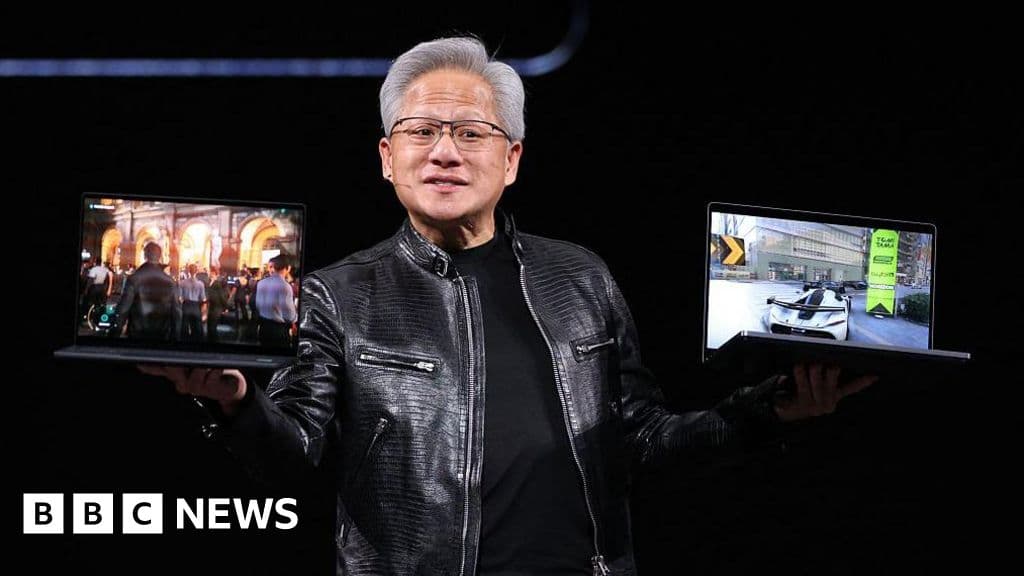
Recent Innovations and Future Outlook During **Nvidia’s annual GTC technology conference** on **March 16**, Huang unveiled a series of groundbreaking updates to their networking system, including the **Nvidia Rubin platform** featuring six new chips designed to power an **“AI supercomputer.”** Additionally, the company introduced the **Nvidia Inference Context Memory Storage platform** and upgraded its **Nvidia Spectrum-X Ethernet Photonics switches**. These innovations signal Nvidia's ongoing commitment to advancing AI technology and its networking capabilities.

Why This Matters The rapid expansion of Nvidia's networking division highlights a significant evolution in the tech landscape, where AI is increasingly central to business operations. As data centers evolve to meet the demands of AI training and processing, companies like Nvidia that integrate networking solutions with AI technology are poised for continued growth. With AI adoption projected to accelerate across various industries, Nvidia's foresight in building a robust networking division could position it as a leader in the next wave of technological advancement.

What’s Next for Nvidia? Looking ahead, industry observers will be keenly watching how Nvidia leverages its networking division to capitalize on the rising demand for AI solutions. The integration of advanced networking technologies with AI capabilities will be critical as businesses seek to optimize their operations and improve efficiency. As Nvidia continues to innovate and expand its offerings, the tech giant is well-positioned to navigate the competitive landscape and maintain its status as a leader in the AI revolution.

Did you find this article useful? Share it!

Share

Related Articles

How the METR Chart Is Shaping the AI Boom's Future
Technology
Apr 19, 2026

How the METR Chart Is Shaping the AI Boom's Future

Discover how the METR time-horizon chart is reshaping the AI boom and influencing investments, public discourse, and technology development.

Indian Express
Shocking Humanoid Robots Outrun Humans in Beijing Marathon
Technology
Apr 19, 2026

Shocking Humanoid Robots Outrun Humans in Beijing Marathon

Humanoid robots outrun human athletes in Beijing's half-marathon, showcasing China's advanced robotics and AI capabilities. Discover what’s next for this technology!

Indian Express
Breaking: Anthropic Meets White House Amid AI Controversy
Technology
Apr 18, 2026

Breaking: Anthropic Meets White House Amid AI Controversy

Discover the implications of the White House's meeting with Anthropic amid ongoing legal battles and concerns surrounding the AI tool Claude Mythos.

BBC Technology

Categories

  • World
  • Technology
  • Business
  • Sports

More

  • Entertainment
  • Science
  • Health
  • Politics

Explore

  • Web Stories
  • About Us
  • Contact

Legal

  • Privacy Policy
  • Terms of Service

© 2026 Glipzo. All rights reserved.