
Image: Wired
Nvidia's DLSS 5 faces backlash from gamers and developers alike for its controversial use of generative AI, raising concerns over artistic integrity and player experience.
GlipzoIn a stunning reveal at the GPU Technology Conference (GTC), Nvidia showcased its latest iteration of deep-learning super-sampling technology, DLSS 5. Unlike its predecessors, which primarily focused on enhancing frame rates, this new version aims to utilize generative AI to elevate the realism of character facial features in video games. However, the unveiling has sparked a wave of criticism from gamers and developers alike, who express concerns over its implications for creativity and player experience.
The DLSS technology, first introduced in 2018, has been a game-changer for the industry. By rendering games at lower resolutions and employing AI to upscale the graphics, it allows for smoother gameplay without overburdening hardware. Recent updates have even included AI-generated frames that sit between rendered images, optimizing performance while maintaining visual quality. As Kevin Bates, the CEO of Arduboy, noted, this new development is an impressive technical feat, especially if it can be executed on a single graphics card.
However, the ambitious leap to generative AI has raised eyebrows. Unlike previous versions that merely enhanced graphics, DLSS 5 alters the visual characteristics of characters in real time, often without the consent of game developers. While players have the option to toggle this feature on or off, its implementation has left many in the industry feeling uneasy.
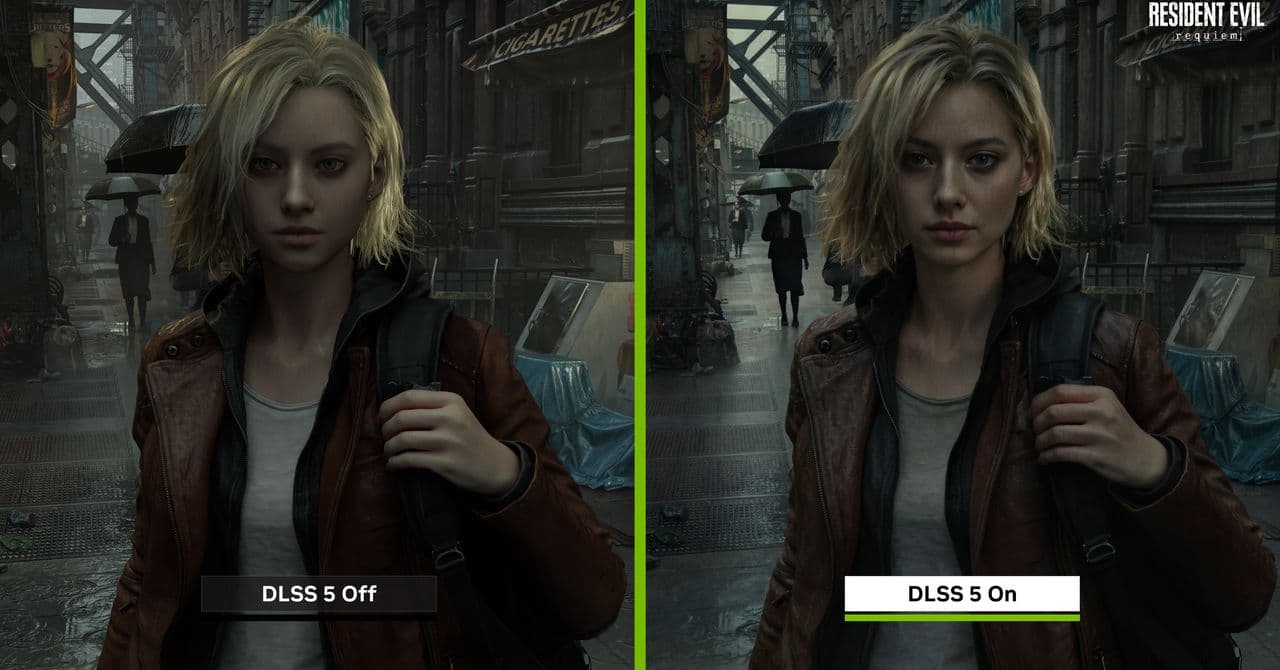
During the demo, Nvidia highlighted DLSS 5's capabilities using popular titles like Capcom’s Resident Evil Requiem, Ubisoft’s Assassin’s Creed, and Bethesda’s Starfield. The technology is designed to create photorealistic graphics and improve lighting effects. Still, viewers noticed that character faces appeared overly detailed, leading to comparisons with Instagram filters and accusations of over-sexualization. Reactions on social media ranged from disappointment to outright disgust, with many users labeling the changes as “yassified” or akin to “porn faces.” The Verge even described it as a form of motion smoothing that detracts from the gaming experience.
In addition to aesthetic concerns, DLSS 5 has not been without its technical pitfalls. Users observing the official demo video noted unexpected artifacts appearing in real time. For instance, in a FIFA scene, a soccer ball displayed odd visual glitches, leading many to question the reliability of the technology. Furthermore, character models in Resident Evil Requiem exhibited altered facial features, with characters having larger eyes and fuller lips, which strayed from the original artistic intent.
James Brady, a game artist known for his work on Call of Duty: Modern Warfare 3, expressed his dismay, stating, “It devalues an artist’s creativity and intent on a basic level.” He argued that the generative AI changes undermine the original design and vision for characters, reducing them to mere superficial enhancements reminiscent of social media filters.
In light of the overwhelming backlash, Nvidia CEO Jensen Huang firmly defended the technology, asserting that gamers are “completely wrong” about the implications of DLSS 5. Unsurprisingly, this response has not settled the discontent among the gaming community, which often bristles at being told their opinions are misguided.
Adding to the tension, developers from Capcom and Ubisoft reported that they were blindsided by the demo. According to sources at Insider Gaming, these developers learned about the technology's visual alterations at the same time as the public, illustrating a potential disconnect between Nvidia and its partners. This lack of communication raises questions about the collaborative process and the implications for future game development.
The introduction of DLSS 5 marks a significant milestone in the evolution of graphics technology within the gaming industry. However, the mixed reactions underscore the complexities of integrating generative AI into creative processes. The controversy serves as a reminder of the importance of collaboration and communication between technology providers and game developers, particularly as the industry navigates the intricate relationship between innovation and artistic integrity.
As we look ahead, it will be crucial to monitor how Nvidia addresses these concerns and whether it chooses to refine DLSS 5 based on feedback from both gamers and developers. Additionally, the broader implications for the use of AI in creative fields will warrant scrutiny as other companies may follow suit with similar technologies.
In the coming months, keep an eye on: - How Nvidia evolves DLSS 5 in response to feedback. - Potential updates or changes from game developers regarding their stance on AI-generated content. - The ongoing discussions surrounding the impact of AI on artistic expression in gaming.
The DLSS 5 controversy is more than just a technical issue; it raises fundamental questions about the future of gaming and the role of AI in shaping player experiences. Whether this technology will enhance or detract from the gaming world remains to be seen, but one thing is clear: the conversation around AI in gaming is just beginning.

Nvidia's new RTX Spark chip aims to transform personal computing with AI, marking a significant shift in technology. Discover what this means for consumers.
BBC Business
The explosion of Blue Origin's New Glenn rocket raises significant concerns over NASA's lunar ambitions and the future of Amazon's satellite projects. Discover the implications.
BBC Science
Discover how Meta's lack of engagement on user bans raises critical concerns about accountability and transparency in social media governance.
BBC Technology