

Image: The Verge
Nvidia's DLSS 5 promises groundbreaking AI enhancements in gaming visuals, but will it compromise artistic integrity? Discover what’s at stake.
GlipzoNvidia has unveiled its latest AI upscaling technology, DLSS 5, during the GTC conference on Monday, and it is already stirring up significant discussion in the gaming community. This innovative advancement in graphics aims to enhance video game visuals, with the potential to alter lighting and materials in real-time. However, as with any cutting-edge technology, the reception has been mixed, with some praising its capabilities while others express concern over artistic integrity and the impact on gaming aesthetics.
DLSS 5, which stands for Deep Learning Super Sampling 5, represents a pivotal moment in the intersection of gaming and artificial intelligence. Nvidia's CEO, Jensen Huang, referred to this development as the “GPT moment for graphics,” emphasizing the blend of handcrafted rendering and generative AI. The aim is to achieve a remarkable leap in visual realism while ensuring that artists retain control over their creative expressions.
Unlike its predecessors, which primarily focused on using machine learning to bridge the gap between varying graphics settings, DLSS 5 employs generative AI to significantly enhance the game's lighting and materials. This technology allows for enhancements that feel almost like newly added details. Early demonstrations of DLSS 5 showcased improvements in popular titles such as Resident Evil Requiem, Starfield, Hogwarts Legacy, and EA Sports FC. The results are visually striking, though some critics have likened the changes to the controversial “AI slop” seen in photography and video editing.
According to Nvidia, the underlying AI model of DLSS 5 is trained to comprehend complex scene semantics, including: - Characters, hair, and fabric - Translucent skin - Environmental lighting conditions (e.g., front-lit, back-lit, overcast)
This comprehensive analysis allows DLSS 5 to generate images that accurately simulate complex features such as subsurface scattering on skin and the nuanced interactions of light with materials like hair and fabric. The technology aims to preserve the original scene's structure while enhancing its visual appeal.
One of the most striking aspects of DLSS 5 is its transformative effect on character models. For instance, in Resident Evil Requiem, the protagonist Grace Ashcroft appears remarkably different, as if subjected to an Instagram filter that amplifies her features. Critics have noted an uncanny resemblance to overly polished images, raising questions about the fine line between enhancement and distortion.
In Starfield, the enhancements similarly produce dramatic results, with characters appearing overly sharp and highlighted, creating an almost surreal visual experience. Todd Howard, the studio head at Bethesda Game Studios, expressed his enthusiasm, stating, “When NVIDIA showed us DLSS 5 and we got it running in Starfield, it was amazing how it brought it to life.”
Despite the excitement surrounding DLSS 5, not everyone is convinced of its merits. Game developer Mike Bithell voiced his concerns, stating, “For when you absolutely, positively, don’t want any art direction in your gaming experience. Disappointing to see anyone take this nonsense seriously. Such a mess.”
However, Nvidia has emphasized that DLSS 5 includes features that allow game developers to customize its impact on the game's visual style. This flexibility enables artists to maintain their unique aesthetics while leveraging the power of generative AI. Key controls include: - Inputting the game’s color and motion vectors for each frame - Adjusting parameters like intensity, color grading, blending, contrast, saturation, and gamma - Masking specific objects or areas from enhancement
This level of control aims to ensure that the enhancements align with the developers' artistic intentions.
DLSS 5 is set to be released this fall, with compatibility confirmed for a select roster of games, including upcoming titles such as The Elder Scrolls VI: Oblivion remake. As the gaming community eagerly awaits its launch, questions remain about how the technology will be embraced by developers and players alike.
Nvidia's commitment to providing tools for artistic control may mitigate some concerns regarding the potential overreach of generative AI in gaming. However, the debate over the implications of such technology will likely continue, especially as gamers experience the balance—or lack thereof—between enhanced realism and artistic vision.
The introduction of DLSS 5 highlights a critical juncture in the gaming industry, where advancements in technology provoke discussions about creativity and artistic integrity. As more games integrate AI-driven enhancements, the challenge will be to find a balance that respects the original vision of developers while pushing the boundaries of visual realism. The ongoing dialogue between gamers, developers, and technology will shape the future of gaming graphics.
As DLSS 5 rolls out, monitoring its adoption across various titles and the feedback from developers will be essential. Will it revolutionize gaming graphics as promised, or will it face backlash for compromising artistic integrity? The answers will emerge as the gaming community engages with this groundbreaking technology.
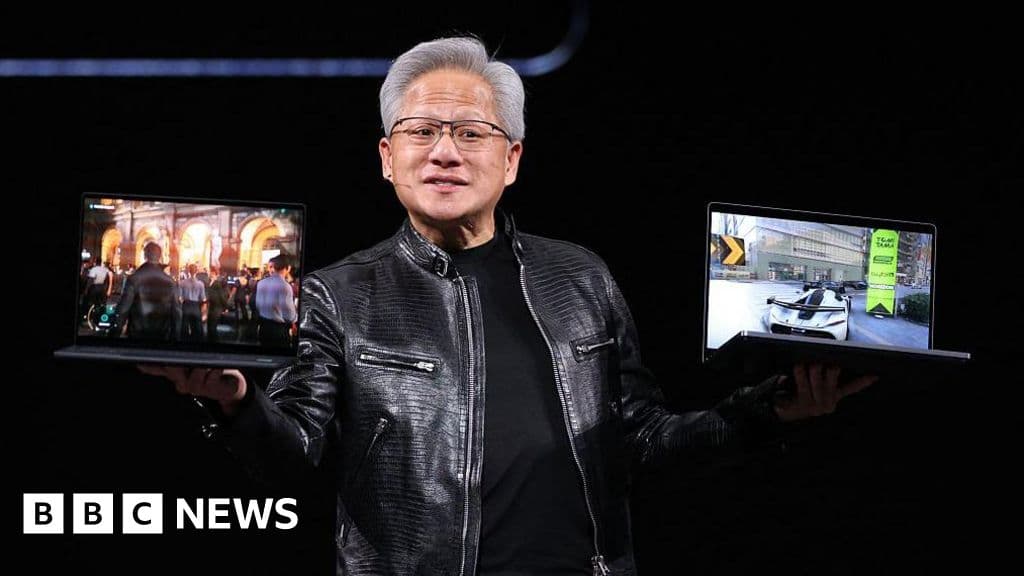
Nvidia's new RTX Spark chip aims to transform personal computing with AI, marking a significant shift in technology. Discover what this means for consumers.
BBC Business
The explosion of Blue Origin's New Glenn rocket raises significant concerns over NASA's lunar ambitions and the future of Amazon's satellite projects. Discover the implications.
BBC Science
Discover how Meta's lack of engagement on user bans raises critical concerns about accountability and transparency in social media governance.
BBC Technology