
Image: The Hindu
Nvidia unveils plans for space-based data centers, led by its new Vera Rubin module, aiming to revolutionize AI and data management beyond Earth.
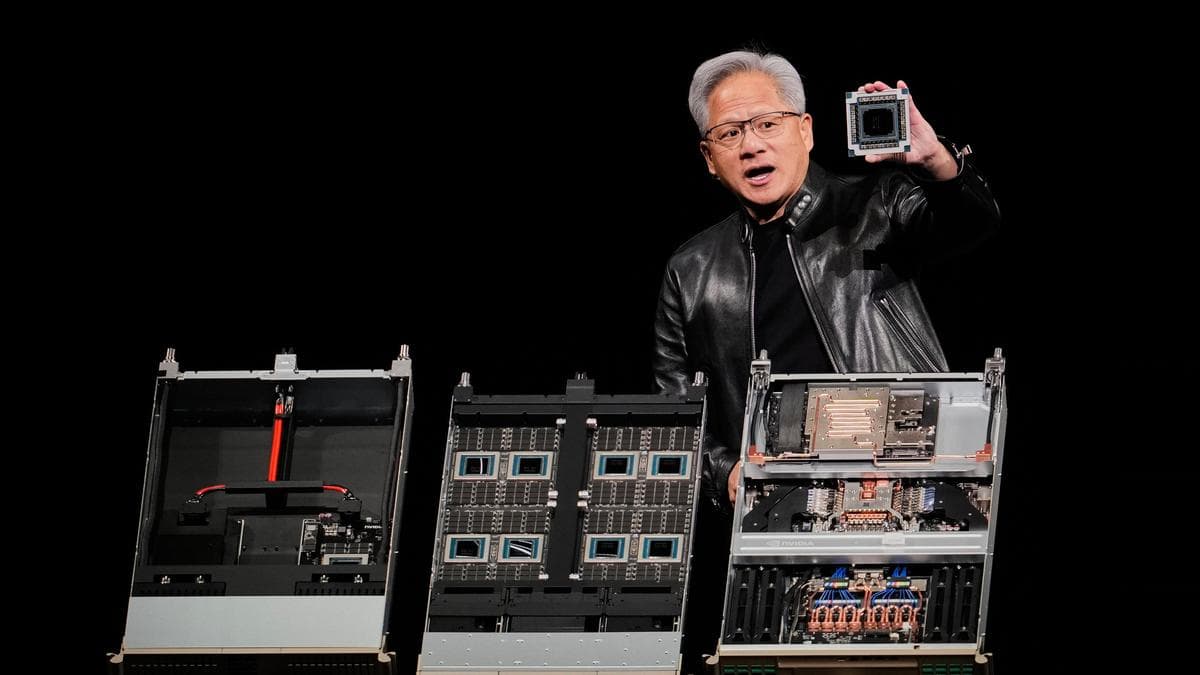
GlipzoIn an ambitious leap into the cosmos, Nvidia, the renowned artificial intelligence chip manufacturer, has announced plans to develop a cutting-edge module designed for data centers in outer space. During the annual developers conference held in Silicon Valley on March 17, 2026, CEO Jensen Huang unveiled the initiative, which aims to harness the unique advantages of space to meet burgeoning data demands driven by AI technologies.
The unveiling of the Vera Rubin Space One module marks a significant milestone in the ongoing race for AI supremacy. Huang emphasized the importance of this project, stating, "We're working with our partners on a new computer called Vera Rubin Space One. It's going to go out to space and start data centres." This project is part of a broader trend among tech companies exploring innovative solutions for energy and data management.
Starcloud, a startup that previously sent an Nvidia graphics processing unit (GPU) into orbit in 2025, is a key partner in this groundbreaking venture. The company has ambitious plans for a satellite launch scheduled for November 2026, which will signify the inaugural deployment of the new Nvidia module. According to Philip Johnston, co-founder and chief of Starcloud, the satellite, approximately the size of a small refrigerator, will be equipped with 100 times more computing power than any prior space-based operation.
The collaboration between Nvidia and Starcloud aims to demonstrate that advanced AI technologies can operate effectively in the challenging conditions of outer space. Starcloud has plans to utilize Nvidia's GPUs to power Google AI, showcasing the feasibility of running large language models in an extraterrestrial environment. Johnston confidently predicted that, "In 10 years, nearly all new data centres will be being built in outer space."
The concept of establishing data centers beyond Earth's atmosphere is gaining traction among various tech firms, startups, and aerospace leaders. Some of the compelling reasons driving this interest include: - Uninterrupted Power Supply: By positioning satellites to orbit in synchrony with the sun, these data centers can access a constant source of solar energy, eliminating concerns about power outages. - Regulatory Freedom: Building in space bypasses the hurdles associated with land acquisition, local regulations, and community resistance that often complicate terrestrial data center projects. - Enhanced Performance: The unique environment of space provides opportunities for innovative computing applications that could revolutionize AI capabilities.
Despite the many advantages, several critical technical challenges must be addressed before space-based data centers can become a reality. Among these challenges are: - Radiation Exposure: Orbiting data centers will face high levels of radiation that can damage electronic components. - Extreme Temperatures: The fluctuating temperatures in space can pose risks to hardware reliability and performance. - Space Debris: The risk of collisions with space junk remains a significant concern for the operational safety of these facilities.
Huang remarked on the significance of these developments, stating, "Space computing, the final frontier, has arrived. With our partners, we're extending Nvidia beyond our planet - boldly taking intelligence where it's never gone before."
Nvidia's strategic foray into the realm of space computing represents a pivotal moment in the intersection of technology and space exploration. As the demand for data continues to surge globally, the potential to establish data centers in space could help alleviate some of the pressures faced by traditional systems on Earth.
Looking ahead, this move by Nvidia and its partners could pave the way for future advancements in AI technologies, enabling more sophisticated applications that harness the unique conditions of space. As companies race to develop solutions in this new frontier, we can anticipate a surge in innovation and collaboration within the tech industry, potentially leading to breakthroughs that reshape our understanding of computing in extreme environments.
As the countdown to Starcloud's satellite launch begins, the tech world will be closely watching for developments in this exciting new chapter of artificial intelligence and data management. The implications of successful space-based data centers could redefine how we approach data processing and management for decades to come.
With the prospect of harnessing solar energy and the promise of unprecedented computational power, the future of AI in space is bright. Keep an eye on this developing story as more details emerge and the launch approaches, as it could signify the dawn of a new era in technology and exploration.
Nvidia's new RTX Spark chip aims to transform personal computing with AI, marking a significant shift in technology. Discover what this means for consumers.
BBC Business
The explosion of Blue Origin's New Glenn rocket raises significant concerns over NASA's lunar ambitions and the future of Amazon's satellite projects. Discover the implications.
BBC Science
Discover how Meta's lack of engagement on user bans raises critical concerns about accountability and transparency in social media governance.
BBC Technology