
Image: BBC World
Netanyahu orders IDF to boost control of Gaza to 70%, raising tensions and concerns over ceasefire commitments. What are the implications?
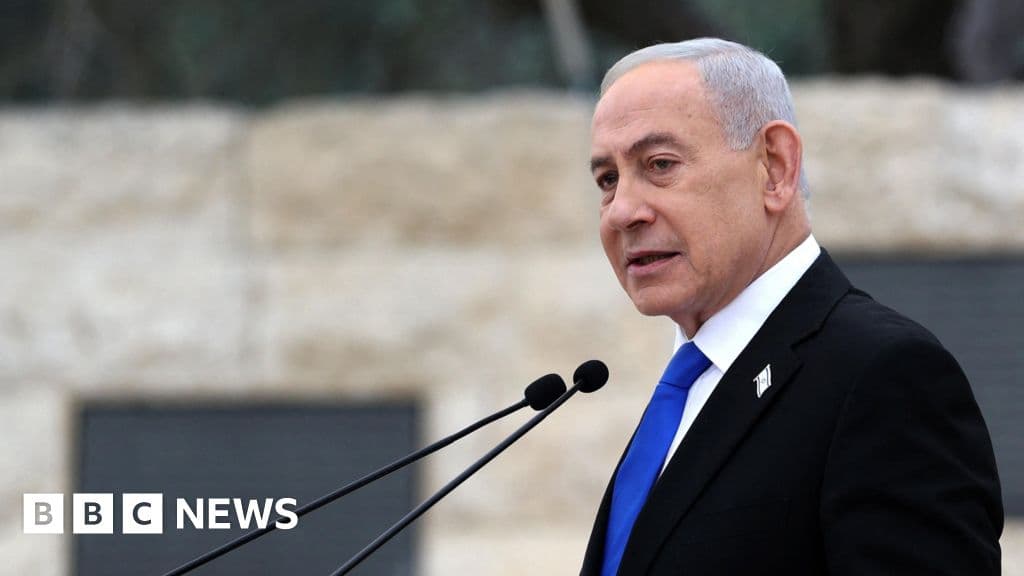
GlipzoIn a significant escalation of military strategy, Israeli Prime Minister Benjamin Netanyahu announced on Thursday that he has instructed the Israel Defense Forces (IDF) to increase their territorial control over Gaza to 70%. This declaration was made during a conference where Netanyahu emphasized the ongoing military pressure on Hamas, stating, "We are currently squeezing Hamas; we now control 60% of the territory of the Strip - you know this. We were at 50, we moved to 60. My directive is to move to..." He paused as an audience member interjected with "100," to which he replied, "Let's go step by step. First of all, 70. Let's start with that. We're pressing them from all sides, we'll deal with the remnants."
This directive raises serious implications for the already tense situation in the region, as it appears to contradict the terms laid out in the ceasefire agreement brokered by former U.S. President Donald Trump in October 2025. Under this agreement, the IDF was expected to adhere to a demarcation line known as the "yellow line," marking the limits of their control. Netanyahu's recent comments indicate a shift away from these commitments, raising questions about the future of peace negotiations.
Netanyahu's remarks come amidst ongoing military operations in Gaza, with the IDF conducting strikes even after the ceasefire was established. Reports indicate that since the ceasefire was implemented, at least 738 Palestinians have lost their lives, according to data from the Hamas-run health ministry, figures that the United Nations considers reliable. This loss of life underscores the dire humanitarian conditions in Gaza, where civilians continue to suffer amid military engagements.
While Netanyahu has publicly stated the IDF’s control has increased from 53% to 60%, the future of peace talks remains precarious. The next stages of the 20-point peace proposal entail Hamas disarming and Israeli troops withdrawing from various territories, yet discussions have stalled, further complicating the situation.
Adding to the military rhetoric, Israeli Defence Minister Israel Katz reiterated on social media that the country’s commitment is to eliminate all individuals responsible for the October 7 massacre in 2023. Katz stated, "We pledged that Hamas will not rule Gaza civilly or militarily," highlighting the Israeli government's hardline stance against the militant group.
Moreover, Katz mentioned that a controversial "plan for voluntary emigration from Gaza" would be activated at an appropriate time, raising ethical and humanitarian concerns. This plan has been supported by members of Netanyahu's far-right cabinet, including National Security Minister Itamar Ben Gvir and Finance Minister Bezalel Smotrich, who advocate for what they term "voluntary migration" of Palestinians from Gaza. Critics argue that such measures could be tantamount to forced displacement, potentially constituting a war crime.
The escalation of military action has resulted in tragic casualties. Just this week, an Israeli strike on a building in Gaza City claimed the lives of at least 10 individuals, including five children. Local hospitals reported these numbers, which are part of the ongoing toll of the conflict. The IDF confirmed its military actions, stating that they targeted and struck two significant Hamas terrorists in northern Gaza, although they did not disclose their identities.
Among the casualties was Imad Asleem, a Hamas battalion commander, who was killed in an attack alongside his teenage daughter, Israa. This strike followed the assassination of Mohammed Odeh, the newly appointed head of Hamas's military wing, during a separate airstrike, which also resulted in the deaths of his family members. These targeted operations reflect Israel's continued focus on eliminating Hamas leadership.
The ongoing conflict has led to severe humanitarian consequences for the 2.1 million residents of Gaza. Following the 2023 Hamas-led attack, which resulted in roughly 1,200 Israeli fatalities and numerous hostages, Israel has launched a significant military campaign that has devastated much of the region. As of May 12, 2026, the Hamas-run health ministry reported 72,742 Palestinian deaths and 172,565 injuries, including a staggering 21,283 children among those killed. The grim statistics highlight the humanitarian crisis unfolding in Gaza, as the population faces displacement and destruction.
As tensions remain high and military operations continue, the international community watches closely. The potential for further escalation raises critical questions about the future of peace in the region. Will Israel's military objectives lead to a broader conflict, or will there be renewed efforts toward a diplomatic resolution?
The coming weeks will be crucial in determining the trajectory of the conflict, as both sides grapple with the consequences of their actions and the humanitarian impact of continued military engagements. The focus on disarming Hamas and the fate of Gaza's civilian population will undoubtedly remain at the forefront of ongoing discussions and global attention.
In summary, the developments surrounding Netanyahu's directive and the IDF's operations in Gaza represent a pivotal moment in the Israeli-Palestinian conflict, and the world will be watching closely to see how this situation unfolds.

Survivors of the Laos cave rescue are aiding efforts to find the last two missing men trapped inside, sharing crucial insights for the search operation.
BBC World
A year after the tragic Air India crash, the Ali family reflects on grief, unanswered questions, and the enduring bonds of love in the face of loss.
BBC Business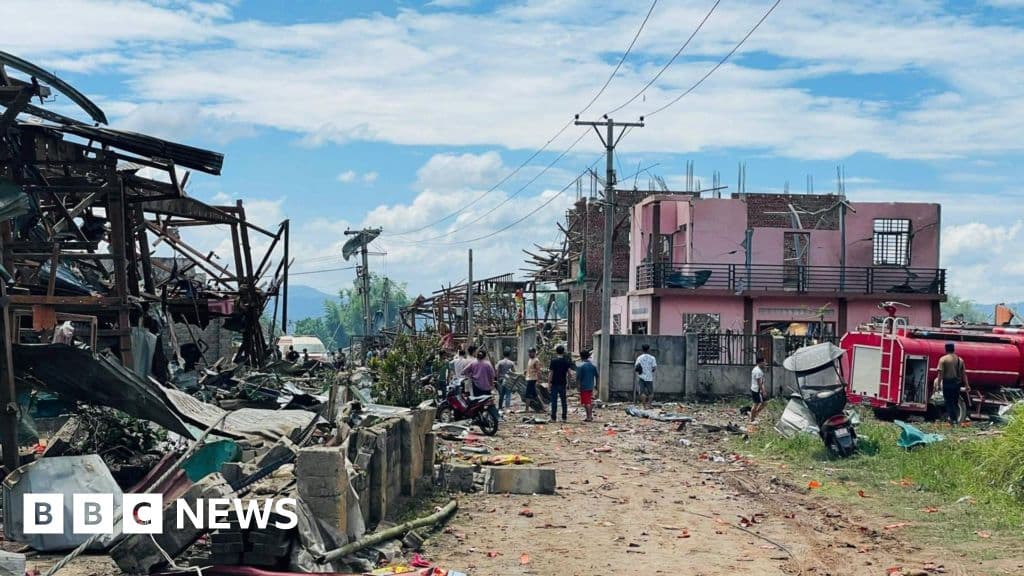
A devastating explosion in Myanmar's Kaung Tat village has killed at least 55 people, raising serious safety concerns and questions about civilian protection in conflict zones.
BBC World