
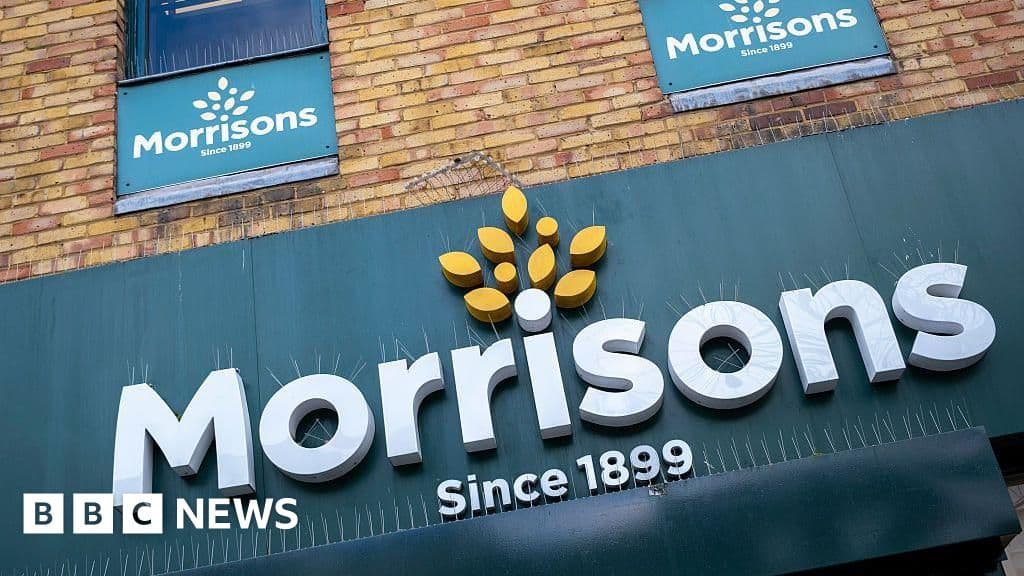
Image: BBC Business
Morrisons plans to close 100 stores due to rising costs and government policies, impacting hundreds of jobs. What's next for the supermarket chain?
GlipzoIn a shocking move, Morrisons has revealed plans to close 100 stores in the coming months, attributing the decision to increasing operational costs driven by government policies. This significant announcement raises concerns about the future of many employees and the supermarket's market presence, particularly following the chain's troubled acquisition of McColls in 2022, which included many of the underperforming stores now facing closure.
According to the supermarket giant, the affected stores have struggled financially for years, and recent government decisions, such as hikes in the national living wage and National Insurance, have intensified these challenges. This announcement follows a troubling trend for Morrisons, which last year closed 52 cafes and 17 convenience stores, affecting hundreds of jobs in the process. Furthermore, just last month, the company disclosed that around 200 jobs at its Bradford headquarters were at risk, raising alarm bells across the retail sector.
Morrisons has acknowledged the difficult position that these store closures place on its staff. In its statement, the company indicated that while it is initiating consultations regarding redundancies, it hopes to find alternative employment opportunities for affected workers. Although the supermarket has not disclosed the exact number of jobs at stake, it is believed that hundreds of positions will be impacted by this drastic decision.
The chain currently operates approximately 1,700 Morrisons Daily convenience stores, having opened over 120 franchise locations last year. However, the stores slated for closure have been identified as those whose performance has been consistently poor, despite efforts to improve them. Morrisons stated, "The performance of these stores has been challenged for a number of years and which are loss-making, despite remedial action."
The supermarket's struggles are not isolated, as many in the retail sector have reported facing substantial cost increases since April of last year. The rise in employer National Insurance contributions and the implementation of higher minimum wage laws have put additional financial strain on businesses. Moreover, food and drink companies are now subject to new charges under the Extended Producer Responsibility (ERP) program, which further complicates the financial landscape for retailers.
Inflation remains a critical issue as well. Recent data shows that food prices rose by 3% in April, surpassing the overall inflation rate of 2.8%. Experts warn that food inflation in the UK could escalate to 10% by the end of the year, exacerbated by geopolitical tensions, including the ongoing US-Israel conflict with Iran. In light of these challenges, many supermarket leaders have voiced their concerns regarding government regulations that they believe contribute to inflationary pressures.
In response to the challenges presented by the government, supermarket executives have pushed back against proposals to freeze prices on essential groceries. Justin King, the former CEO of Sainsbury's, criticized the government's request as contradictory, highlighting the competitive nature of the British supermarket industry. He noted that it is unreasonable for the Treasury to impose price caps while simultaneously introducing policies that fuel inflation.
Despite these setbacks, Morrisons is looking ahead. The supermarket chain has outlined a robust expansion plan aimed for 2026, with ambitions to open hundreds more franchise stores in the coming years. This long-term vision underscores the company’s commitment to adapt and grow in a challenging retail environment.
As Morrisons prepares to implement these closures, key questions remain about the future of its workforce and the overall strategy for recovery. The impending consultation process will be critical in determining how many employees will ultimately be affected and whether Morrisons can pivot successfully in a rapidly changing marketplace.
Retail watchers will be eager to see how Morrisons navigates these turbulent waters, particularly as additional economic pressures loom on the horizon. The outcome of this situation could set important precedents for other retailers facing similar challenges in the UK. As the company aims for a resurgence, its strategic decisions in the coming months will be pivotal in shaping the future landscape of British retail.
---
Commercial LPG prices have risen again, with increases of ₹42 in Delhi and ₹53.50 in Kolkata impacting businesses and consumers alike. Find out more.
Indian Express
Discover how a tragic coal mine explosion in Shanxi, China, reveals ongoing safety concerns in the industry amidst a push for green energy.
BBC Business
Montek Singh Ahluwalia highlights key economic challenges for India, emphasizing the need for a strategic approach to balance payments and investment.
Indian Express