
Image: BBC World
Claudia Sheinbaum denies a diplomatic crisis with Spain, calling for unity while addressing historical grievances from the conquest era. What’s next for relations?
GlipzoIn a bold statement during a summit of leftist leaders in Barcelona, Mexican President Claudia Sheinbaum confidently declared there is "no diplomatic crisis" between Mexico and Spain. This declaration comes amid a backdrop of strained relations stemming from historical grievances related to Spain's colonization of Mexico, a contentious issue that has fostered calls for accountability and reconciliation. Sheinbaum emphasized the importance of recognizing the strength of the country's indigenous communities, asserting that a diplomatic rift has never truly existed.
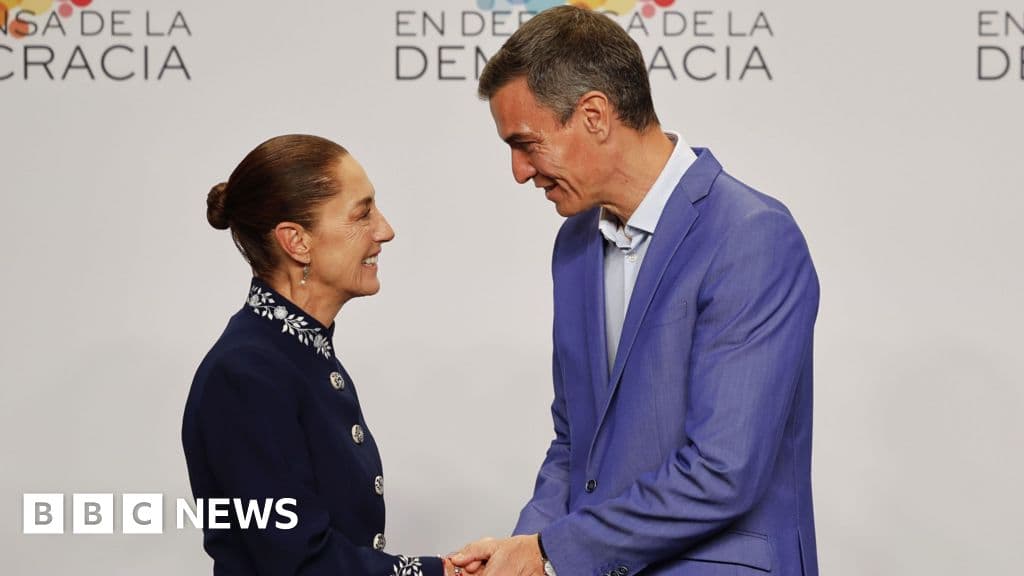
The summit, which aims to discuss rising illiberalism across the globe, saw Sheinbaum arrive just before meeting with Spanish Prime Minister Pedro Sánchez. While Sánchez refrained from discussing the state of bilateral relations, Spain's economy minister described Sheinbaum's attendance as a "very important and positive sign" of potential rapprochement between the two nations.
The diplomatic tensions trace back to 2019 when Sheinbaum's predecessor, Andrés Manuel López Obrador, publicly demanded an apology from Spain for historical injustices committed during the conquest of the Aztec empire. This era saw countless indigenous lives lost due to violence and disease brought by Spanish conquistadors, creating a deep-rooted animosity that has surfaced intermittently in diplomatic discourse.
The situation escalated when López Obrador's plea for acknowledgment went unreciprocated, leading to Sheinbaum's controversial decision not to invite King Felipe VI to her inauguration in 2024. In response, Spain withheld sending any formal representative to the event. However, the tone began to soften recently, with King Felipe acknowledging the historical abuses committed during the conquest in a visit to an exhibition on indigenous women in Madrid. His remarks were notable as they marked the first public admission of such abuses by a Spanish monarch.
In a surprising turn, Sheinbaum recently extended an invitation to King Felipe for the upcoming FIFA World Cup, which will be held across Mexico, the United States, and Canada. She cited the event as a significant opportunity to celebrate the deep-rooted and unique relationship between the two nations. This gesture indicates a willingness from both sides to move forward, despite the historical tensions.
Additionally, Spain's Foreign Minister José Manuel Albares received commendation from Sheinbaum when he acknowledged the "pain and injustice" embedded in the shared history of both countries. Such statements reflect a gradual shift toward a more reconciliatory approach to their complex relationship, indicating potential for future collaboration.
The Barcelona summit, which is part of the "In Defence of Democracy" initiative, focused on combating the rise of extremism and the erosion of democratic values worldwide. Leaders from Brazil, Mexico, and Spain convened to express solidarity against these challenges, with Sánchez cautioning that democracy should never be taken for granted. He highlighted ongoing threats to international law and the normalization of force in global politics.
Brazil's President Luiz Inácio Lula da Silva echoed these sentiments, criticizing the structure of the UN Security Council, which he claimed has been manipulated by its five permanent members. Lula's remarks aimed to draw attention to the imbalances in global governance and the need for reform.
During the summit, a notable collaboration emerged with the announcement of increased humanitarian aid for Cuba, which is currently grappling with a crisis exacerbated by energy shortages and a US-imposed oil blockade. The leaders' commitment to support Cuba illustrates their willingness to address regional instability and humanitarian needs, further solidifying their diplomatic ties.
As relations between Mexico and Spain evolve, the upcoming FIFA World Cup will serve as a crucial platform for both nations to potentially redefine their partnership. The presence of King Felipe and other dignitaries could symbolize a renewed commitment to dialogue and collaboration, paving the way for deeper connections moving forward.
Why It Matters: The rekindling of Mexico-Spain relations is not just about historical grievances; it reflects broader trends in international diplomacy where nations seek to reconcile past injustices while addressing contemporary issues. Observers will be keen to see how both countries navigate their shared history and build a future grounded in mutual respect and cooperation. With upcoming events and meetings, both leaders have the opportunity to set a precedent for how former colonial powers engage with their former territories, making it a significant case study in modern diplomacy.

Tensions soar as the US and Iran engage in air strikes near the Strait of Hormuz, raising concerns over global oil supply and regional stability.
BBC World
Trump's international interventions face serious stalemates. What will this mean for U.S. foreign policy? Explore the critical challenges ahead.
Indian Express
Tehran denies resignation of President Masoud Pezeshkian amid claims of IRGC influence. What does this mean for Iran's political stability? Click to learn more!
Indian Express