
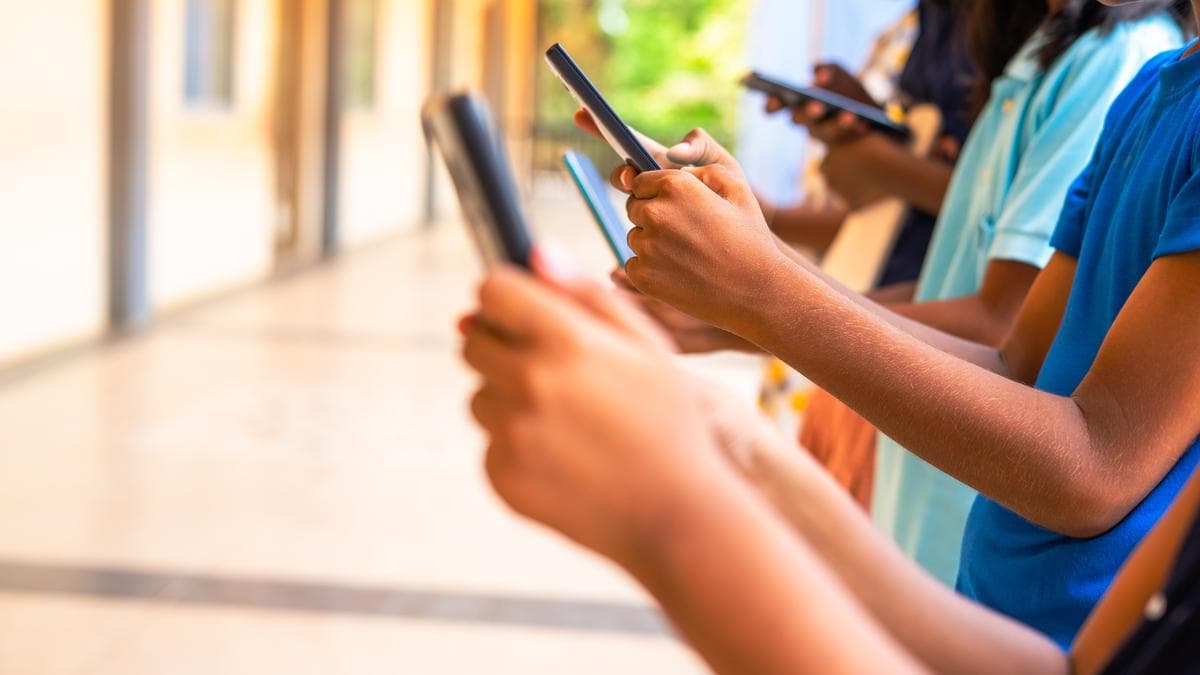
Image: The Hindu
Discover how over 58% of countries have implemented phone bans in schools, driven by concerns over attention and student well-being. Read more!
GlipzoIn a significant move reflecting growing concerns about student well-being, more than half of the countries worldwide have now implemented bans on mobile phones in schools. This trend, detailed in the latest report from UNESCO's Global Education Monitoring (GEM) team, underscores the urgent need to address issues such as declining attention spans and the rise of cyberbullying among students.
The GEM report reveals that 114 education systems, constituting 58% of nations globally, have enacted national bans on mobile devices in educational settings. This marks a dramatic increase from just 24% in June 2023, when the trend was first documented. By early 2025, the number had risen to 40%, and the latest figures show a further surge in just over a year. A senior GEM official noted that, "The growth reflects mounting concerns about declining attention in classrooms, cyberbullying, and the broader influence of digital environments on children."
The report sheds light on the troubling impact of social media, particularly on young girls. Data indicates that girls are twice as likely as boys to experience eating disorders exacerbated by social media, with 32% of teenage girls reporting negative body image feelings after using Instagram. Notably, TikTok’s algorithm has also come under scrutiny, as it targets users with body image-related content every 39 seconds and promotes eating disorder-related content every eight minutes.
These findings suggest that not only are mobile phones a distraction during school hours, but they also contribute to a pervasive culture of comparison and insecurity among young users. As such, the urgency for bans and restrictions on phone use in schools has never been clearer.
In the wake of these revelations, many countries have joined the movement to ban mobile phones in educational institutions. Recent additions to the list of countries with national bans include Bolivia, Costa Rica, Croatia, Georgia, the Maldives, and Malta. France, a pioneer in this initiative, has long prohibited mobile phones in primary and lower secondary education, leading to ongoing debates about further regulations in the country.
Currently, the French parliament is considering a legislative proposal that would clarify and potentially tighten smartphone regulations within schools. Such discussions are crucial as they aim to balance the necessity of technology in modern education against the mental health and academic performance of students.
The GEM report highlights that while many countries are adopting outright bans, others are taking a more nuanced approach. In nations like Comoros, Colombia, Estonia, Lithuania, Iceland, Peru, Indonesia, Serbia, Poland, and the Philippines, the focus is on developing school-specific policies that limit phone use rather than imposing a blanket prohibition. This strategy allows educators and administrators to tailor regulations to their unique environments while acknowledging the need for some control over mobile device usage.
Moreover, in the United States, where no federal ban exists, 39 states have recognized the necessity of restrictions, enacting laws that require school districts to formulate their own policies regarding mobile phone use. This local approach demonstrates how educational policy can evolve, often starting at a regional level before gaining national traction.
The implications of these restrictions extend beyond merely keeping phones out of classrooms. According to the GEM report, emotional well-being is entwined with academic success, particularly for girls, who are especially vulnerable to the negative impacts of social media. Research indicates that increased exposure to social media at age 10 correlates with worsening emotional difficulties as children mature, highlighting the urgent need for effective interventions.
The growing trend of banning mobile phones in schools is not just about eliminating distractions; it reflects a broader societal acknowledgment of the importance of mental health in education. As we move forward, educators and policymakers must navigate the complex relationship between technology and the learning environment carefully.
What’s next? With the ongoing debates in countries like France and the evolving policies in the U.S., it will be critical to monitor how these regulations impact student learning and well-being. As the conversation around technology in education continues, stakeholders must prioritize strategies that foster healthy digital habits among young learners, ensuring that education adapts to the realities of the digital age while safeguarding the mental health of students globally.

Amritsar student questions age-based ranking, prompting Punjab CM to reform PSEB policies. A significant change towards merit-based recognition is underway.
Indian Express
AP EAMCET 2026 results are out! Discover how to check your scorecard and navigate the upcoming counselling process for college admissions.
Indian Express
CBSE's new OSM system faces backlash as students struggle with re-evaluation. Will their futures be jeopardized by technical flaws?
Indian Express