
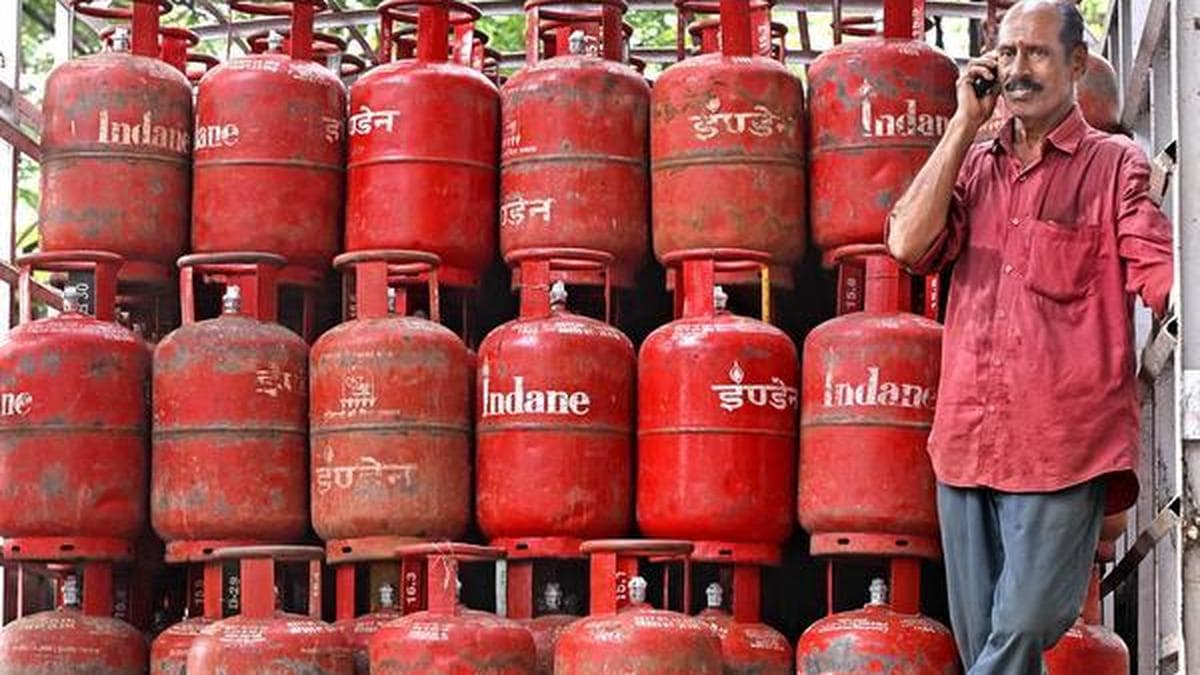
Image: The Hindu
The LPG crisis in Kerala escalates as West Asia conflict disrupts supply, leading to panic among consumers and challenges for local businesses.
GlipzoIn a shocking turn of events, Kerala is grappling with a pressing LPG crisis that has left consumers and businesses in turmoil. The tensions in West Asia, which escalated on February 28, 2026, have disrupted vital supply lines, leading to fears of a cooking gas shortage. For 32 years, Divakaran, a local LPG distributor in Ernakulam, never imagined he would need police protection to safeguard his business amid rising consumer panic.
As news of the conflict spread, residents flocked to local gas agencies, trying to secure their supplies. Divakaran faced the brunt of this anxiety firsthand. "One woman became so frustrated with our booking system that she demanded I reprimand my staff. It was clear that convincing her it was an automated system was futile, so I assured her I would address her concerns," he recounted. This incident highlights the growing desperation among consumers as they grapple with uncertainty over their cooking gas supply.
The crisis stems from the closure of the Strait of Hormuz, a crucial maritime route for transporting LPG, which supplies about 80% of Kerala’s gas needs, particularly from Qatar. While the domestic supply of LPG has remained largely intact, consumers have reported significant delays in booking and receiving cylinder refills, sometimes extending to nearly a week.
Compounding the issue, the shortfall in LPG for commercial use has led to the closure of more than 1,000 hotels statewide. T.J. Manoharan, State Secretary of the Kerala Hotel and Restaurant Association, remarked, "This is an unprecedented crisis for our industry." The situation has forced the state government to prioritize domestic consumers, restricting the distribution of commercial LPG cylinders.
In response to the escalating crisis, the Kerala government convened an emergency meeting to address the distribution of LPG. The government decided to prioritize essential institutions such as:
This decision underscores the urgency with which authorities are treating the situation as the state confronts a potential humanitarian crisis. However, the restrictions mean that many businesses are left struggling to adapt.
The repercussions of this LPG shortage are being felt acutely by small business owners. Take Mini Santhosh, who operates a tea shop in Ernakulam. With no access to commercial cylinders, she has resorted to using an induction cooktop, despite the risk of soaring electricity bills. "I had no choice but to adapt. My regular customers rely on me," Mini shared.
Many other eateries have also turned to using firewood stoves as a last resort. Samridhi@Kochi, a budget food chain, was among the first to make the switch after depleting its LPG supply. This shift, however, has not come without challenges, as firewood prices surged to nearly ₹3,000 per tonne, creating a new set of hurdles for those relying on this alternative.
Hameed Shah, a sawmill owner in Ernakulam, noted, "The demand for firewood has skyrocketed. People are showing up in small vehicles looking for large quantities. It’s a chaotic situation." This reflects a broader shift in market dynamics as businesses scramble to find reliable fuel sources amid the crisis.
The LPG crisis in Kerala is not just a localized issue; it has potential implications for the broader economy. With the hospitality sector severely impacted and many businesses forced to operate at reduced capacity or close altogether, the economic ramifications could be significant. The Union government has also taken measures to bar individuals with Piped Natural Gas (PNG) connections from obtaining additional LPG connections, further complicating the supply landscape.
As the crisis unfolds, consumers and businesses alike are left wondering how long this situation will persist. The government's focus on prioritizing essential services offers some relief, but it does little to alleviate the anxiety felt by everyday consumers who rely on LPG for their cooking needs.
Looking ahead, the situation remains fluid. The state government and local distributors continue to monitor the situation closely, and consumers are advised to remain patient as they navigate the current challenges. The hope is that diplomatic efforts in West Asia may stabilize the region, leading to a resumption of normal supply flows.
As the crisis evolves, what remains crucial is the resilience of the community in facing these challenges. With continued government support and consumer adaptation, Kerala may find a way to weather this storm. However, the longer the crisis persists, the more significant the impacts on both households and local businesses will become.
In the meantime, consumers should stay informed about updates regarding LPG supply and any potential measures that may be enacted to alleviate the current shortages. This crisis serves as a stark reminder of the interconnectedness of global events and local economies, showcasing how quickly situations can change and the importance of preparedness in the face of uncertainty.

Commercial LPG prices have risen again, with increases of ₹42 in Delhi and ₹53.50 in Kolkata impacting businesses and consumers alike. Find out more.
Indian Express
Discover how a tragic coal mine explosion in Shanxi, China, reveals ongoing safety concerns in the industry amidst a push for green energy.
BBC Business
Montek Singh Ahluwalia highlights key economic challenges for India, emphasizing the need for a strategic approach to balance payments and investment.
Indian Express