
Image: BBC World
Court ruling allows Trump's White House ballroom construction to resume, raising questions about national security and legal compliance. What’s next?
GlipzoIn a significant ruling, the U.S. Court of Appeals for the District of Columbia has permitted the continuation of construction for President Donald Trump's White House ballroom. This decision comes after an appeal was filed against a recent order from U.S. District Judge Richard Leon, who had initially put a halt to above-ground construction on Thursday.
With this new administrative stay, work on both the underground and above-ground sections of the ballroom can proceed, at least until the next court hearing scheduled for June 5. The appeals court's ruling is seen as a crucial win for the Trump administration, which is eager to see the redesign of this historic American venue realized.
The backdrop to this legal battle includes serious discussions surrounding national security. Judge Leon had previously expressed concerns about the project, suggesting that it might require congressional approval. He had also questioned the administration's assertion that reclassifying the ballroom as vital for national security was an appropriate justification for bypassing legal procedures.
“National security is not a blank cheque to proceed with otherwise unlawful activity,” Leon stated. This critical remark underscores the tension between the administration's goals and legal requirements, sparking a broader debate about the balance of power between the executive branch and legislative oversight.
Following the ruling, President Trump took to Truth Social, where he vehemently criticized Judge Leon’s decision, claiming it threatened future presidential engagements. He asserted that the ballroom is essential for hosting large-scale meetings with world leaders, emphasizing its importance for national security and military operations.
Trump elaborated on the project's significance, stating, “It’s all tied together as one big, expensive, and very complex unit, which is vital for National Security and Military Operations of the United States of America!” He further insisted that the ballroom was “needed now” and expressed his belief that “no judge can be allowed to stop” its construction.
This ruling is not without its complexities, as it follows a lawsuit filed by the National Trust for Historic Preservation last year. The group argues that the White House violated legal protocols by commencing construction on the ballroom and an accompanying bunker without proper submissions to the National Capital Planning Commission or seeking authorization from Congress.
In March, Judge Leon temporarily halted the project because he believed the administration had not adhered to the necessary procedures before breaking ground. This pause raised alarms about potential impacts on presidential security and the integrity of the Executive Residence.
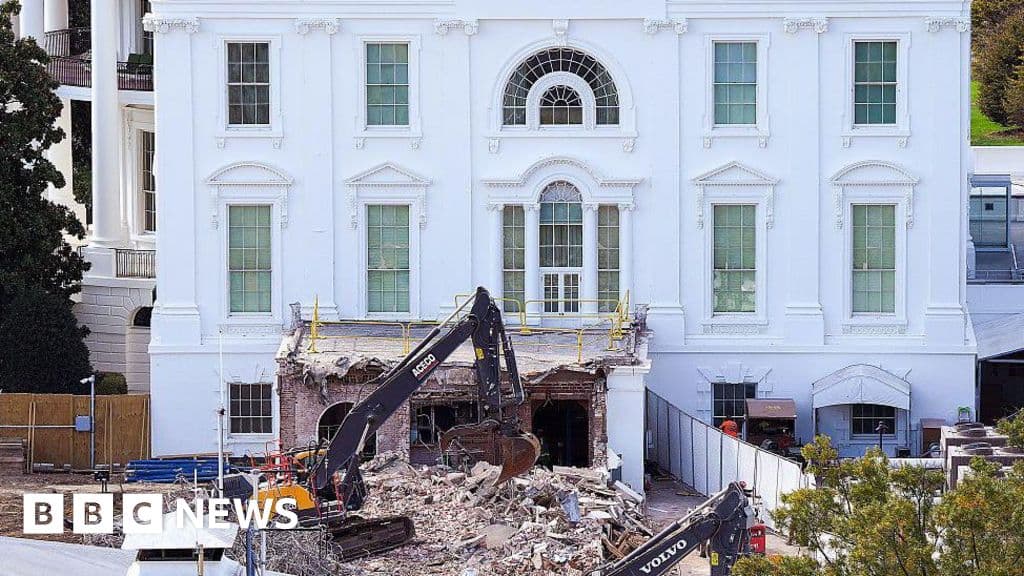
The proposed ballroom, which is set to accommodate up to 1,350 guests, represents a significant investment in the infrastructure of the White House. The East Wing, originally built in 1902, was demolished last October to clear the way for this ambitious project. The estimated cost of the ballroom is around $400 million (£302 million), with funding sourced entirely from private donations.
As the construction resumes, questions linger about how the administration will navigate the legal landscape and address preservation concerns while moving forward with its plans.
Looking forward, the next court hearing on June 5 will be pivotal. The outcome may determine whether construction can continue unabated or if further legal challenges will arise, potentially complicating the timeline for completion. The administration's aggressive push for the ballroom underscores a broader strategy to redefine the White House as a modern venue for diplomacy and state functions.
The implications of this ruling are vast; it not only affects the architectural landscape of the White House but also raises critical questions about the relationship between national security and legal compliance. As the project unfolds, it will be essential to monitor how the administration addresses both the logistical challenges of construction and the legal hurdles put forth by preservation advocates.
In conclusion, this legal saga serves as a reminder of the complexities that arise when modern governance intersects with historical preservation and national security. The coming weeks will be crucial in shaping the future of the White House's architectural identity and its role in U.S. diplomacy.

Tensions soar as the US and Iran engage in air strikes near the Strait of Hormuz, raising concerns over global oil supply and regional stability.
BBC World
Trump's international interventions face serious stalemates. What will this mean for U.S. foreign policy? Explore the critical challenges ahead.
Indian Express
Tehran denies resignation of President Masoud Pezeshkian amid claims of IRGC influence. What does this mean for Iran's political stability? Click to learn more!
Indian Express