
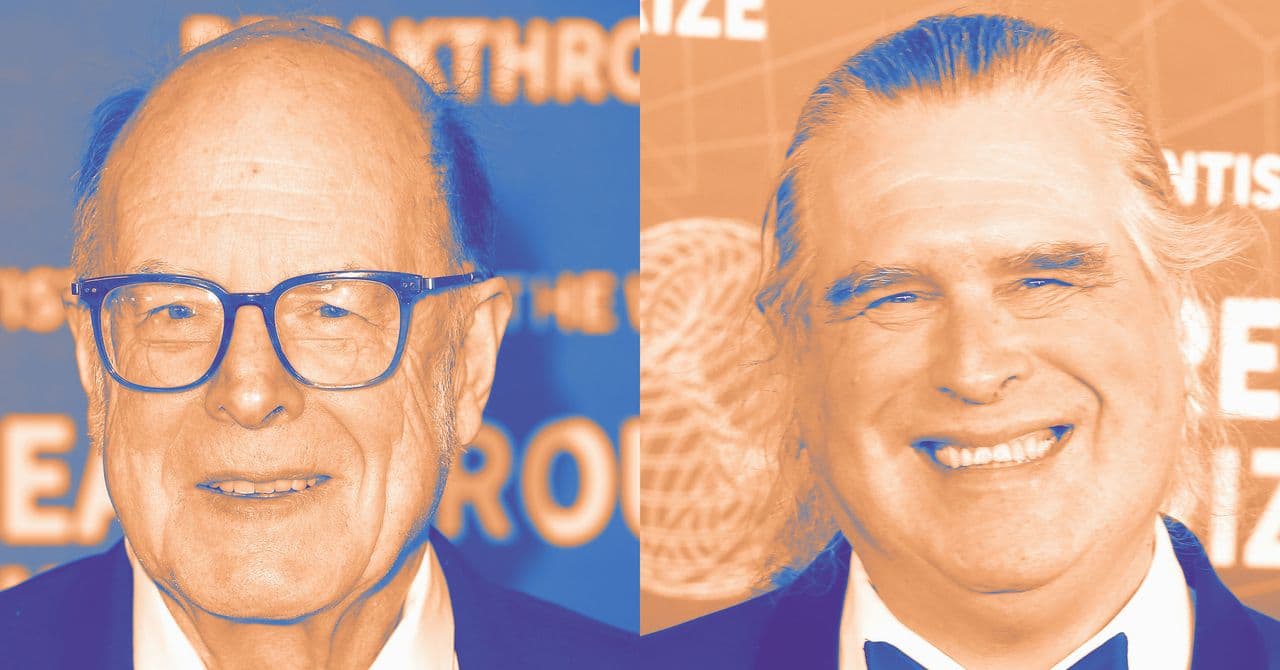
Image: Wired
Discover how Turing Award winners Bennett and Brassard revolutionized quantum computing, merging physics and information science for a secure digital future.
GlipzoThe landscape of computing is undergoing a seismic shift as quantum technology gains traction. Today, tech giants such as Google, Microsoft, and IBM are racing to develop quantum computers, each touting advancements that suggest this revolutionary technology is closer than ever. However, the groundwork for this extraordinary leap was laid decades ago, notably during a pivotal meeting in 1979 between two visionary scientists, Charles Bennett and Gilles Brassard. Their groundbreaking conversation off the coast of Puerto Rico sparked the development of quantum information theory, effectively bridging the gap between classical computer science and the enigmatic world of quantum physics.
The contributions of Bennett and Brassard have now earned them the prestigious ACM A.M. Turing Award, often dubbed the Nobel Prize of computing. This recognition not only honors their past achievements but also highlights the immense potential of quantum computing in reshaping technology as we know it.
Before the 1979 encounter, there was a significant disconnection between the realms of information science and physics. While physics was undergoing a paradigm shift with the advent of quantum mechanics in the early 20th century, computer science remained largely oblivious to its implications, aside from grappling with its effects on small-scale electronic components. As Bennett recalls, "In the 1950s through the 1980s, people thought of quantum effects as occurring in very small things and as a source of noise—[quantum theory] was seen as a nuisance."
Bennett and Brassard's collaboration transformed this perception. They introduced concepts such as quantum coin-tossing and quantum entanglement, which harnessed the quirks of quantum mechanics and turned them into robust tools for cryptography and information processing. This was a radical departure from viewing quantum effects merely as disruptive forces.
At the time of their historic meeting, Bennett was at a pivotal juncture in his career. After joining IBM in 1973, he had taken a lengthy hiatus from publishing. However, he was intrigued by an idea from his classmate, Steven Weisner, who proposed that quantum cryptography could pave the way for digital currency that could not be counterfeited—essentially envisioning a rudimentary form of cryptocurrency in the late 1960s.
During a conference in 1979, Bennett stumbled upon Brassard, who had just completed his dissertation on public-key cryptography. The two met in the ocean, where Bennett shared Weisner's ideas with a captivated Brassard. "If I had been on firm ground, I would have run for my life, but I was trapped in the ocean, so I listened politely," Brassard recalled. This serendipitous encounter led to the development of BB84, a revolutionary framework that established a new pathway for secure communication using quantum principles.
The significance of Bennett and Brassard's work cannot be overstated. Their theory not only offered an alternative to traditional public-key cryptography but also fundamentally altered our understanding of information itself. As Yannis Ioannidis, president of the ACM, stated, “Bennett and Brassard fundamentally changed our understanding of information itself.” Their research illuminated the potential of quantum mechanics to provide solutions to complex problems that classical methods could not efficiently tackle.
It's important to note that Bennett and Brassard's initial discoveries did not directly lead to today's frantic quest for quantum computers. Bennett recalls that the legendary physicist Richard Feynman suggested in a 1981 MIT conference that certain computational tasks might necessitate quantum computing. This idea, alongside contributions from physicist David Deutsch, laid the conceptual framework for the development of quantum computers, with Bennett and Brassard joining the effort as their work gained recognition.
Despite the rapid advancements in quantum computing, Bennett and Brassard are clear that their original contributions were not the sole catalysts for this technological evolution. Brassard himself played a pivotal role in the early design of quantum circuits for quantum teleportation, a concept that remains in the experimental phase but has captured the imagination of scientists worldwide. Brassard has confidently asserted that “one day, it will function.”
As we move forward, the impact of Bennett and Brassard's work will continue to resonate across various fields, from cryptography to artificial intelligence and beyond. The intersection of quantum mechanics and computer science promises not only to enhance our computational capabilities but also to redefine our understanding of security, privacy, and the nature of information itself.
The recognition of Bennett and Brassard with the Turing Award marks a significant milestone in the quantum computing journey. As companies invest heavily in this frontier technology, the world watches closely. The implications of their work could lead to breakthroughs in secure communication, complex problem-solving, and even the emergence of new industries built around quantum technologies.
In conclusion, as quantum computers inch closer to reality, the contributions of pioneers like Bennett and Brassard serve as a reminder of the profound possibilities that lie at the intersection of physics and computer science. The next decade promises to be a thrilling era for quantum innovation, making it essential to keep an eye on how these developments unfold.
Nvidia's new RTX Spark chip aims to transform personal computing with AI, marking a significant shift in technology. Discover what this means for consumers.
BBC Business
The explosion of Blue Origin's New Glenn rocket raises significant concerns over NASA's lunar ambitions and the future of Amazon's satellite projects. Discover the implications.
BBC Science
Discover how Meta's lack of engagement on user bans raises critical concerns about accountability and transparency in social media governance.
BBC Technology