
Image: BBC Business
China confirms a groundbreaking purchase of 200 Boeing jets following a summit with Trump, signaling a potential thaw in U.S.-China trade relations.
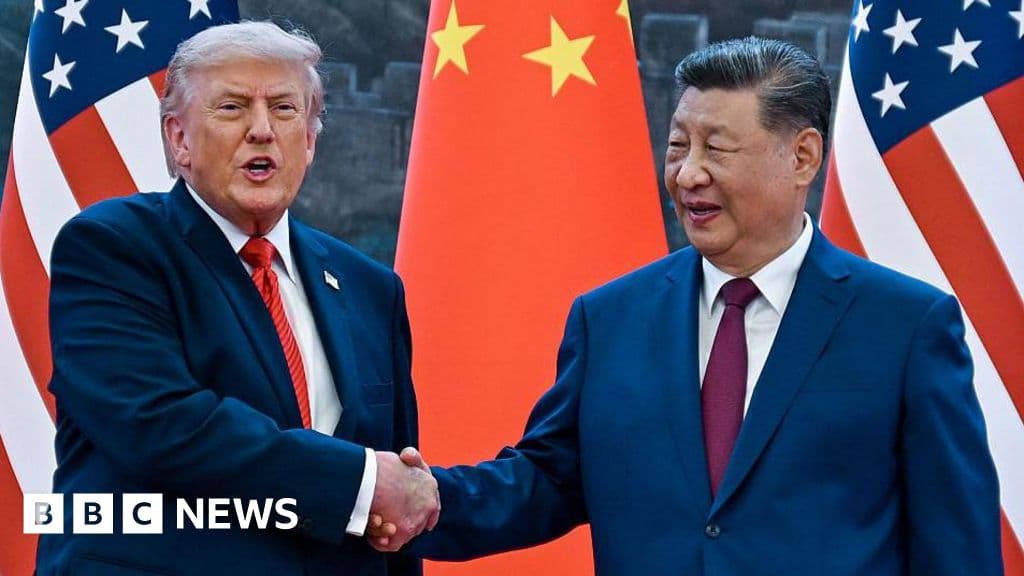
GlipzoIn a significant development for international trade, China has officially announced it will procure 200 Boeing jets following a recent summit between U.S. President Donald Trump and Chinese President Xi Jinping in Beijing. This landmark deal underscores the ongoing economic relationship between the two nations, which are the largest economies globally.
The announcement was made by China's Commerce Ministry on Wednesday, indicating that the agreement includes supply guarantees for essential aircraft engine parts and components from the U.S. This strategic move not only highlights the importance of aviation in the U.S.-China trade relationship but also showcases Boeing's integral role in the global aerospace industry.
The deal is part of a broader effort to enhance economic cooperation between the U.S. and China. The two countries are also working towards extending a tariffs truce originally agreed upon in October, aiming to negotiate potential cuts on $30 billion worth of goods for each country. This collaboration is pivotal as it may prevent further escalation in trade tensions that have characterized their relationship in recent years.
The timing of this announcement is crucial, coming just days after Xi's discussions with Russia's President Vladimir Putin. This context adds a layer of complexity to the geopolitical landscape, as China seeks to balance its relationships with both the U.S. and Russia.
During the trip, President Trump highlighted the importance of the agreements reached, stating, "We made a lot of great trade deals, including over 200 planes for Boeing, with a promise of 750 planes in total, which would be by far the largest order ever." This statement reflects Trump's focus on bolstering American manufacturing and securing jobs through international agreements.
Boeing's CEO, Kelly Ortberg, who was part of the U.S. delegation, emphasized the successful outcomes of the trip. The company issued a statement expressing optimism about the future, noting, "We had a very successful trip to China and accomplished our major goal of reopening the China market to orders for Boeing aircraft." The initial commitment for 200 aircraft is seen as just the beginning, with expectations for further orders to follow.
The ongoing trade negotiations between the U.S. and China have been tumultuous, characterized by tariffs and counter-tariffs that have impacted various sectors. The agreement reached in Kuala Lumpur, Malaysia, before the Trump-Xi meeting in South Korea in October 2025, was pivotal in extending the existing truce until November of this year. This deal involved reducing U.S. tariffs on Chinese goods and easing restrictions on China's exports of rare earth minerals and magnets, which are crucial for technology and manufacturing.
The significance of the recent Boeing deal extends beyond just the aircraft order; it symbolizes a potential thawing in trade relations and a commitment to work together amid rising global tensions. The ability of both countries to navigate these complex dynamics will be critical for future agreements and economic stability.
As the dust settles from this major announcement, several questions arise regarding the future of trade relations between the U.S. and China. Will the commitment to purchase further Boeing aircraft materialize? What other sectors might benefit from this renewed cooperation? These are critical areas to watch as both nations move forward.
The potential for increased cooperation could pave the way for more significant agreements in other industries, including technology and agriculture. American farmers, for instance, are expected to gain improved access to the Chinese market, which could lead to increased exports and economic benefits.
In conclusion, the Boeing deal serves as a hopeful sign for U.S.-China relations, suggesting that both countries are willing to engage in dialogue and compromise. As they work towards a more stable economic environment, stakeholders in both nations will be closely monitoring developments that could impact trade and investment opportunities in the future.
This Boeing deal is not just about aircraft; it represents a critical juncture in U.S.-China relations and could influence the global economic landscape for years to come. As both nations seek to bolster their economies, the outcomes of these negotiations will have far-reaching implications for industries worldwide.

Commercial LPG prices have risen again, with increases of ₹42 in Delhi and ₹53.50 in Kolkata impacting businesses and consumers alike. Find out more.
Indian Express
Discover how a tragic coal mine explosion in Shanxi, China, reveals ongoing safety concerns in the industry amidst a push for green energy.
BBC Business
Montek Singh Ahluwalia highlights key economic challenges for India, emphasizing the need for a strategic approach to balance payments and investment.
Indian Express