
Image: Mint (Business)
Discover the $40 billion nuclear reactor project announced by Trump and Takaichi, a major step in U.S.-Japan energy collaboration.
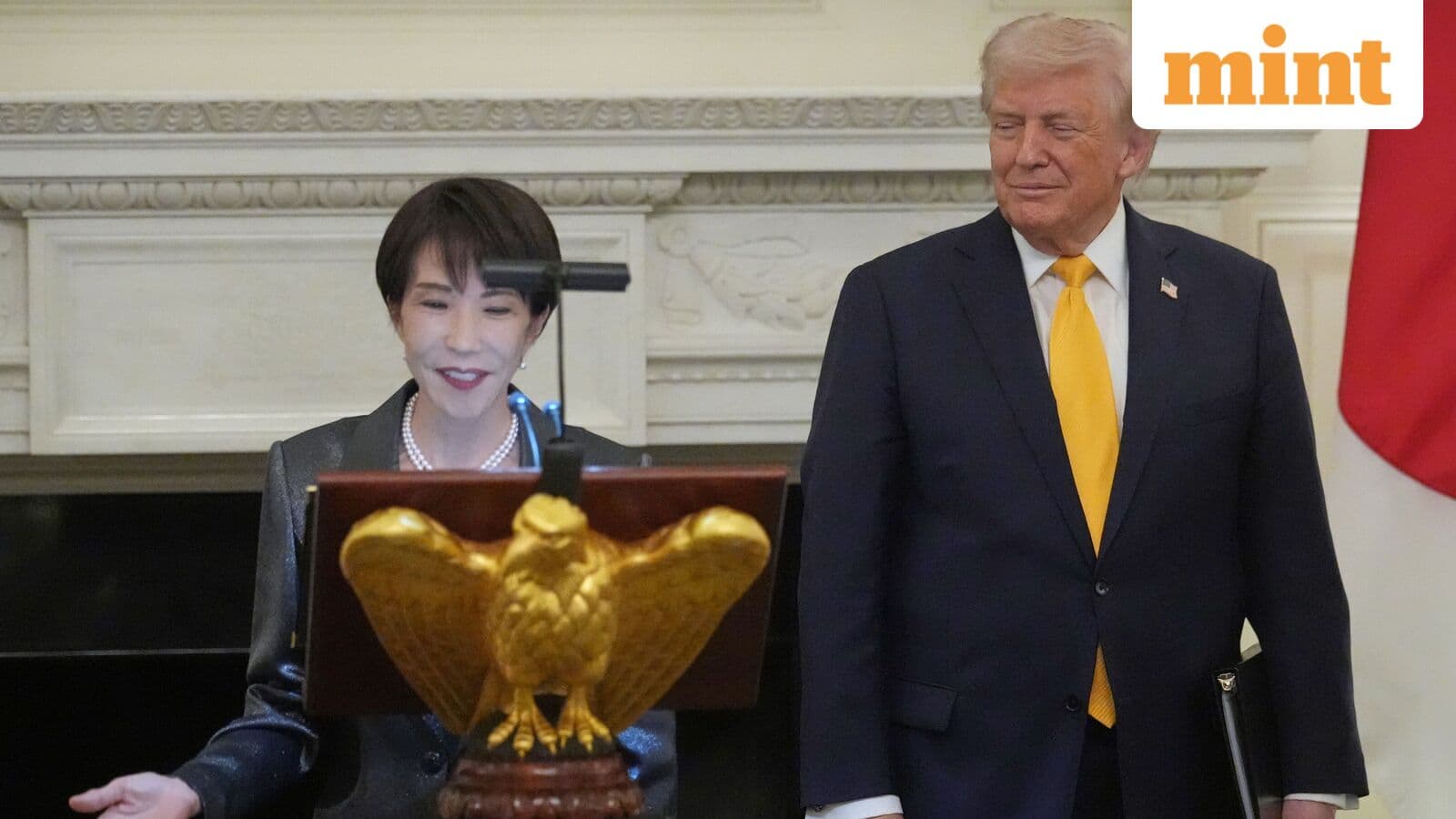
GlipzoIn a significant development for energy collaboration between the United States and Japan, President Donald Trump and Prime Minister Sanae Takaichi unveiled a $40 billion nuclear reactor initiative. This announcement was made at the White House on Thursday and marks a pivotal step forward in the countries' ongoing economic partnership, stemming from a recently established investment fund as part of their trade agreement.
The project involves the construction of BWRX-300 small modular nuclear reactors by GE Vernova Inc. and Hitachi Ltd. These reactors will be strategically located in Tennessee and Alabama, with the aim of enhancing energy production capabilities in the United States. Furthermore, Japan is set to invest an additional $33 billion in natural gas power plants located in Pennsylvania and Texas.
The primary objectives behind these projects are twofold: to stabilize electricity prices and to reinforce the United States' leadership in the global technology landscape. This initiative is particularly critical as major technology companies race to establish power-intensive data centers that are essential for the development of artificial intelligence.
A White House official, who requested anonymity, emphasized that the introduction of small modular reactors (SMRs) is crucial for fueling industrial growth in America. These reactors offer the advantage of generating power on demand, a feature that traditional reactors, typically producing 1 gigawatt, cannot match. While the exact timeline for operational deployment remains uncertain, the administration is making strides towards expediting the regulatory process necessary for these reactors.
The design of SMRs presents several advantages: - Faster Development: SMRs are intended to be developed more quickly than traditional reactors, which usually take a decade to build and finance. - Scalability: With a smaller footprint and capacity, these reactors can be built to meet specific energy demands, providing localized power solutions. - Regulatory Efficiency: Efforts are underway to streamline the approval process for these innovative technologies, which could lead to their introduction into the U.S. energy grid sooner rather than later.
Despite these potential benefits, it’s important to note that no SMRs have yet been integrated into U.S. energy systems, and the regulatory landscape remains a significant hurdle.
This nuclear reactor agreement is part of a larger $550 billion investment fund established between the U.S. and Japan, a fund that aims to bolster economic ties and facilitate trade. Last month, the two nations announced a series of projects totaling $36 billion, which included an oil export terminal, a gas power facility, and a synthetic diamond manufacturing plant.
In addition to energy initiatives, the countries signed an agreement aimed at accelerating cooperation in the production of deep-sea critical minerals, including valuable rare-earth elements found near Japan’s Minamitorishima Island. This agreement is part of a broader strategy to diversify and enhance the supply of critical minerals essential for technology manufacturing and energy production.
The significance of this trade agreement cannot be overstated. For Japan, it cements an alliance with the U.S., ensuring favorable tariff rates for auto exports and establishing a streamlined path for direct investments. This relationship is particularly crucial given the historical complexities surrounding Japanese investments in U.S. industries, as highlighted by the recent approval of a Japanese acquisition of U.S. Steel.
For the United States, these megafund deals signify a resurgence in industrial growth and serve as a testament to Trump’s trade policies, which have often been criticized but are now being positioned as catalysts for economic revival. Trump recently stated, “The scale of these projects is so large, and could not be done without one very special word, TARIFFS.”
While the ambitious plans for the $550 billion fund are promising, they also carry inherent risks. The allocation process for the funds remains somewhat ambiguous, and any setbacks in major initiatives could pose political challenges for Japan. Stakeholders in both countries will need to monitor the progress of these projects closely.
As this initiative unfolds, it will be essential to watch how quickly regulatory approvals are secured and whether the projects can deliver on their promise of economic revitalization and energy stability. Additionally, the ongoing cooperation between the U.S. and Japan in science, technology, national defense, and regional security will be pivotal in shaping future collaborations.
Why It Matters: The nuclear reactor project not only represents a significant investment in energy technology but also reinforces the strategic partnership between two of the world's largest economies, paving the way for future innovations and collaborative efforts in addressing global energy needs.
Stay tuned for more updates on this developing story and its implications for U.S.-Japan relations and global energy dynamics.
Commercial LPG prices have risen again, with increases of ₹42 in Delhi and ₹53.50 in Kolkata impacting businesses and consumers alike. Find out more.
Indian Express
Discover how a tragic coal mine explosion in Shanxi, China, reveals ongoing safety concerns in the industry amidst a push for green energy.
BBC Business
Montek Singh Ahluwalia highlights key economic challenges for India, emphasizing the need for a strategic approach to balance payments and investment.
Indian Express