
Image: BBC World
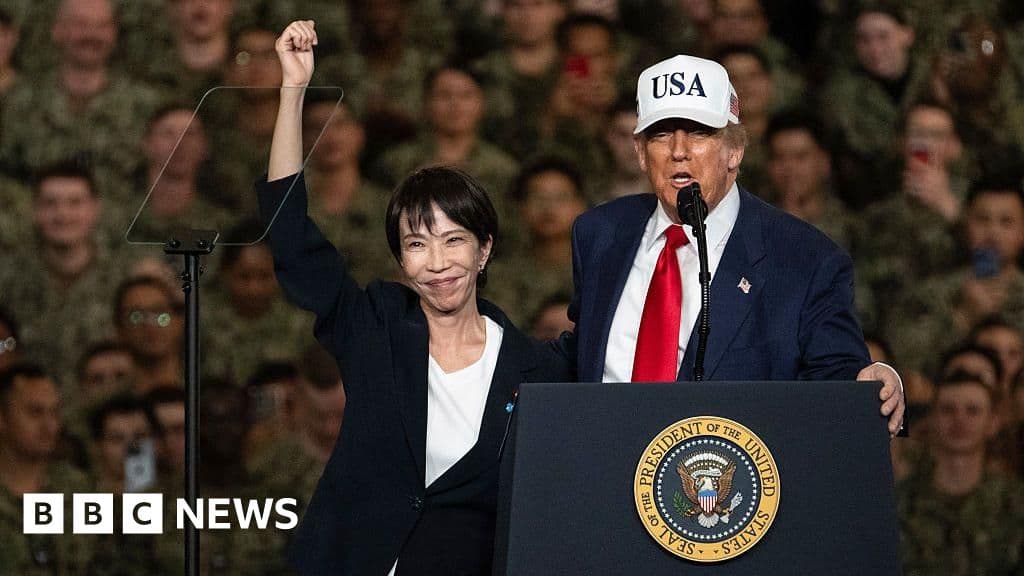
Japan PM Sanae Takaichi faces tough talks with Trump amid rising tensions in the Strait of Hormuz and concerns over Chinese aggression. What’s at stake?
GlipzoJapan's Prime Minister Sanae Takaichi is preparing for a challenging three-day visit to Washington, D.C., where she is expected to engage in tough discussions with U.S. President Donald Trump. Scheduled to begin on Wednesday, this meeting comes at a critical time as tensions surrounding the Iran conflict continue to escalate and the Strait of Hormuz remains a focal point for global oil security. Takaichi openly described her upcoming discussions as 'very difficult' during a parliamentary session prior to her departure, emphasizing her commitment to safeguarding Japan's national interests.
As the world watches, Takaichi's visit is not only aimed at strengthening trade ties but also at reinforcing the longstanding U.S.-Japan alliance. However, this visit has taken on new significance in light of recent geopolitical events. Just days before her trip, Trump made headlines by calling for support from allied nations to secure the vital waterway that serves as a major conduit for oil shipments, particularly from the Middle East.
This meeting had initially been heralded as a continuation of the positive rapport established between Takaichi and Trump following her election victory. In October, shortly after Takaichi assumed office, the two leaders engaged in a friendly discourse, marking what they referred to as a 'golden age' in U.S.-Japan relations. At that time, Takaichi appeared confident in her ability to advocate for Japan's interests, particularly regarding Chinese aggression in the region, which had been a growing concern for Tokyo.
However, the backdrop of military tensions and Trump's unpredictable diplomatic style complicate the landscape. Recent statements from Trump on his social media platform, Truth Social, have highlighted Japan's reliance on oil imports from the Strait of Hormuz, suggesting that nations like Japan should take a more active role in ensuring the strait's security. Trump's initial call for assistance from allies was met with a lukewarm response, leading him to later assert that the U.S. does not need help from anyone.
For Takaichi, the stakes are high. Japan depends on the Strait of Hormuz for a staggering 95% of its oil, making any discussions regarding military intervention particularly sensitive. Analysts suggest that if Trump presses the issue of Japanese military assistance, Takaichi may find it challenging to outright reject his demands due to the economic implications of the situation.
Moreover, Japan's post-World War II pacifist constitution restricts its military engagements, allowing for the use of force only in self-defense situations. Direct military involvement in conflicts abroad would not only contravene this constitution but could also provoke significant backlash from the Japanese populace. A recent poll conducted by Asahi Shimbun revealed that 82% of Japanese voters disapprove of the ongoing war, further complicating Takaichi's position.
Aside from oil security, Takaichi is also expected to address the growing concerns regarding China. The relationship between Japan and China has deteriorated sharply, especially following Takaichi's previous comments suggesting Japan would activate its self-defense forces in response to any aggression towards Taiwan. This statement has not been retracted or clarified, which may further strain ties with Beijing—an outcome that Takaichi must consider as she navigates her discussions with Trump.
In an attempt to bolster Japan's defense capabilities, Takaichi and Trump are likely to discuss Japan's potential role in the U.S. Golden Dome missile defense system. Reports indicate that an initial investment of $25 billion has been earmarked for these defense initiatives, signaling Japan's commitment to enhancing its military readiness in a rapidly changing geopolitical landscape.
As Takaichi embarks on her trip, the complexities of her discussions with Trump are becoming increasingly apparent. The outcome of these talks will not only impact Japan's foreign policy but could also have broader implications for global security dynamics in the region.
As the world anticipates the results of this crucial meeting, all eyes will be on how Takaichi balances national interests with the demands of an unpredictable U.S. administration. The unfolding events will likely shape not just the future of U.S.-Japan relations but also the broader geopolitical landscape in Asia and beyond.

Tensions soar as the US and Iran engage in air strikes near the Strait of Hormuz, raising concerns over global oil supply and regional stability.
BBC World
Trump's international interventions face serious stalemates. What will this mean for U.S. foreign policy? Explore the critical challenges ahead.
Indian Express
Tehran denies resignation of President Masoud Pezeshkian amid claims of IRGC influence. What does this mean for Iran's political stability? Click to learn more!
Indian Express