
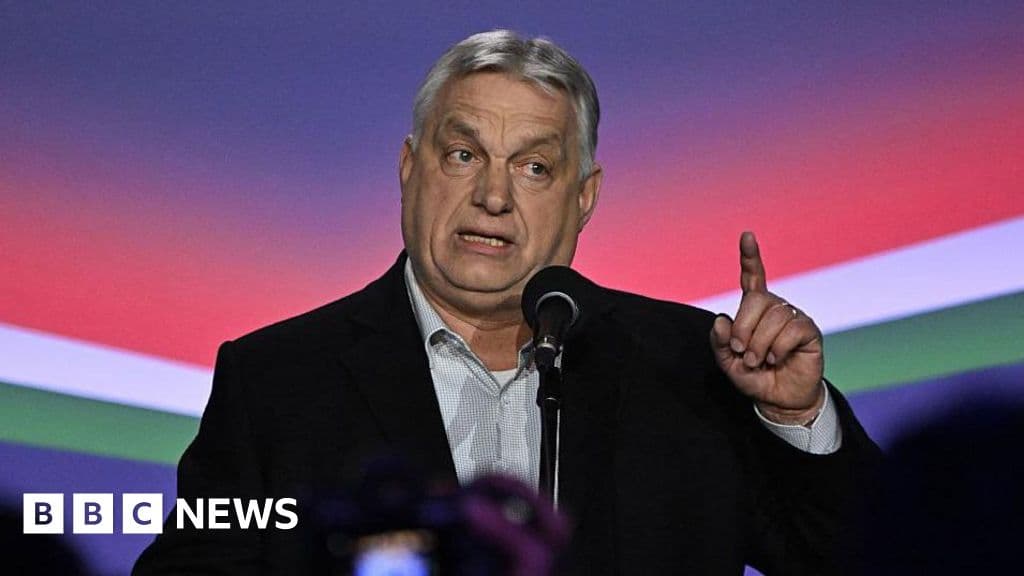
Image: BBC World
Hungarian PM Orban raises alarms over a gas pipeline bomb plot as elections loom. Is it a political maneuver or a genuine threat? Discover more.
GlipzoIn a dramatic turn of events, Hungarian Prime Minister Viktor Orban has summoned an emergency session of the National Defence Council following the alarming discovery of explosives near a crucial pipeline that delivers Russian gas to Hungary. This incident, which unfolded on April 2, 2023, in a border area of Serbia, casts a shadow over Hungary's political landscape just days before the pivotal elections scheduled for April 9, 2023.
The explosives were located approximately 20 kilometers (12 miles) from where the TurkStream pipeline enters Hungary, raising fears of potential sabotage. The timing of this discovery is particularly troubling for Orban, whose ruling party, Fidesz, is lagging in the polls against opposition parties. The situation has led to escalating tensions and accusations, as political rivals and analysts speculate about the motives behind this incident.
Opposition leader Peter Magyar has criticized Orban's response to the situation, suggesting that the Prime Minister is engaging in “panic-mongering” with the help of “Russian advisers.” This accusation comes just days after security experts indicated the possibility of a false flag operation that could potentially be blamed on Ukraine. Such an event could serve to rally public support for Orban's party or provide a pretext for declaring a state of emergency, which could affect the electoral process.
The discovery of the explosives was communicated to Orban by Serbian President Alexander Vucic, a close ally. According to Vucic, the Serbian army found two rucksacks filled with explosives and detonators near the village of Tresnjevac in the Kanjiza district. In a social media update, Vucic described the explosives as having “devastating power” and assured that Hungary would be kept informed throughout the investigation.
Hungary's energy security is intricately tied to Russian gas imports, with the TurkStream pipeline being a vital link supplying between five and eight billion cubic meters of gas annually. This dependence raises the stakes significantly for Hungary, especially amid the ongoing conflict in Ukraine. As the European Union encourages member states to reduce reliance on Russian energy, Orban has steadfastly resisted these calls, positioning himself as a defender of national interests.
The political implications of the pipeline incident are profound. Balint Pasztor, president of the Vojvodina Hungarian Association and an ally of Orban, voiced concerns about the possible motivations behind this alleged terrorist act. He stated that if the investigation reveals that Hungary's supply lines were the actual target, it would underscore a conspiracy to destabilize Orban's leadership.
As Hungary approaches its elections, Fidesz has incorporated a strong anti-Ukraine narrative into its campaign rhetoric. Orban has been vocal at rallies, attributing the country’s low fuel prices to affordable Russian gas and oil, emphasizing the critical nature of these resources for Hungarian citizens. He has framed the situation as a battle against a “Kyiv-Brussels-Berlin” alliance aiming to disrupt Hungary's energy supplies and impose a pro-Ukrainian government.
This narrative has helped solidify support among Orban's base, with the Prime Minister arguing that a change in leadership could usher Hungary into a broader conflict with Russia, which many citizens want to avoid. He has also accused Ukrainian President Volodymyr Zelensky of instituting an “oil blockade” against Hungary, claiming that disruptions in oil supplies via the Druzhba pipeline have left Hungary vulnerable.
In light of the situation, the Ukrainian government has proactively denied any involvement in the pipeline incident. Heorhiy Tykhyy, the spokesperson for Ukraine's foreign ministry, stated unequivocally, “Ukraine has nothing to do with this.” Tykhyy suggested that the incident is likely part of a Russian false-flag operation aimed at influencing the Hungarian elections.
Experts, including Andras Racz, a Hungarian security analyst, have warned of the potential for a staged attack intended to frame Ukraine. Racz has suggested that explosives could be misidentified as Ukrainian, further exacerbating tensions and allowing Orban to redirect blame towards Kyiv.
As the investigation progresses, all eyes will be on how this incident impacts the upcoming elections. The potential for heightened tensions and political maneuvering remains significant. Orban’s response and the findings of the investigation could either fortify his position ahead of the vote or backfire, depending on public perception and the political landscape.
As the investigation unfolds and election day approaches, the interplay of security concerns and political strategy will be essential to watch. How this situation develops could have lasting implications not only for Hungary but also for the broader geopolitical landscape in Eastern Europe.

Tensions soar as the US and Iran engage in air strikes near the Strait of Hormuz, raising concerns over global oil supply and regional stability.
BBC World
Trump's international interventions face serious stalemates. What will this mean for U.S. foreign policy? Explore the critical challenges ahead.
Indian Express
Tehran denies resignation of President Masoud Pezeshkian amid claims of IRGC influence. What does this mean for Iran's political stability? Click to learn more!
Indian Express