
Image: BBC World
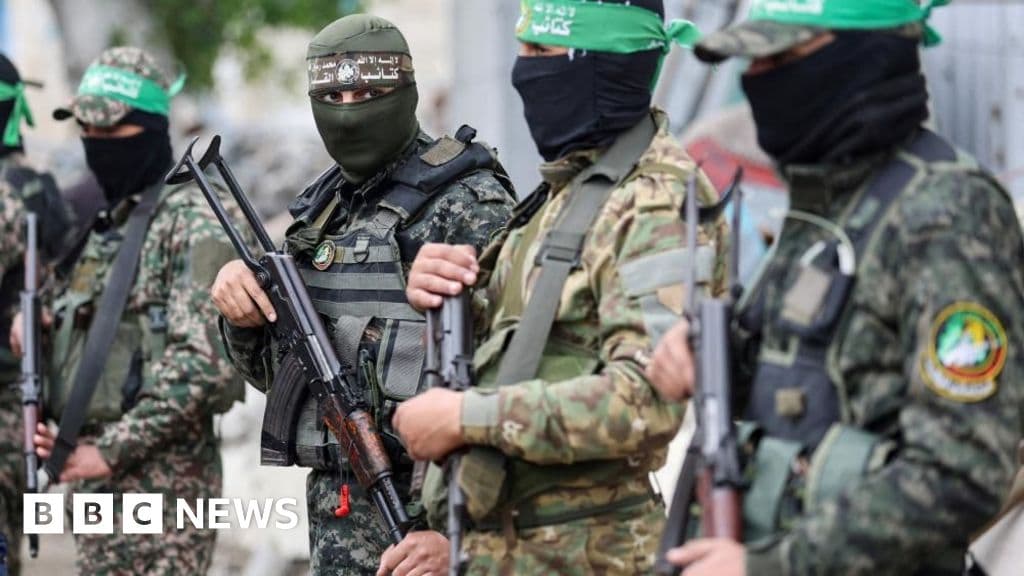
Hamas rejects a key U.S. disarmament plan, raising tensions as peace negotiations stall. What are the implications for Gaza and the broader region?
GlipzoHamas has firmly turned down a disarmament proposal introduced by Nickolay Mladenov, the U.S. envoy responsible for Gaza, according to a senior Palestinian official familiar with the ongoing negotiations. This decision underscores the complexities of the peace efforts that are currently underway in the region, particularly in light of the recent violence that has seen significant loss of life.
Mladenov's disarmament framework was presented as part of the second phase of a ceasefire agreement reached between Hamas and Israel in October 2023, following a violent conflict that led to the deaths of approximately 1,200 individuals and the abduction of 251 hostages during a Hamas-led attack on Israel. The Palestinian official accused Mladenov of showing bias towards Israel, indicating that Hamas seeks a more balanced approach in negotiations.
The first phase of the peace plan, which halted hostilities, returned Israeli hostages in exchange for Palestinian prisoners, and initiated a partial withdrawal of Israeli forces from Gaza, has yet to be fully realized. The Palestinian official stated that Hamas remains unwilling to discuss the second phase of the plan until Israel adheres to the commitments outlined in the initial phase.
Israel, on the other hand, has asserted that any advancement in negotiations hinges on Hamas's disarmament. The current deadlock between the two parties raises significant concerns over the potential for renewed violence and instability in the region.
A Hamas delegation is scheduled to meet with Egypt's intelligence chief, which is pivotal for potential mediation. A senior Hamas member emphasized the importance of establishing a clear timetable for Israel to fulfill its obligations from the first phase before any discussions about disarmament can commence. The official pointed out that Palestinian factions view the issue of disarmament as intrinsically linked to a broader resolution that acknowledges their right to self-determination.
The ongoing humanitarian crisis in Gaza complicates the situation further. Since the ceasefire began on October 10, 2023, there have been significant casualties, with reports indicating that over 72,330 lives have been lost due to Israeli military actions. The humanitarian needs of the population have escalated, and Hamas insists that discussions about disarmament cannot occur amidst ongoing violence, killings, and starvation in Gaza.
During a recent address to the UN Security Council, Mladenov articulated a vision where the disarmament of militant groups could signify a crucial shift away from the persistent cycle of violence that has plagued Gaza. He stated that the choice facing the region is stark: either continue in a state of war or embrace a new beginning through disarmament and reconstruction. Mladenov expressed that for the people of Gaza, the implications of halting violence are profound, promising a pathway to reconstruction and renewed hope.
However, Hamas and other Palestinian factions remain skeptical of the proposed approach, arguing that it aligns too closely with Israeli interests without providing the necessary framework for humanitarian aid and reconstruction efforts. A senior Hamas official criticized Mladenov for linking all discussions to disarmament while neglecting the dire need for financial support and recovery plans.
Israeli Prime Minister Benjamin Netanyahu has issued stern warnings to Hamas, suggesting that the organization will face disarmament regardless of their cooperation, stating they will be disarmed “either the easy way or the hard way.” This rhetoric adds an element of urgency and tension to the ongoing discussions, as both sides appear entrenched in their positions.
The future of peace negotiations in the region remains uncertain, with both sides holding firm to their respective demands. As Hamas continues to resist disarmament without the fulfillment of prior agreements, the international community watches closely to see if any breakthrough can be achieved.
Looking forward, the situation in Gaza is precarious, and developments in the coming weeks will be critical. Key factors to monitor include: - The outcome of the Hamas delegation's meeting with Egypt’s intelligence chief. - Any signs of compliance from Israel regarding the initial ceasefire terms. - The potential for renewed violence if negotiations stall further.
As tensions simmer, the prospect of lasting peace hinges on the ability of both Hamas and Israel to find common ground. The stakes are high, not only for the parties involved but also for the broader stability of the region.
#### Why It Matters This ongoing conflict and refusal to disarm illustrate the intricate dynamics of Israeli-Palestinian relations and the challenges of achieving peace in a historically volatile area. The decisions made in the near future could have profound implications for the lives of thousands and the stability of the Middle East.

Tensions soar as the US and Iran engage in air strikes near the Strait of Hormuz, raising concerns over global oil supply and regional stability.
BBC World
Trump's international interventions face serious stalemates. What will this mean for U.S. foreign policy? Explore the critical challenges ahead.
Indian Express
Tehran denies resignation of President Masoud Pezeshkian amid claims of IRGC influence. What does this mean for Iran's political stability? Click to learn more!
Indian Express