

Image: Wired
Google is restructuring its Project Mariner team as AI agents like OpenClaw rise. What does this mean for the future of browser agents? Find out more.
GlipzoIn a significant move within its AI division, Google is restructuring the team responsible for Project Mariner, the ambitious initiative aimed at creating an AI agent capable of navigating the Chrome browser to perform tasks on behalf of users. This change comes amid the burgeoning popularity of advanced AI agents like OpenClaw, which have been capturing attention for their potential to transform user interactions with technology.
According to sources familiar with the situation, several team members from Google Labs involved in the research phase of Project Mariner have transitioned to focus on higher-priority projects. A spokesperson for Google confirmed these adjustments, emphasizing that the capabilities developed under Project Mariner will be integrated into the company's broader agent strategy moving forward. This includes the incorporation of features into the newly launched Gemini Agent, showcasing Google's commitment to enhancing its AI offerings.
The timing of this restructuring is critical as it aligns with a rapid evolution in the AI landscape. The rise of tools like OpenClaw has prompted tech giants, including Google, to reevaluate their approach to AI agents. Currently, these advanced agents are predominantly utilized by developers, but their potential to serve as general-purpose assistants for both individuals and businesses is gaining traction.
Nvidia's CEO, Jensen Huang, recently likened OpenClaw to a new operating system for intelligent computers, stating, "Every company in the world today needs to have an OpenClaw strategy." This statement underscores the urgency for tech companies to innovate and adapt in a competitive environment where AI capabilities are becoming increasingly sophisticated.
During last year’s I/O conference, Google CEO Sundar Pichai spotlighted Project Mariner, positioning browser agents as a pivotal development in the tech industry. With competitors like OpenAI and Perplexity launching their own consumer agents, the expectation was that these tools would revolutionize how users interact with the web.
However, the uptake of these browser agents has fallen short of initial predictions. For instance, Perplexity’s Comet browser agent achieved only 2.8 million weekly active users in December 2025, while OpenAI's ChatGPT Agent recently saw its user base dip to below 1 million. In contrast, ChatGPT continues to engage hundreds of millions of users weekly, making browser agent usage seem minimal in comparison.
As the AI landscape evolves, the focus has shifted towards more capable systems like Claude Code and OpenClaw, which utilize command-line interfaces instead of conventional web browsing. This shift reflects a growing recognition that managing tasks via text-based systems can be more efficient than the graphical interface used by browser agents.
Kian Katanforoosh, CEO of the AI upskilling platform Workera and a lecturer at Stanford, points out that browser agents face significant challenges due to their high computational demands. Most current agents rely on a cumbersome process of capturing screenshots of web pages, processing them through AI models, and then executing actions based on the visual data. This method can be slow and often unreliable, leading to frustration among users.
Katanforoosh states, “What Claude Code and OpenClaw showed was that it’s actually much more efficient to work with the terminal, because the terminal is text-based and LLMs are text-based. It’s probably 10 to 100X less steps to get to the same outcomes.”
Despite the challenges facing browser agents, there's ongoing innovation in the field of computer use. In a recent breakthrough, the startup Standard Intelligence introduced a model trained on videos rather than still images. They claim this new video encoder can compress data into an AI model’s context window 50X more efficiently than previous approaches. Demonstrating this capability, they connected their model to a car, a live video feed, and a keyboard, achieving brief autonomous driving around San Francisco.
Ang Li, CEO of Simular and a former researcher at Google DeepMind, argues that computer use agents are essential for filling critical gaps in agent capabilities. He believes, “I do see there always being an 80/20 split.” This suggests that while advanced command-line agents are effective, there will always be tasks suited for browser agents.
Looking ahead, Google's restructuring of its browser agent team could be a pivotal step in redefining its AI strategy. As the tech giant integrates the capabilities developed under Project Mariner into its broader agent framework, we can expect to see enhanced features in upcoming products. The emphasis on efficiency and effectiveness will likely shape the next generation of AI agents, as Google and its competitors strive to meet user needs in an increasingly complex digital landscape.
Why It Matters: The evolution of AI agents is crucial not only for tech companies but also for everyday users who seek more intuitive and efficient ways to interact with technology. As firms like Google adapt to emerging trends, the future of AI-powered assistants will be closely watched, with implications for various sectors from business to education.
As we move forward, keep an eye on how these developments unfold, particularly the integration of video training models and advancements in command-line interfaces. The success of these innovations could redefine user experiences in the digital age.
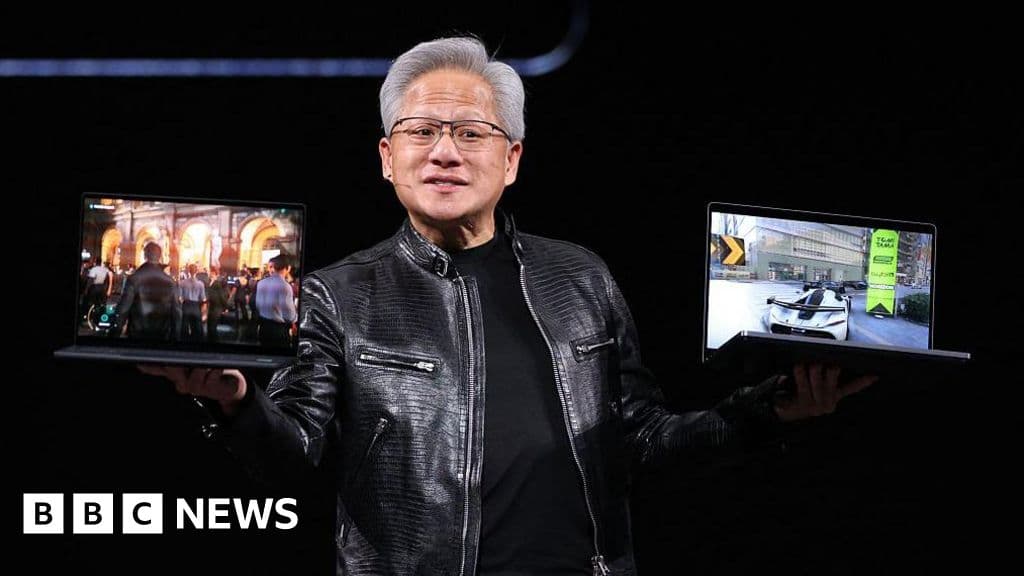
Nvidia's new RTX Spark chip aims to transform personal computing with AI, marking a significant shift in technology. Discover what this means for consumers.
BBC Business
The explosion of Blue Origin's New Glenn rocket raises significant concerns over NASA's lunar ambitions and the future of Amazon's satellite projects. Discover the implications.
BBC Science
Discover how Meta's lack of engagement on user bans raises critical concerns about accountability and transparency in social media governance.
BBC Technology