

Image: TechCrunch
Explore how Google and Accel's Atoms program is changing the AI startup landscape in India by rejecting superficial solutions in favor of genuine innovation.
GlipzoIn a significant development for the Indian tech landscape, Google and Accel have unveiled their latest cohort of five innovative startups within their collaborative AI accelerator program, Atoms. This initiative, announced in November 2023, aims to propel the growth of early-stage startups that are leveraging artificial intelligence in transformative ways. Notably, none of the chosen startups fall into the category of superficial “AI wrappers,” which have become commonplace in the saturated market of tech solutions.
The Atoms program is designed to provide substantial support to emerging enterprises, offering up to $2 million in funding through the AI Futures Fund as well as cloud credits worth up to $350,000 from Google. The selection process was highly competitive, drawing in more than 4,000 applications, a figure that reflects a burgeoning interest in AI entrepreneurship in India.
Accel partner Prayank Swaroop highlighted a key insight from the selection process: around 70% of the applications were classified as “wrappers,” meaning they merely added AI features—like chatbots—on top of pre-existing software without offering any innovative workflows. This trend raises concerns for investors who are increasingly wary of startups that do not provide substantial advancements or unique value propositions in the ever-evolving AI landscape.
Swaroop explained, “We found that many startups were not truly reimagining workflows using AI, which is what we hoped to see.” This lack of originality in application ideas contributed to many proposals being turned down, particularly in saturated markets such as marketing automation and AI recruitment tools. In these areas, differentiation is critical for success, yet many startups struggle to present novel approaches.
The current state of India’s AI ecosystem is heavily skewed towards enterprise applications. According to Swaroop, approximately 62% of submissions focused on productivity tools, while 13% were centered around software development and coding. This means that nearly three-quarters of the applications were geared towards enterprise software rather than consumer-facing products. Swaroop expressed a desire to see more innovative ideas in sectors like healthcare and education, where AI has the potential to make a significant impact.
The substantial increase in applications—nearly four times more than previous cohorts—also indicates a surge in interest from first-time founders, who are eager to navigate the complexities of the AI space.
The five startups selected for this year's Atoms program represent a diverse array of innovative solutions that align with Google's vision for real-world AI adoption. Jonathan Silber, co-founder and director of the AI Futures Fund, emphasized that these startups reflect areas where Google anticipates significant advancements in AI technology.
Silber noted that the program does not restrict participating startups to using only Google’s AI models. Many companies often utilize a combination of various models tailored to their specific workflows. This flexibility allows for a broader spectrum of experimentation, ultimately benefiting both the startups and Google by enhancing model performance based on real-world feedback.
The collaboration between Google and Accel is designed to create a synergistic relationship where insights gathered from these startups can be fed back to Google's DeepMind teams. This feedback loop is intended to enhance future AI models, thereby fostering continuous improvement in the technology. Silber described this dynamic as a “flywheel,” suggesting that every startup's success or challenges can inform and refine Google’s offerings in the market.
The selected startups are not just participants; they are pioneers in redefining how AI can be embedded into various industries. As these startups embark on their journeys, the broader tech community will be watching closely to see how their innovations unfold and how they contribute to the evolving AI landscape.
As we look to the future, the ongoing developments from these five selected startups will be instrumental in shaping the trajectory of AI in India. With significant funding and resources from Google and Accel, these companies have the potential to disrupt traditional markets and introduce groundbreaking solutions.
The emphasis on genuine innovation over superficial enhancements indicates a shift in the industry, where depth and practical application are becoming increasingly valued. For aspiring entrepreneurs and investors alike, the Atoms program serves as a beacon of hope and a model for nurturing robust AI solutions that can thrive in a competitive landscape.
What remains to be seen is how these startups will navigate their respective markets, the obstacles they may face, and how they will leverage their support to create meaningful impact in the realm of AI. The future of AI in India is bright, and the next wave of innovations is just around the corner.
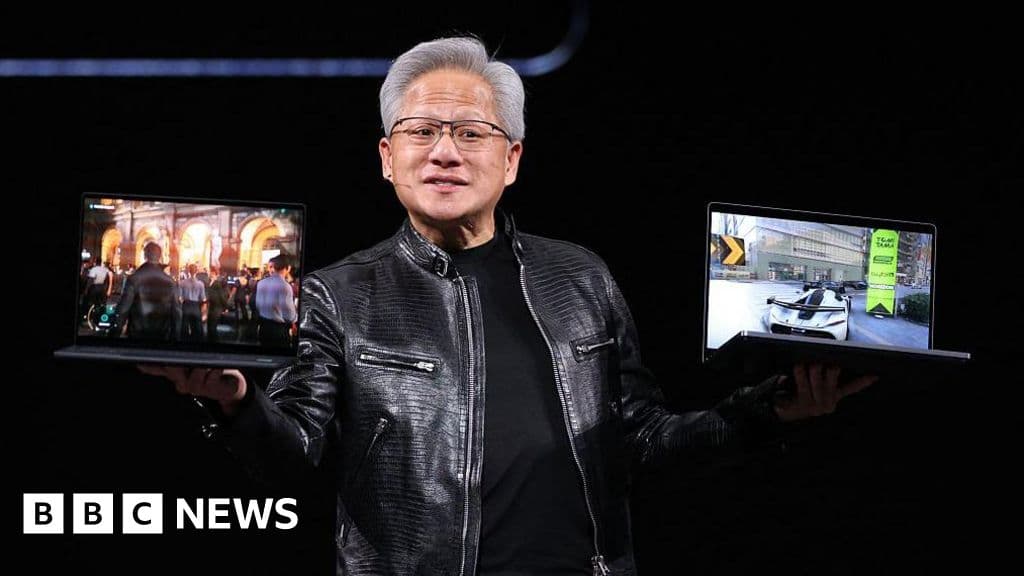
Nvidia's new RTX Spark chip aims to transform personal computing with AI, marking a significant shift in technology. Discover what this means for consumers.
BBC Business
The explosion of Blue Origin's New Glenn rocket raises significant concerns over NASA's lunar ambitions and the future of Amazon's satellite projects. Discover the implications.
BBC Science
Discover how Meta's lack of engagement on user bans raises critical concerns about accountability and transparency in social media governance.
BBC Technology