

Image: TechCrunch
Discover why Garry Tan's Claude Code setup is creating a stir in tech—both for its innovative approach and the criticism it faces from skeptics.
GlipzoDuring the South by Southwest (SXSW) festival, Garry Tan, the CEO of Y Combinator, made waves with his candid remarks about the burgeoning world of artificial intelligence. On stage alongside fellow venture capitalist Bill Gurley, Tan expressed his enthusiasm for AI agents, revealing that he experiences what he humorously termed "cyber psychosis."
"I sleep, like, four hours a night right now," Tan shared, highlighting how his excitement for AI keeps him awake. His comments, while likely intended in jest, touch on a serious issue; the psychological impact of technology on individuals. Tan's passion for AI is palpable, and it underscores a growing trend among tech leaders who are increasingly consumed by the rapid advancements in this field.
Tan's reflections didn't stop at humor. He compared his current AI experiences to the grueling startup days, reminiscing about a past venture that required $10 million in venture capital and a dedicated team of 10 people over two years. He humorously referenced his previous reliance on anti-narcoleptic drugs to stay awake and productive during those challenging times.
Fast forward to today, and Tan's enthusiasm has taken on a new form: Claude Code (CC). Just two days prior to his SXSW appearance, he made headlines by releasing his Claude Code setup, dubbed gstack, on GitHub under an open-source license. This innovative toolkit consists of six specialized skills that enable users to instruct the AI on how to perform various tasks effectively.
In a tweet showcasing his release, Tan explained, "I’ve been having such an amazing time with Claude Code, I wanted you to be able to have my exact skill setup." His open-source approach allows anyone to easily install gstack in their local environments or share it with team members. As of now, the repository boasts 13 skills, and Tan continues to expand its functionality with frequent updates.
So, what exactly does gstack offer? Tan has developed a series of skills that allow Claude to operate in multiple capacities: - CEO: Evaluates the viability of startup ideas and features. - Engineer: Writes code for new features based on CEO feedback. - Code Reviewer: Conducts thorough evaluations to identify bugs and security vulnerabilities. - Designer and Documenter: Enhances the overall development process by providing design input and documentation.
This multi-faceted approach has garnered widespread acclaim, with Tan's initial tweet going viral on social media and his project trending on Product Hunt. The gstack repository has amassed nearly 20,000 stars on GitHub and over 2,200 forks, indicating that developers are eager to customize and implement these tools in their projects.
However, the excitement surrounding gstack did not come without controversy. Shortly after its launch, Tan tweeted a comment from a friend, a CTO, who described gstack as "god mode" and claimed it had uncovered a security flaw in his company’s code. This bold assertion led to a backlash from some in the tech community.
Critics were quick to respond, with one founder remarking, "If it’s true, that CTO should be fired immediately," suggesting that relying on a tool like gstack for security could undermine a team's expertise. Others echoed similar sentiments, emphasizing that developers already have their own methods for code review and security checks.
A notable vlogger, Mo Bitar, weighed in on the situation, arguing that the excitement surrounding gstack reflects a trend of tech leaders becoming overly optimistic about AI capabilities. He characterized Tan’s project as merely a collection of prompts stored in a text file, questioning its uniqueness. This criticism was echoed on platforms like Product Hunt, where users suggested that if Tan weren't the CEO of Y Combinator, his project might not receive the same level of attention.
The mixed reactions to gstack highlight a critical conversation in the tech world: the balance between AI innovation and human expertise. As AI tools become more prevalent, developers are tasked with integrating these technologies without undermining their own skills and capabilities. Tan's enthusiasm for AI and its potential is inspiring, but it also raises important questions about reliance on technology versus human intelligence.
As we move forward, the tech community will be watching closely to see how gstack evolves and whether it genuinely enhances the development process or simply contributes to a growing hype around AI. The future of AI in coding is bright, but it demands a careful assessment of both its advantages and limitations.
In conclusion, Garry Tan's journey with gstack reflects the dual-edged sword of innovation in AI technology. As excitement builds, the need for critical discourse and practical application remains paramount. What will be the lasting impact of gstack on the industry? Only time will tell, but one thing is clear: the dialogue around AI and its role in the workforce is just beginning.
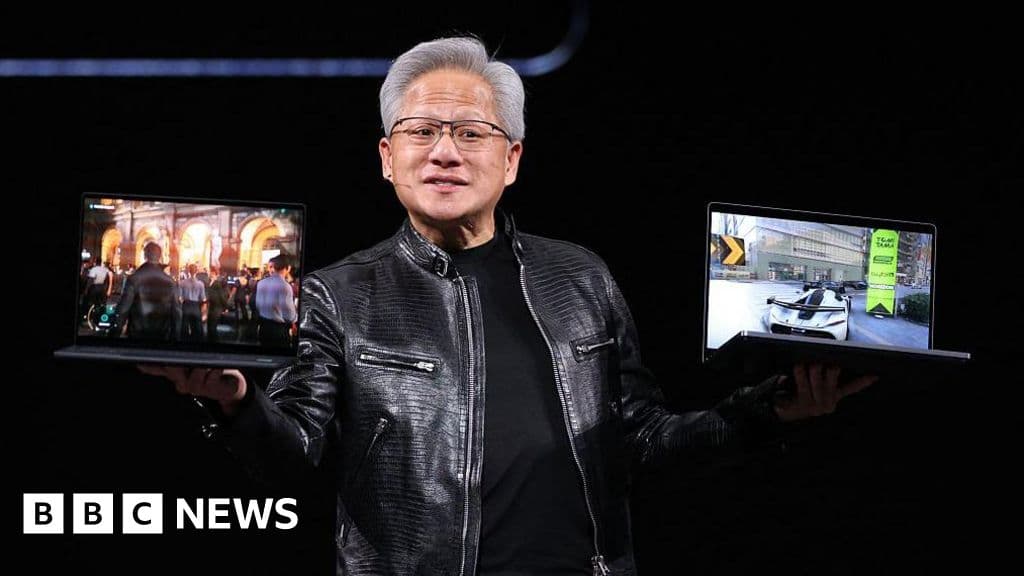
Nvidia's new RTX Spark chip aims to transform personal computing with AI, marking a significant shift in technology. Discover what this means for consumers.
BBC Business
The explosion of Blue Origin's New Glenn rocket raises significant concerns over NASA's lunar ambitions and the future of Amazon's satellite projects. Discover the implications.
BBC Science
Discover how Meta's lack of engagement on user bans raises critical concerns about accountability and transparency in social media governance.
BBC Technology